
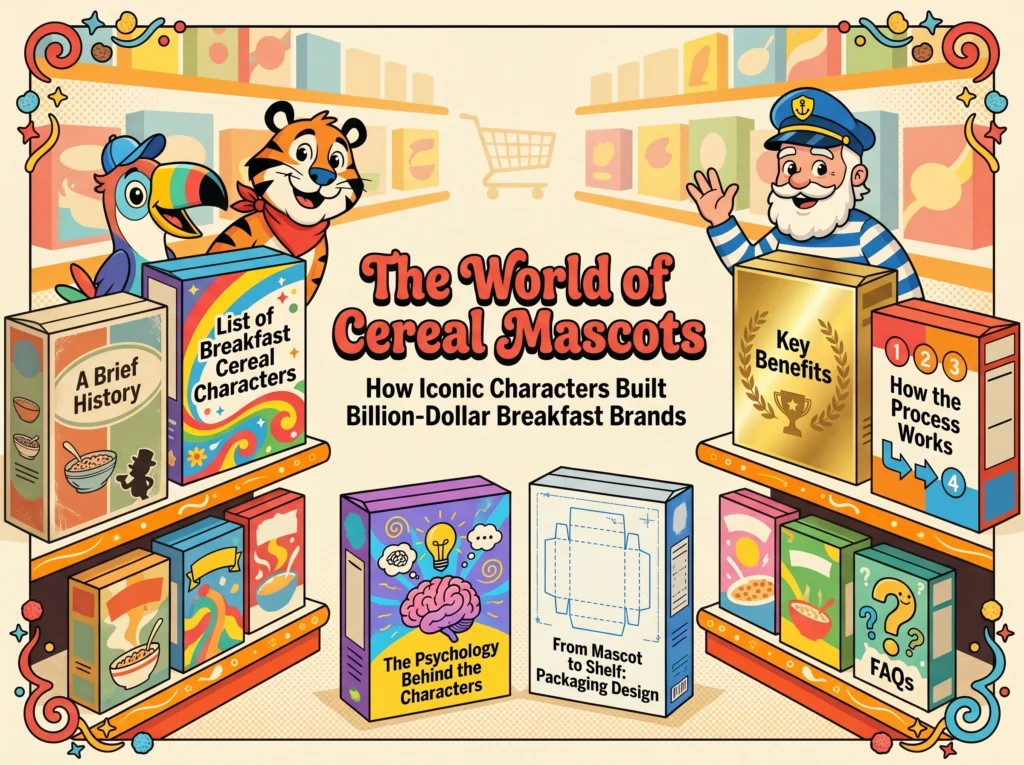
The world of cereal mascots includes more than 100 famous breakfast cereal characters from Tony the Tiger and Toucan Sam to Cap’n Crunch and the Trix Rabbit created between the 1930s and today. These cereal box characters drive brand recognition, emotional loyalty, and shelf appeal, making mascot-led packaging one of the most effective strategies in food marketing.
Why Cereal Mascots Still Matter
Walk down any cereal aisle in America and you’ll face a wall of competing colors, claims, and characters. Shoppers make their choice in roughly three to five seconds and for decades, the brands that win that moment have one thing in common: a memorable mascot staring back from the box.
For cereal brands, food manufacturers, and packaging designers, this presents both a challenge and an opportunity. The challenge: standing out in one of the most saturated categories in retail. The opportunity: the world of cereal mascots proves that a well-designed character, paired with smart packaging, can carry a brand for generations.
This guide breaks down the most famous cereal mascots in history, what makes them work, and how modern brands from startups to established manufacturers can apply the same principles through professional custom packaging.
The World of Cereal Mascots: A Brief History
Cereal advertising characters didn’t appear by accident. They evolved alongside American media itself.
The 1930s–1940s: The Originals.
Snap, Crackle, and Pop debuted for Kellogg’s Rice Krispies in 1933, making them among the oldest surviving breakfast brand characters. These early mascots were built for radio jingles and print ads, designed to make a commodity product feel friendly and familiar.
The 1950s–1960s: The Television Golden Age.
When TV entered American living rooms, cereal mascots became Saturday-morning celebrities. Tony the Tiger (Frosted Flakes, 1952), the Trix Rabbit (1959), Cap’n Crunch (1963), and Lucky the Leprechaun (Lucky Charms, 1964) all launched during this era. Animated commercials gave these cartoon cereal characters personalities, catchphrases, and ongoing storylines “They’re grrreat!” and “Silly rabbit, Trix are for kids!” became part of the cultural vocabulary.
The 1970s–1980s: Personality and Play.
This era leaned into fun and fantasy: Count Chocula, Franken Berry, and Boo Berry turned breakfast into entertainment, while Sonny the Cuckoo Bird went “cuckoo for Cocoa Puffs.” Cereal boxes themselves became collectibles, with back-panel games, cut-out masks, and mail-in prizes.
The 1990s–Today: Modern Cereal Mascots.
Contemporary characters have been redesigned for digital media softer features, simplified color palettes, and social-media-ready expressions. Vintage cereal mascots have also seen a revival, as nostalgia marketing brings classic designs back to shelves and collectors hunt original boxes from past decades.
Also Read: Cereal Box Dimensions: The Complete Size Guide You’ll Actually Use (2026)
List of Breakfast Cereal Characters: The Icons Everyone Knows
Here’s a reference list of the most popular cereal characters, organized by brand family useful for designers, marketers, students, and collectors alike.
Kellogg’s Cereal Brand Mascots
- Tony the Tiger Frosted Flakes (1952). Arguably the most famous food mascot in the world.
- Snap, Crackle & Pop Rice Krispies (1933). The oldest active cereal mascot trio.
- Toucan Sam Froot Loops (1963). Famous for “following his nose.”
- Cornelius “Corny” the Rooster Corn Flakes (1957).
- Dig’em Frog Honey Smacks (1972).
General Mills Breakfast Cereal Mascots
- Lucky the Leprechaun Lucky Charms (1964).
- Trix Rabbit Trix (1959). The eternally denied rabbit remains a masterclass in narrative branding.
- Buzz the Bee Honey Nut Cheerios (1979).
- Sonny the Cuckoo Bird Cocoa Puffs (1962).
- Count Chocula, Franken Berry & Boo Berry The Monster Cereals (1971–1973), now seasonal collector favorites.
Quaker Oats & Post Characters
- Cap’n Crunch Quaker Oats (1963). A full fictional universe, complete with a ship and crew.
- Sugar Bear Post Golden Crisp (1949). Known for his laid-back, crooning voice.
- Fred Flintstone & Barney Rubble Post Pebbles cereals (1971), one of the longest-running licensed-character partnerships in food.
Other Iconic Breakfast Mascots
- Chef Wendell Cinnamon Toast Crunch (1980s–1990s).
- The Cheerios Bee predecessor characters and dozens of regional and discontinued mascots that now fuel the vintage collector market.
What unites every name on this list? None of them describe the cereal. They embody it. That distinction is the foundation of effective mascot branding and effective packaging.
Why Cereal Mascots Work: The Psychology Behind the Characters
Understanding why kids’ cereal mascots succeed helps any brand apply the same mechanics:
- Eye contact sells. Research on cereal box marketing famously found that mascots on kids’ cereals are often angled to make eye contact with children at shelf height. Perceived eye contact measurably increases trust and brand connection.
- Characters create stories, not claims. A nutrition label informs a character entertains. The Trix Rabbit has run the same simple story for 65+ years, and it still works because narrative is more memorable than information.
- Mascots survive reformulations. Recipes change, packaging trends shift, but the character provides continuity. Consumers who grew up with a mascot pass that affinity to their own children multi-generational loyalty no discount can buy.
- Color and character work together. Tony’s orange, Lucky’s green, Cap’n Crunch’s blue each mascot is inseparable from a signature color system that makes the box findable from across the aisle. This is deliberate cereal packaging design, not decoration.
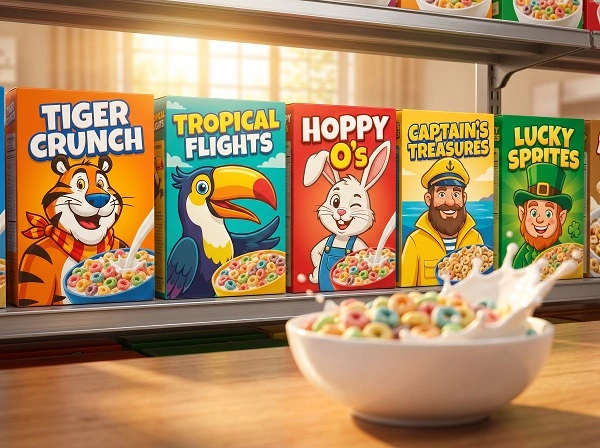
From Mascot to Shelf: Where Packaging Makes or Breaks the Character
This is the part most articles about cereal mascots skip: a great character is only as strong as the box it lives on.
A mascot’s success depends on execution details that happen at the packaging stage:
- Print fidelity. Flat, washed-out character colors undermine the energy a mascot is supposed to project. High-quality offset or digital printing keeps brand colors consistent across every production run.
- Structural design. Box dimensions, window cutouts, and panel layouts determine how much real estate your character gets and whether it sits at the right eye level on shelf.
- Finish choices. Matte backgrounds with spot-gloss on the character itself can make a mascot literally pop off the box. Foil accents, embossing, and soft-touch coatings add the premium feel modern consumers expect.
- Back-panel engagement. The classic cereal box trick games, puzzles, collectible panels still works. It extends time spent with your brand from seconds in-store to minutes at the breakfast table.
Whether you’re launching a new cereal, a snack line, or any food product with character-driven branding, partnering with an experienced packaging manufacturer like ONO Custom Boxes ensures your mascot translates from concept art to a retail-ready box with accurate color matching, food-safe materials, and structural options tested for real shelf conditions, available to brands nationwide across the United States.
Key Benefits of Mascot-Driven Custom Packaging
For brands weighing the investment, here’s what character-led packaging delivers in practice:
- Faster shelf recognition a distinctive character cuts purchase-decision time and beats text-heavy competitors in the three-second test.
- Higher recall and repeat purchase consumers remember characters far longer than logos or slogans.
- Premium perception without premium pricing professional finishes signal quality before the product is ever tasted.
- Built-in content for marketing a mascot fuels social media, advertising, and seasonal packaging variations from a single creative asset.
- Collector and nostalgia value limited-edition boxes featuring your character can become marketing events in themselves.
Also Read: Custom Made Shipping Boxes vs Standard Packaging
How the Custom Packaging Process Works
If you’re ready to put your own character on a box, the workflow is simpler than most brands expect:
- Consultation & brief. Share your product specs, brand assets, and mascot artwork (or get guidance if your character is still in development).
- Structural design & dieline. Engineers create the box template sized for your product, fill weight, and retail requirements.
- Artwork setup & proofing. Your mascot and brand colors are prepared for print, with digital and physical proofs to verify color accuracy.
- Material & finish selection. Choose board grade, coating, and special finishes suited to your budget and shelf goals.
- Production & quality control. Boxes are printed, cut, and inspected against the approved proof.
- Nationwide delivery. Finished packaging ships flat to your facility or co-packer anywhere in the USA.
Most projects move from approved artwork to delivered boxes in two to four weeks, depending on quantity and finishes.
Who This Guide Is For
- Cereal brands and food manufacturers developing or refreshing character-led packaging.
- Packaging designers and marketing professionals researching what makes mascot design succeed at retail.
- Startups and challenger brands that want big-brand shelf presence on a realistic budget.
- Students, bloggers, and branding enthusiasts studying the history of breakfast cereal brands and advertising characters.
- Collectors and parents curious about the stories behind the mascots on cereal boxes they grew up with.
Frequently Asked Questions
Who is the most famous cereal mascot of all time?
Tony the Tiger is widely considered the most famous cereal mascot, recognized globally since 1952. Snap, Crackle & Pop are the longest-running, active since 1933.
Why do cereal brands use mascots instead of just logos?
Mascots build emotional connection and storytelling that logos can’t. Characters give a brand a voice, a personality, and decades of marketing continuity which translates directly into recognition and loyalty at the shelf.
Do cereal mascots still work for modern brands?
Yes. While advertising channels have shifted to digital, character-driven packaging remains highly effective, and nostalgia marketing has made both vintage and modern cereal mascots more valuable than ever.
Can a small or startup brand afford mascot-driven custom packaging?
Absolutely. Digital printing has lowered minimum order quantities dramatically, so emerging brands can produce professional, fully customized character packaging in short runs without big-brand budgets.
What makes cereal packaging design different from other food packaging?
Cereal boxes are large-format, front-facing billboards with significant back-panel space ideal for character storytelling, games, and promotions. Structural integrity, food-safe liners, and vivid color reproduction are the key technical requirements.
How do I protect my own mascot character legally?
Register your character as a trademark (and the artwork under copyright) before wide release. Your packaging partner can work under NDA during development.
What information do I need to request a packaging quote?
Box dimensions or product weight, estimated quantity, print colors, and any special finishes. If you only have rough specs, a consultation can define the rest.
Ready to Put Your Brand in the Cereal Aisle Hall of Fame?
Every icon in the world of cereal mascots from Tony the Tiger to the Trix Rabbit started as an idea someone committed to a box. Your character deserves the same quality of execution.
Request a free quote and packaging consultation today. Share your product details and artwork, and get expert guidance on structure, materials, and finishes with fast, nationwide delivery across the United States.