
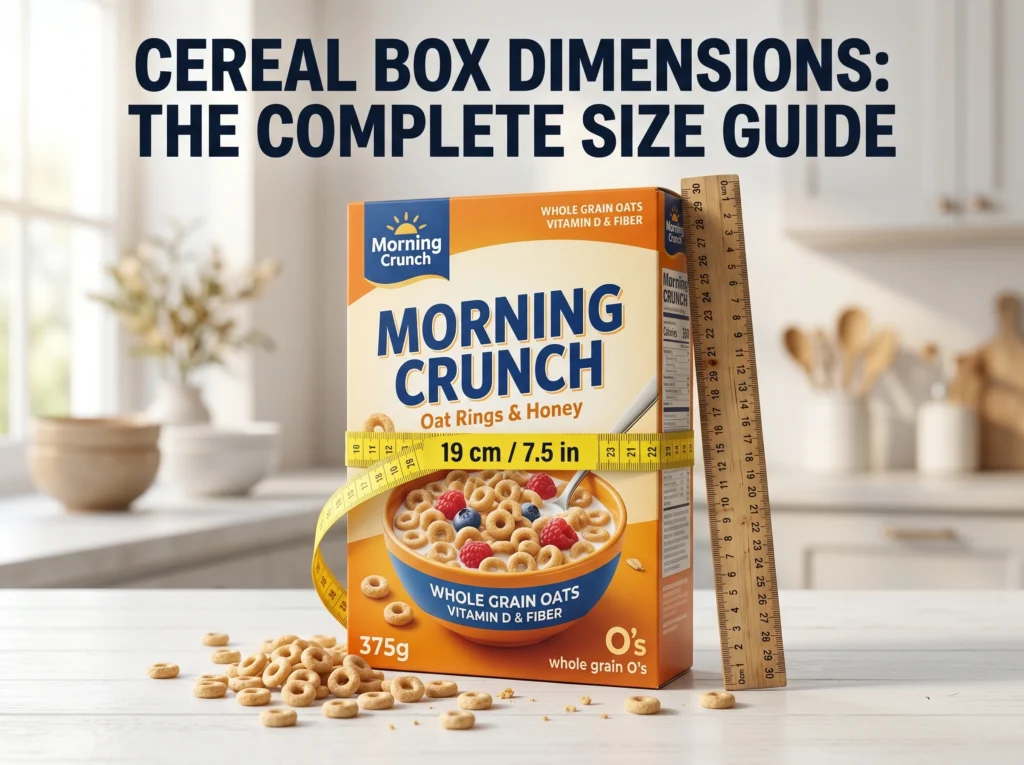
Ever grabbed a cereal box and wondered, “How big is this thing, really?” You’re not alone! Whether you’re a student working on a cereal box school project, a designer building a cereal box template, or a brand planning custom printed cereal boxes, knowing the exact cereal box dimensions saves you time, money, and headaches.
Here’s the quick answer: a standard cereal box measures about 12 inches high, 8 inches wide, and 2 inches deep (30 × 20 × 5 cm). But that’s just the start. Keep reading this guide breaks down every size, from mini cereal box dimensions to family size cereal box dimensions, with charts, math, and pro printing tips.
What Are the Standard Cereal Box Dimensions?
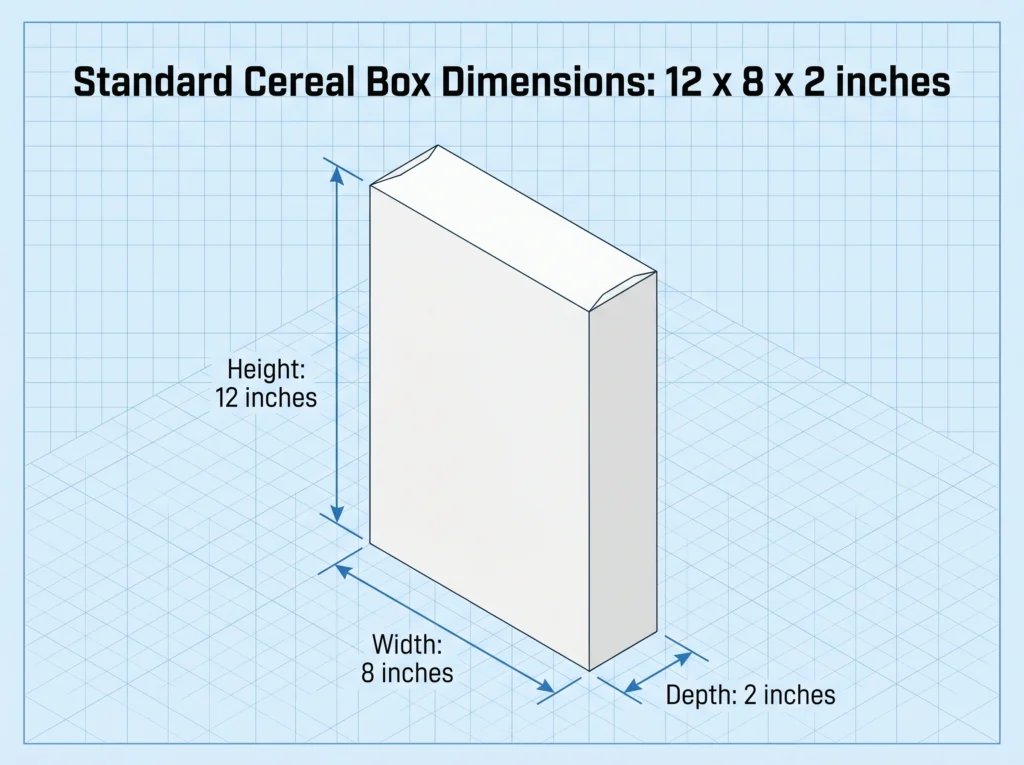
The most common cereal box size in inches is 12″ H × 8″ W × 2″ D. In metric, that’s roughly 30 cm × 20 cm × 5 cm. This size holds about 12 to 14 ounces of cereal and fits perfectly on most grocery store shelves.
Big brands like Kellogg’s, General Mills, Post, and Quaker Oats all use sizes close to this standard. Why? Because retailers like Walmart, Target, and Costco design their shelves around these carton dimensions. A box that’s too tall or too wide simply won’t fit and that means lost shelf space and lost sales.
Cereal Box Size Chart (Inches & Centimeters)
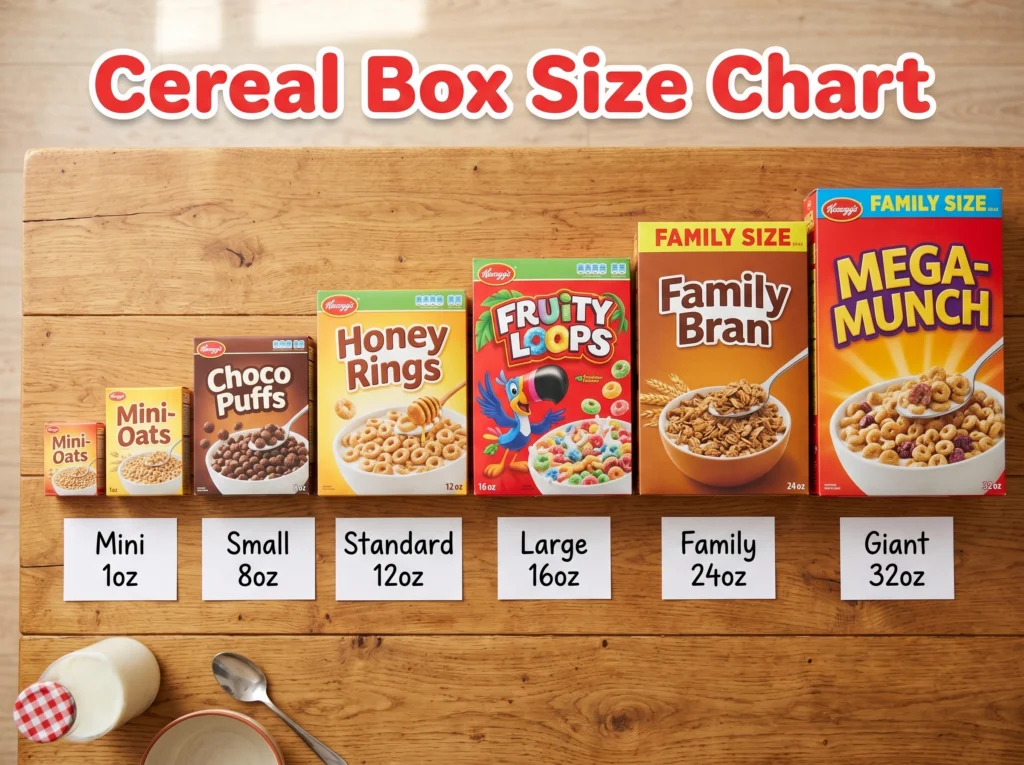
Here’s a handy cereal box measurements table you can bookmark:
| Box Type | Height | Width | Depth | Typical Weight |
|---|---|---|---|---|
| Mini / Single Serve | 4.4 in (11 cm) | 3 in (7.6 cm) | 1.5 in (3.8 cm) | 0.75–1 oz |
| Small | 10 in (25 cm) | 7 in (17.8 cm) | 2 in (5 cm) | 8–10 oz |
| Standard | 12 in (30 cm) | 8 in (20 cm) | 2 in (5 cm) | 12–14 oz |
| Large | 13 in (33 cm) | 9 in (23 cm) | 2.5 in (6.4 cm) | 16–18 oz |
| Family Size | 13.8 in (35 cm) | 9.5 in (24 cm) | 3 in (7.6 cm) | 18–24 oz |
| Giant / Club (Costco) | 14 in (35.6 cm) | 10 in (25.4 cm) | 3.5 in (8.9 cm) | 24+ oz |
Note: Sizes vary slightly by brand. Always measure your exact box before designing or shipping.
Also Read: The World of Cereal Mascots: How Iconic Characters Built Billion-Dollar Breakfast Brands
Popular Cereal Brands and Their Box Sizes
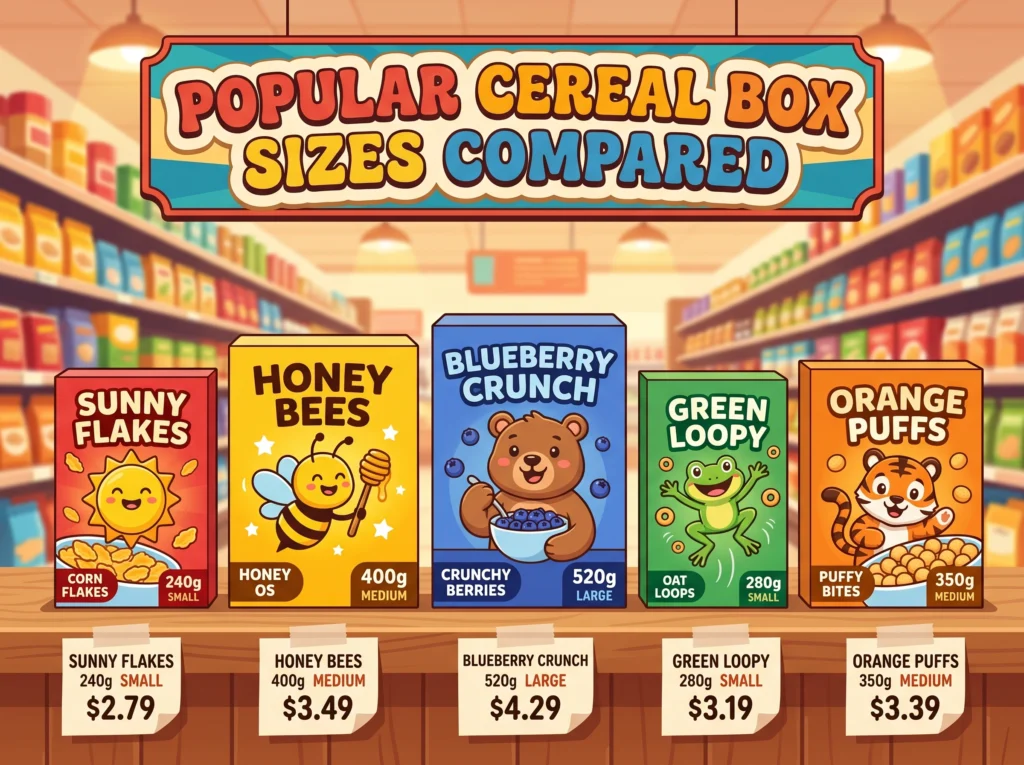
Different cereals come in different cartons. Here’s how famous brands compare:
| Cereal Brand | Common Box Size | Net Weight |
|---|---|---|
| Cheerios (General Mills) | 12″ × 7.75″ × 2″ | 12 oz |
| Frosted Flakes (Kellogg’s) | 12.2″ × 8″ × 2.2″ | 13.5 oz |
| Corn Flakes (Kellogg’s) | 12″ × 8″ × 2″ | 12 oz |
| Lucky Charms (General Mills) | 11.9″ × 7.8″ × 2.1″ | 10.5 oz |
| Rice Krispies (Kellogg’s) | 12.1″ × 8″ × 2″ | 12 oz |
| Froot Loops (Kellogg’s) | 12.2″ × 8.1″ × 2.2″ | 10.1 oz |
Notice something interesting? Boxes stay the same size even when the net weight drops. This trend called shrinkflation means companies keep the box dimensions big but put less cereal inside. Smart shoppers check the weight, not just the box!
Cereal Box Volume and Surface Area (Math Made Easy)
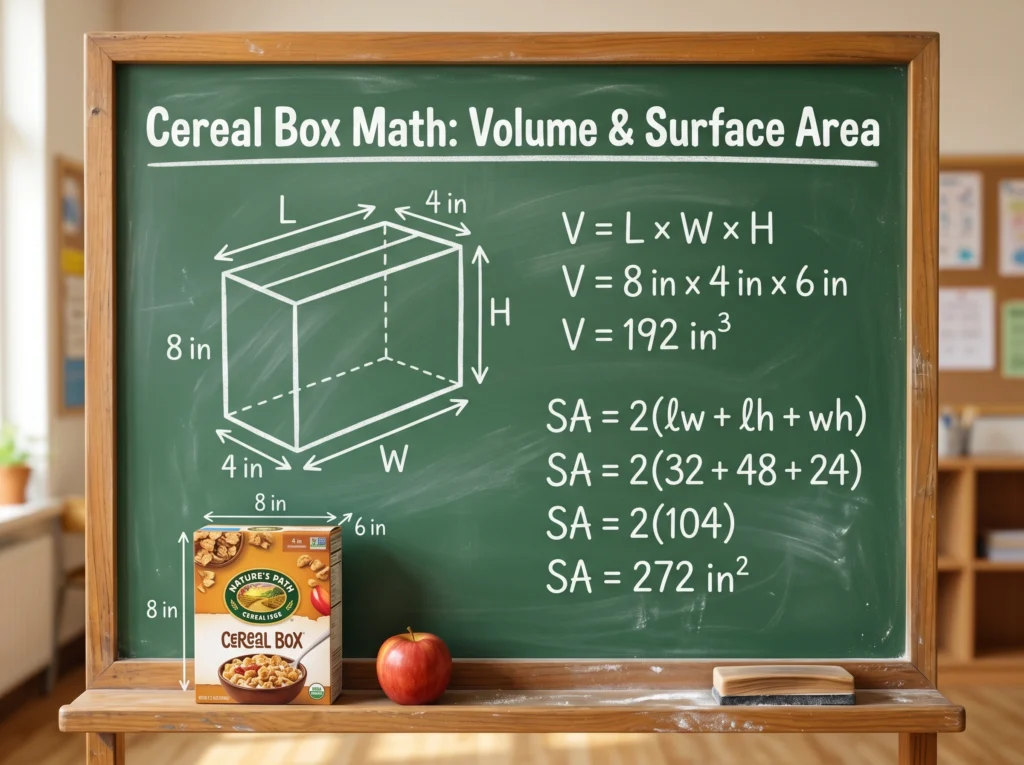
Working on a cereal box surface area math project? Here’s the simple math for a standard box:
Volume = Length × Width × Height
- 12 × 8 × 2 = 192 cubic inches
Surface Area = 2(LW + LH + WH)
- 2[(12×8) + (12×2) + (8×2)] = 2[96 + 24 + 16] = 272 square inches
That 272 square inches is the total cereal box surface area for printing the canvas designers use for colors, mascots, and the Nutrition Facts panel required by FDA labeling rules.
What Are Cereal Boxes Made Of?
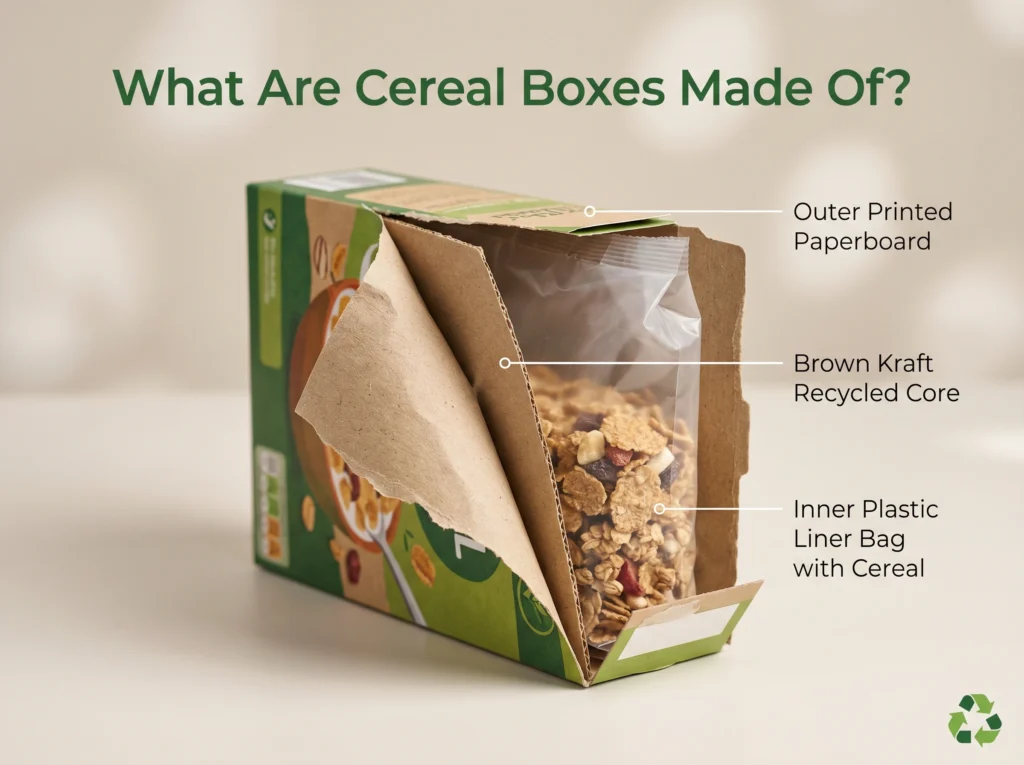
Most cereal boxes use SBS paperboard or recycled kraft board thin, lightweight cardboard box material that folds easily and prints beautifully. The cereal itself sits inside a plastic or wax liner bag, which is why this style is called bag-in-box packaging.
Today, eco-friendly packaging is a huge trend. Brands are switching to recyclable paperboard and sustainable packaging inks because shoppers care about the planet. It’s a win-win: better for Earth and better for branding and shelf appeal.
Designing a Cereal Box: Templates and Dielines
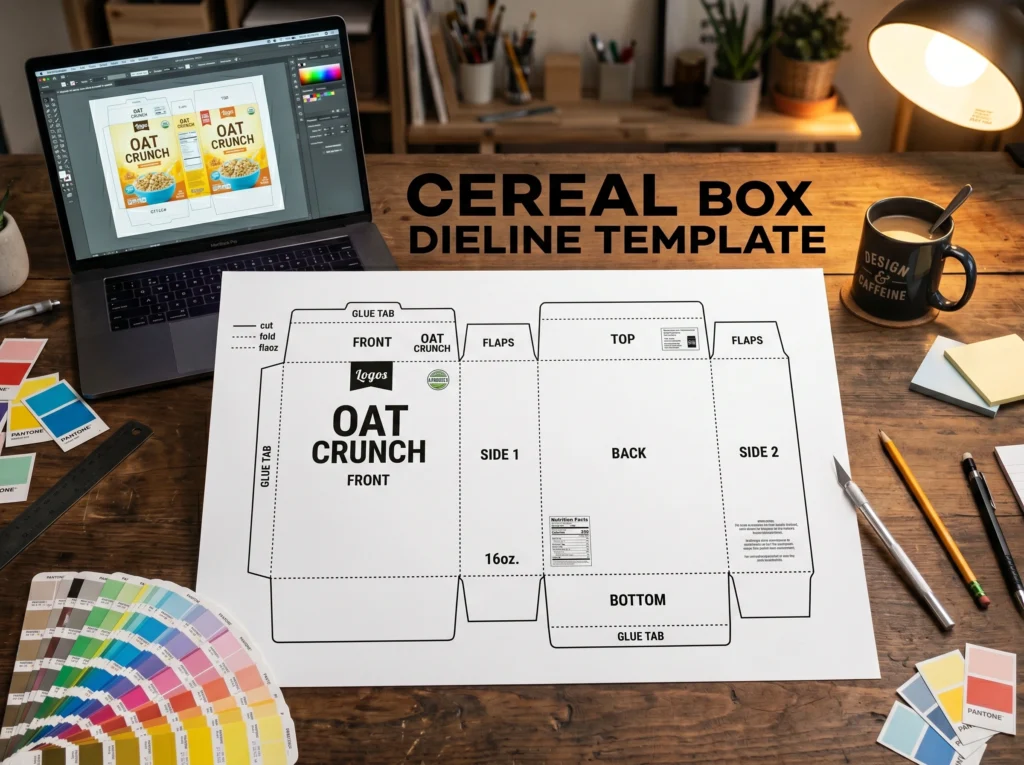
Planning to create your own box? You’ll need a cereal box dieline template a flat blueprint showing every panel, flap, and fold line. Designers build dielines in Adobe Illustrator or Photoshop, while packaging pros use tools like ArtiosCAD and Esko.
A complete dieline includes:
- Front and back panels the big faces (about 12″ × 8″ each)
- Side panels the narrow 12″ × 2″ strips
- Top and bottom flaps the box flap and tuck dimensions that seal everything
- Glue tab a small strip that holds the box together
Want a head start? Search for a cereal box template printable free online, or download a free dieline template that matches ECMA and FEFCO carton standards. You can also test your design with a 3D box mockup generator or packaging mockup (PSD files) before printing a single box.
If you’re a small brand or startup looking for custom cereal box dimensions for printing, working with a trusted supplier like ONO Custom Boxes makes the process simple they handle dielines, materials, and shelf-ready packaging specs so your product looks amazing in stores.
Cereal Box Dimensions for School Projects
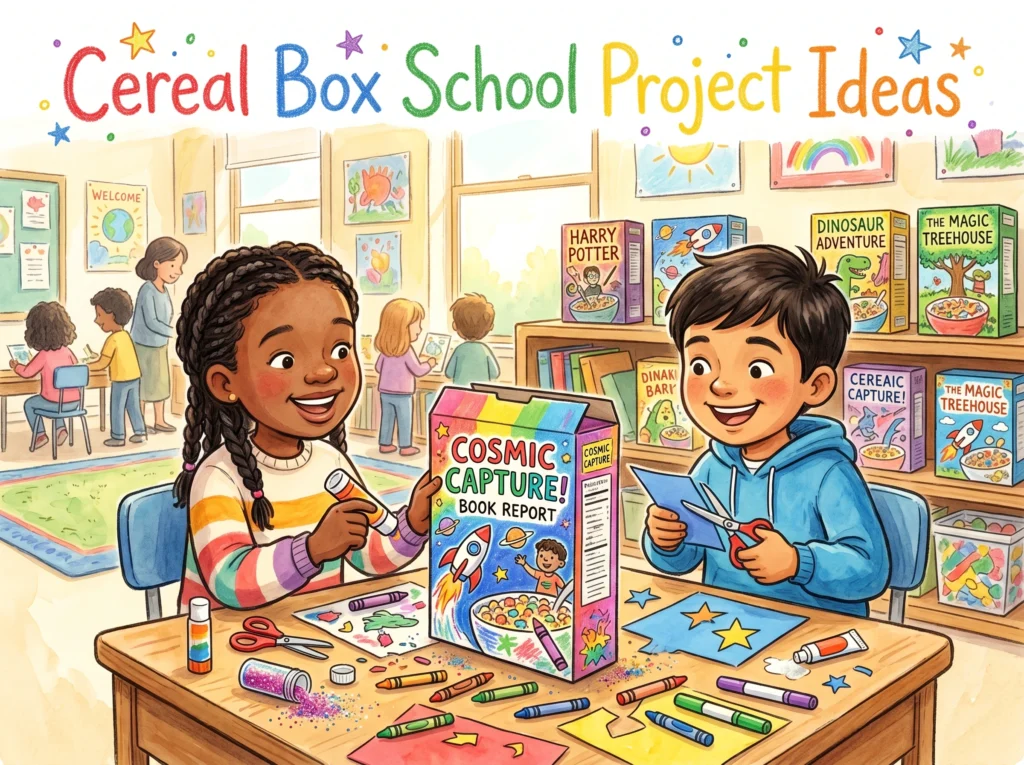
The classic cereal box book report is a school favorite! Students cover a real cereal box with paper and decorate it like a book cover. Here’s why the standard box works so well:
- The front (12″ × 8″) fits a title and main picture
- The back holds a summary or fun facts
- The sides are perfect for character lists or ratings
Teachers love this project because it mixes reading, art, and math students often calculate how many cubic inches is a cereal box as part of the assignment. (Answer: about 192 for a standard box!)
Shipping and Storage Tips
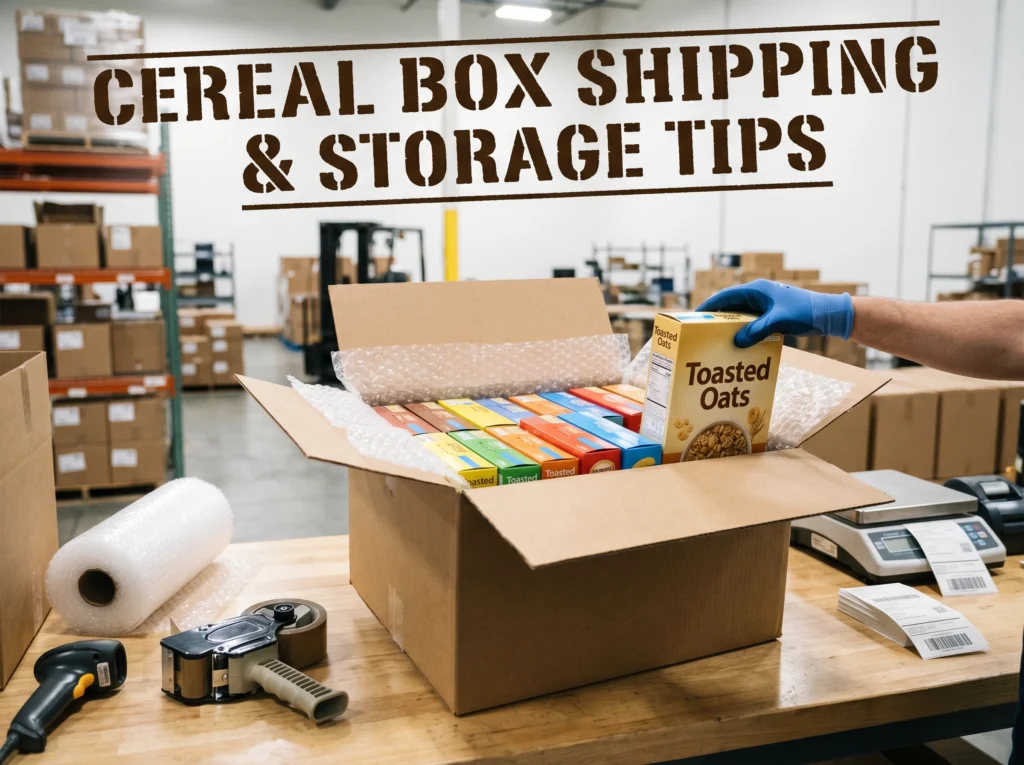
Need cereal box dimensions for shipping? Keep these points in mind:
- A standard box fits easily in a 12″ × 10″ × 4″ shipping carton with padding
- Corrugated cardboard outer boxes protect the thinner paperboard inside
- For bulk packaging or box wholesale orders, cases usually hold 10–14 cereal boxes
- Stack boxes upright laying them flat can crush the flaps
Frequently Asked Questions
How tall is a standard cereal box?
About 12 inches (30 cm) tall.
What are the dimensions of a cereal box in cm?
Roughly 30 cm high × 20 cm wide × 5 cm deep.
What is the volume of a cereal box?
A standard box holds about 192 cubic inches (3,146 cubic cm).
What are family size cereal box dimensions?
About 13.8″ × 9.5″ × 3″ (35 × 24 × 7.6 cm), holding 18–24 oz.
What are mini cereal box dimensions?
About 4.4″ × 3″ × 1.5″ the fun single serve cereal box size found in variety packs.
Are all cereal boxes the same size?
No. Sizes range from tiny single-serve boxes to giant club-store cartons. The “standard” 12 × 8 × 2 inch box is simply the most common.
What is a 12 oz cereal box dimensions?
Usually about 12″ × 7.75″ × 2″ close to the industry standard.
What about 18 oz cereal box size?
Expect around 13″ × 9″ × 2.5″, which falls into the large or family category.
Why are cereal boxes tall and thin instead of cube-shaped?
Tall, thin boxes show more “billboard” space on the shelf, use less material, and stack neatly a perfect mix of marketing and package design specs.
Can I order custom cereal box sizes?
Yes! Custom printers create any size you need, from sample minis to jumbo promotional boxes, complete with custom dielines and finishes.
Key Takeaways
- Standard cereal box dimensions: 12″ × 8″ × 2″ (30 × 20 × 5 cm)
- Family size: 13.8″ × 9.5″ × 3″ | Mini: 4.4″ × 3″ × 1.5″
- Standard box volume = 192 cubic inches; surface area = 272 square inches
- Boxes are made of paperboard with a liner bag inside
- Watch for shrinkflation same box, less cereal
- Use a dieline template for custom designs, and always follow retail shelf specs
Now you know cereal boxes inside and out literally! Whether you’re measuring for a math project, designing your dream cereal brand, or just settling a breakfast-table debate, you’ve got every number you need.