
Picking the right subscription box size feels small, but it shapes everything: your shipping bill, how your products arrive, and how customers feel when they open the lid. Get the box dimensions right and you protect your margins. Get them wrong and you pay for air, ship damaged goods, or scare buyers off with a clumsy unboxing.
This guide walks you through subscription box packaging dimensions in plain language. You will learn standard sizes, how dimensional weight changes your costs, and how to choose the perfect fit. Let’s make sizing easy.
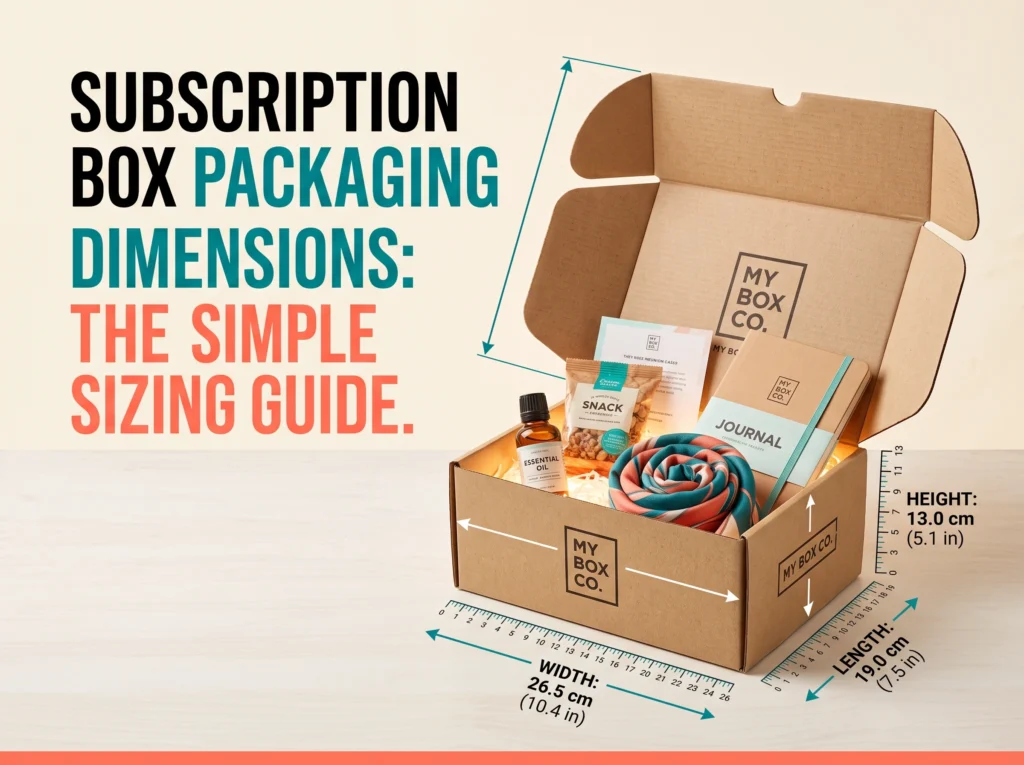
Subscription box packaging dimensions are the length, width, and height (LxWxH) measurements of the box that holds and ships your products. Most subscription boxes fall between 4x4x2 inches (small) and 12x9x4 inches (large). The best size hugs your products snugly to lower dimensional weight, cut void fill, and reduce shipping cost. Always match your box dimensions to carrier limits from USPS, UPS, and FedEx to avoid surcharges.
Why Box Dimensions Matter More Than You Think
Your box dimensions quietly decide three things at once.
First, they set your shipping price. Carriers like USPS, UPS, and FedEx charge by dimensional weight (also called DIM weight), not just actual weight. A big, light box can cost as much as a heavy one because you are paying for the space it takes up in the truck.
Second, dimensions protect your products. A snug fit stops items from sliding, which means fewer broken goods and fewer refund requests.
Third, size drives the unboxing experience. A clean, right-sized box looks thoughtful. An oversized one looks wasteful and can hurt your brand.
Standard Subscription Box Sizes
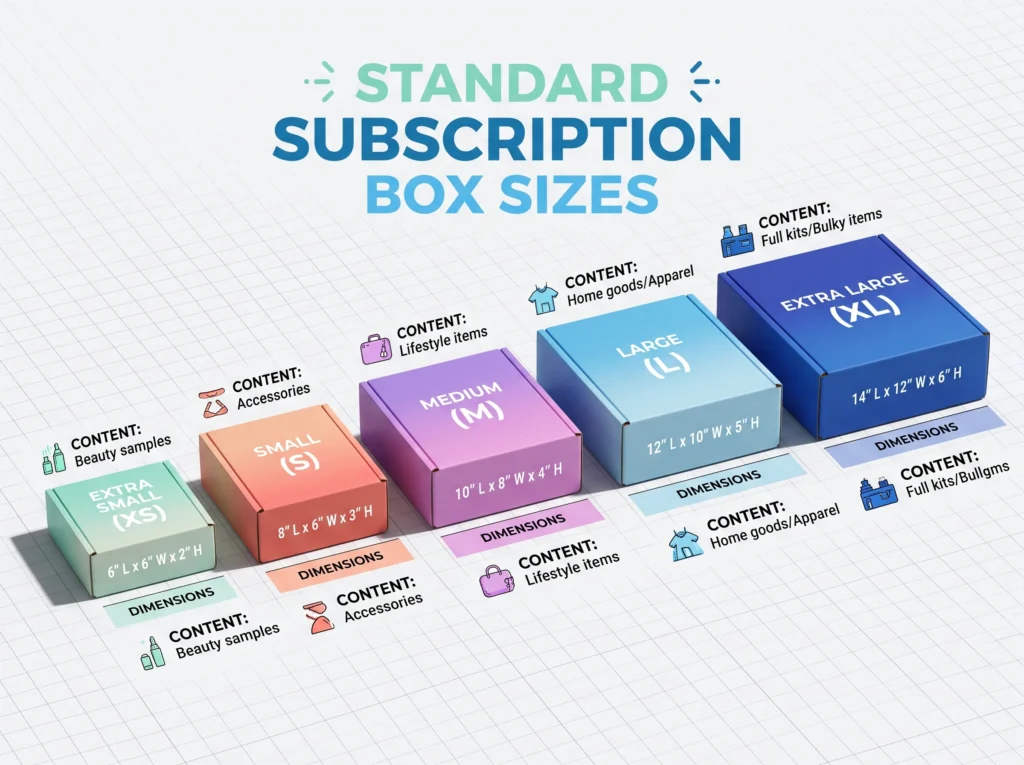
Most brands start with stock box sizes because they are cheaper and ship fast. Here is a simple reference you can use today.
| Box Size | Dimensions (Inches) | Dimensions (cm) | Best For |
|---|---|---|---|
| Extra Small | 4 x 4 x 2 | 10 x 10 x 5 | Jewelry, samples, single items |
| Small | 6 x 6 x 2 | 15 x 15 x 5 | Cosmetics, snacks, small bundles |
| Medium | 8 x 6 x 3 | 20 x 15 x 8 | Beauty boxes, coffee, books |
| Large | 10 x 8 x 4 | 25 x 20 x 10 | Multi-product boxes, apparel |
| Extra Large | 12 x 9 x 4 | 30 x 23 x 10 | Premium and bulky subscriptions |
These are exterior dimensions. Remember that interior dimensions are slightly smaller because of the corrugated cardboard wall thickness, so always measure your products against the inside space.
Mailer Box vs. Shipping Box: Which Dimensions Win?
Two main styles dominate the subscription world.
A mailer box is the classic die-cut, tuck-top style with wings that fold and lock. It looks premium, prints beautifully, and shines for the unboxing experience. Mailer boxes use sturdy corrugated cardboard and are great for monthly subscriptions where presentation matters.
A corrugated shipping box (regular slotted carton) is the workhorse. It is strong, stackable, and ideal when you ship heavier or bulkier goods and care most about product protection.
For most subscription brands, a custom printed mailer box wins on brand feel, while a plain shipping box wins on raw strength and price. Pick based on what your customer sees first and how fragile your items are.
Understanding Dimensional Weight (The Hidden Cost)
Here is the math that trips up new brands. Carriers calculate DIM weight like this:
(Length x Width x Height) ÷ DIM divisor = dimensional weight
The DIM divisor is set by your carrier (commonly 139 for inches in the US). If your dimensional weight is higher than your actual weight, you get charged for the bigger number.
The lesson is simple: a smaller, snug box almost always ships cheaper. Right-sizing your packaging is one of the fastest ways to protect your profit. This is the kind of detail teams like the one at ONO Custom Boxes help brands plan before they order.
Also Read: Half Box Packaging Dimensions: The Complete Size Guide
How to Measure Your Subscription Box Step by Step
Follow this quick process and you will nail your box dimensions every time.
- Lay out all the products that go in one box, arranged the way you want them packed.
- Measure the total length, width, and height of that grouped layout.
- Add a small buffer (about a quarter inch on each side) for box inserts and void fill.
- Match those numbers to the nearest stock box size, or order a custom size if nothing fits well.
- Check the final dimensions against USPS, UPS, and FedEx limits to dodge surcharges.
Choosing the Right Material and Flute
Box dimensions work hand in hand with material strength. Corrugated cardboard comes in different flute types (such as B, C, and E flute). E flute is thin and crisp, perfect for printed mailer boxes. B and C flutes are thicker and stronger for heavier loads. Look at the ECT or edge crush rating to judge stacking strength. For eco-minded brands, FSC-certified cardboard and kraft material are popular, sustainable choices.
Common Subscription Box Sizing Mistakes
Avoid these and you are ahead of most new sellers.
- Buying oversized boxes. Extra space raises dimensional weight and invites damage.
- Ignoring carrier limits. Going one inch over a threshold can trigger a surcharge.
- Forgetting interior dimensions. Your products fit the inside, not the outside.
- Skipping inserts. Loose items rattle and break without a snug box insert.
- Ordering custom too early. Custom sizes have a minimum order quantity (MOQ), so test with stock sizes first.
User Pain Points We Just Solved
Many founders struggle with the same worries: not knowing the standard subscription box size, fearing surprise shipping costs from DIM weight, and wondering whether to choose a mailer box or a shipping box. Others get stuck on custom box MOQs or how much room to leave for void fill. This guide tackles each of those head-on so you can order with confidence.
Trending Topics in Subscription Packaging
The industry is moving fast. Sustainable packaging is now a top buyer expectation, with plastic-free mailers, eco-friendly boxes, and carbon-neutral shipping gaining ground. Smart packaging and on-demand fulfillment through 3PL partners help brands scale without waste. And unboxing moments shared on TikTok keep pushing the value of a clean, right-sized design.
Frequently Asked Questions
What is the standard subscription box size?
Most subscription boxes range from 6x6x2 inches for small bundles up to 12x9x4 inches for premium boxes. Medium sizes around 8x6x3 inches are the most common starting point.
How do box dimensions affect shipping cost?
Carriers charge by dimensional weight, so larger boxes cost more even when they are light. Smaller, snug box dimensions lower your bill.
What is dimensional weight? It is a pricing method where carriers multiply length x width x height and divide by a DIM divisor. If that number beats your actual weight, you pay the higher amount.
Should I use a mailer box or a shipping box?
Choose a mailer box for a premium unboxing experience and lighter items. Choose a corrugated shipping box for heavier or fragile products that need extra product protection.
What is the MOQ for custom subscription box sizes?
Minimum order quantities vary by supplier, but custom sizes usually start in the hundreds. Test with stock box sizes first, then move to custom as you grow.
What box size avoids dimensional weight charges?
The best size hugs your products with only a small buffer for void fill. Right-sizing keeps dimensional weight below your actual weight and avoids surcharges.
Final Thoughts
The right subscription box packaging dimensions save money, protect products, and delight customers. Start with a stock box size that fits snugly, watch your dimensional weight, and upgrade to custom sizing once your volume grows. Measure carefully, choose the right flute, and your boxes will work as hard as you do.