
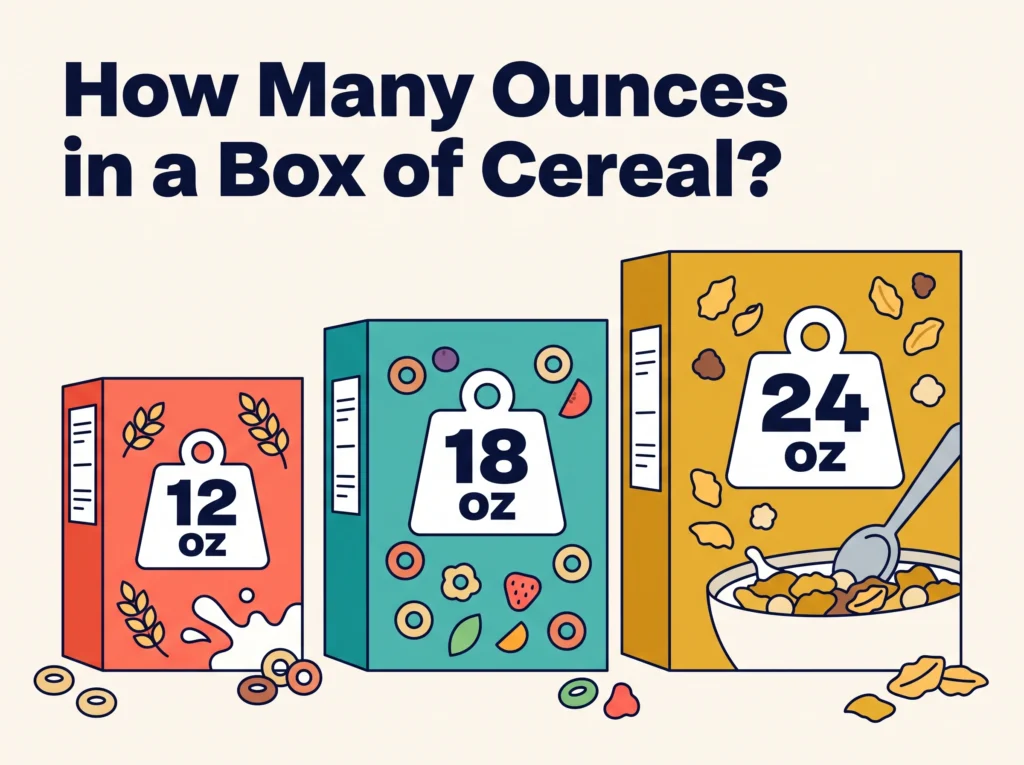
A standard box of cereal holds 10 to 14 ounces. A family size box holds 18 to 24 ounces. Giant or value size boxes reach 24 to 36 ounces, while single serve cups and variety pack mini boxes hold 0.5 to 2.5 ounces. Club store bags and twin packs can climb to 35 to 45 ounces. Every weight on a cereal box is listed as net weight in dry ounces, never fluid ounces.
That range is wide for a good reason, and once you understand it, reading a cereal shelf becomes simple. This guide gives you the full chart by size, the weights of popular brands, an oz to cups conversion table that actually accounts for bulk density, and a look at how box dimensions connect to fill volume.
Cereal Box Sizes in Ounces: The Complete Chart
Breakfast cereal is sold by weight, not by volume. The number printed near the bottom of the front panel is the net weight declaration, and it tells you exactly how much cereal is inside once the paperboard carton and film liner are removed.
Here is how the common sizes break down.
| Box Size Label | Typical Net Weight | Approximate Cups | Best For |
|---|---|---|---|
| Single serve cup or bowl | 1 – 2.5 oz | 1 – 2 cups | Travel, desk breakfast |
| Mini box (variety pack) | 0.5 – 1.5 oz | 0.5 – 1.5 cups | Kids, hotels, camping |
| Snack size | 2 – 4 oz | 2 – 4 cups | Lunchboxes |
| Standard size / regular size | 10 – 14 oz | 9 – 14 cups | One or two people |
| Family size | 18 – 24 oz | 16 – 24 cups | Households of 3 to 5 |
| Giant size / jumbo / mega size | 24 – 36 oz | 22 – 36 cups | Big families, meal prep |
| Club pack / bulk pack bag | 35 – 45 oz | 32 – 45 cups | Costco, Sam’s Club shoppers |
Helpful tip: The cup numbers above are estimates. Light puffed rice fills far more cups per ounce than heavy granola, and the next section explains exactly why.
How Many Ounces Is a Family Size Box of Cereal?
Family size cereal usually lands between 18 and 24 ounces, with 18.8 oz and 19.4 oz showing up often on shelves.
Here is the part most shoppers miss: family size has no legal definition. The FDA regulates the Nutrition Facts panel and the net weight declaration, but it does not set rules for size names on the front of the box. One brand’s family size can weigh less than another brand’s standard size.
That is why the unit price on the shelf tag matters more than the word on the package. Always compare price per ounce, not price per box.
Also Read: The World of Cereal Mascots: How Iconic Characters Built Billion-Dollar Breakfast Brands
Popular Cereal Brands and Their Box Weights
Brand weights shift over time, so treat this table as a working reference and check the panel on your box. These figures reflect commonly stocked U.S. retail sizes.
| Cereal | Standard Box | Family Size |
|---|---|---|
| Cheerios | ~12 oz | ~18 oz |
| Honey Nut Cheerios | ~10.8 oz | ~18.8 oz |
| Frosted Flakes | ~13.5 oz | ~24 oz |
| Froot Loops | ~10.1 oz | ~18.7 oz |
| Lucky Charms | ~10.5 oz | ~18.6 oz |
| Cinnamon Toast Crunch | ~12 oz | ~18.8 oz |
| Rice Krispies | ~12 oz | ~18 oz |
| Raisin Bran | ~16.6 oz | ~23.5 oz |
| Frosted Mini-Wheats | ~18 oz | ~24 oz |
| Corn Flakes | ~12 oz | ~18 oz |
| Special K | ~12 oz | ~18.6 oz |
| Honey Bunches of Oats | ~12 oz | ~18 oz |
| Chex | ~12 oz | ~18 oz |
| Magic Spoon (high protein cereal) | ~7 oz | n/a |
Notice the smaller boxes at the bottom. High protein cereal brands run lighter net weights because their formulas are denser and their price per ounce is higher. A 7 oz box is normal in that category, not a shortage.
Ounces to Cups: Why Every Cereal Converts Differently
This is where recipes cause the most trouble. Your Rice Krispie treats recipe calls for cups. Your box lists dry ounces. The conversion changes with every cereal type because of bulk density.
| Cereal Type | Weight Per Cup | Cups in a 12 oz Box |
|---|---|---|
| Puffed rice / puffed wheat | ~0.9 oz | ~13 cups |
| Flakes (corn, bran) | ~1.1 oz | ~11 cups |
| O-shaped cereal | ~1.0 oz | ~12 cups |
| Squares / coated cereal | ~1.3 oz | ~9 cups |
| Shredded wheat biscuits | ~1.6 oz | ~7.5 cups |
| Clusters / muesli | ~2.0 oz | ~6 cups |
| Granola | ~4.0 oz | ~3 cups |
A 12 oz box of granola and a 12 oz box of puffed rice weigh the same and cost similar shelf space, yet one gives you 3 cups and the other gives you 13. Same net weight, completely different bowl count.
Quick conversion note: Cereal ounces are weight ounces (avoirdupois ounce), equal to about 28 grams. They are not fluid ounces. A measuring cup will not give you an accurate weight reading for cereal.
How Many Servings Are in a Box of Cereal?
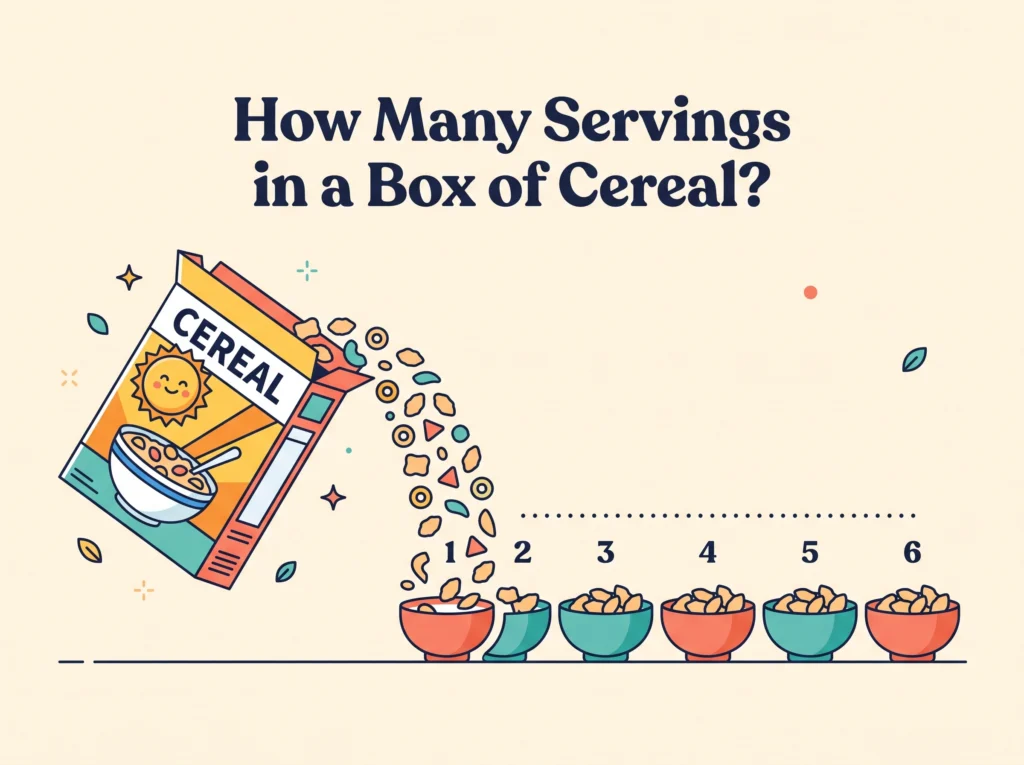
The FDA sets a RACC (Reference Amount Customarily Consumed) for cereal, and most serving size listings fall between 1 oz and 1.5 oz, or roughly 29 to 42 grams.
| Box Weight | Labeled Servings (at ~1.3 oz) | Real-World Bowls |
|---|---|---|
| 10 oz | ~8 servings | ~4 bowls |
| 12 oz | ~9 servings | ~5 bowls |
| 18 oz | ~14 servings | ~7 bowls |
| 24 oz | ~18 servings | ~9 bowls |
| 36 oz | ~28 servings | ~14 bowls |
The right column is the honest one. Studies of portion size consistently show people pour close to double the labeled serving size. If you plan groceries using the box’s servings per container number, you will run out early. Plan with the real-world column instead, and you will shop with much better accuracy.
Why Cereal Boxes Have Odd Weights Like 18.8 oz
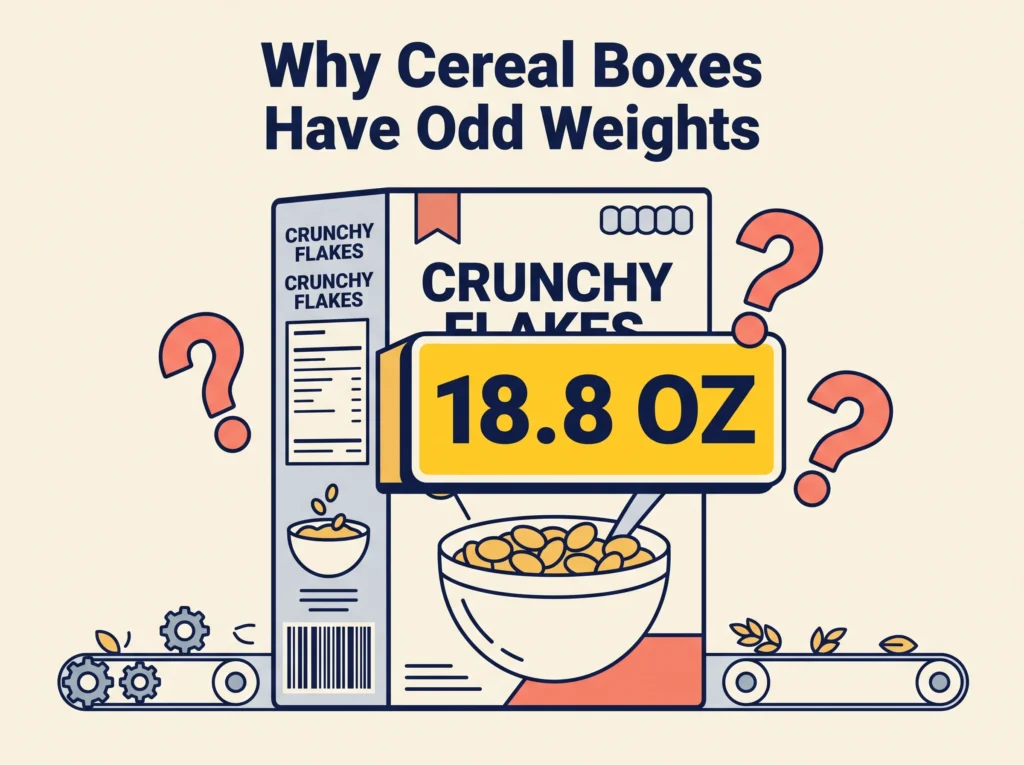
Shoppers ask this constantly, and the answer is refreshingly practical.
Cereal is filled by volume on high speed lines. The carton has a fixed fill volume, and the machine fills to a set level. Because grain density varies slightly from batch to batch, brands set the printed net weight at a number they can guarantee every single time. Round numbers create risk, since a slightly light batch would put the box below its stated weight. Odd numbers like 10.8, 18.8, and 19.4 build in a safety margin.
Brands also use these odd figures to hold a price point. Rather than raise the shelf price, they trim the fill weight by a fraction of an ounce while keeping the same folding carton. That leads directly to the next section.
Also Read: Funny Cereal Names: 200 Puns, Parodies & Real Ones
Shrinkflation: Same Box, Fewer Ounces
Shrinkflation is the practice of reducing product weight while keeping the package size and price steady. Cereal is one of the clearest examples on any grocery shelf.
| Era | Typical “Standard” Box | Typical “Family Size” |
|---|---|---|
| Early 2000s | 15 – 18 oz | 24 – 28 oz |
| Early 2010s | 13 – 15 oz | 20 – 24 oz |
| Mid 2020s | 10 – 14 oz | 18 – 24 oz |
Why the box dimensions barely changed: retail shelf space is allocated by facing width, and brands do not want to lose visual presence. So the carton depth shrinks, the headspace grows, and the height stays the same. You notice the change when you pour, not when you look.
How to spot it in one second: Ignore the front panel. Read the net weight and the unit price together. That pairing tells you the truth every time.
Is Family Size Cereal Actually Cheaper Per Ounce?
Usually yes, but not always, and promotions flip the math often.
| Box Size | Sample Price | Price Per Ounce |
|---|---|---|
| 12 oz standard size | $4.29 | $0.36 |
| 18.8 oz family size | $5.99 | $0.32 |
| 24 oz giant size | $7.49 | $0.31 |
| 36 oz club pack | $9.99 | $0.28 |
| 12 oz store brand / private label | $2.79 | $0.23 |
Two takeaways worth keeping. First, store brand and generic cereal from Aldi, Great Value, Kirkland Signature, or Millville often beat even the largest name brand box on cost per serving. Second, buying bigger only saves money if you finish the box. Cereal goes stale within weeks of opening, so a bulk pack that sits half eaten is not a bargain.
How Box Size Connects to Fill Weight
Here is the connection almost no article explains, and it is useful whether you are curious or building a cereal brand.
A cereal box is a reverse tuck or tuck-end box made from SBS board or similar paperboard carton stock, holding an inner cereal liner. Engineers size that carton around cubic capacity, then match it to the cereal’s bulk density to hit a target net weight. Slack fill rules require that empty space serve a real function, such as settling during shipping, so the headspace is calculated, not arbitrary.
These are typical carton footprints by fill weight for flake and O-shaped cereals.
| Net Weight | Approximate Box Dimensions (W × D × H) |
|---|---|
| 10 – 12 oz | 7.75″ × 2.5″ × 11″ |
| 12 – 14 oz | 8″ × 2.75″ × 11.5″ |
| 18 – 20 oz | 9.5″ × 3″ × 12.25″ |
| 24 oz | 10.5″ × 3.25″ × 13″ |
| 30 – 36 oz | 11.5″ × 3.5″ × 14″ |
Denser products need smaller cartons for the same weight. A granola brand hitting 12 oz needs roughly a third of the volume a puffed wheat brand needs. This is why every new cereal launch starts with a density test before a dieline is finalized, and why teams at ONO Custom Boxes and other packaging producers ask for fill weight and product density before quoting a carton size.
Cereal Box Sizes for Food Pantry Donations
Donation guidelines are written in ounces, which trips up a lot of well-meaning donors.
- Most food pantry programs prefer standard size boxes between 12 and 18 oz
- Family size boxes above 24 oz are welcome but harder to distribute evenly
- Variety pack mini boxes work well for school breakfast program and weekend backpack drives
- WIC approved cereals must meet whole grain and sugar limits, so check the list before buying
- Sealed boxes only, and check the date on the top flap
A simple rule: two 12 oz boxes are more useful to a pantry than one 24 oz box, because they serve two households.
Common Mistakes Shoppers Make
- Reading fluid ounces instead of dry ounces. Cereal is always sold by weight.
- Trusting the size name. Family size and value size are marketing terms, not measurements.
- Using one conversion for all cereals. Granola and flakes are not interchangeable by cup.
- Comparing box prices instead of unit prices. Shelf tags sometimes show per ounce, sometimes per pound. Convert before you compare.
- Planning meals with labeled servings. Real bowls run about double.
- Buying the biggest box by default. Stale cereal cancels the savings.
Frequently Asked Questions
How many ounces are in a standard box of cereal?
A standard size box holds 10 to 14 ounces, with 12 oz being the most common. This yields roughly 9 to 12 cups depending on the cereal type and its bulk density.
How many ounces are in a family size box of cereal?
Family size boxes range from 18 to 24 ounces. Common weights include 18.8 oz and 19.4 oz. The term is a marketing label, so always confirm the net weight on the front panel.
How many cups are in an 18 oz box of cereal?
Roughly 14 to 18 cups for flakes and O-shaped cereal, about 20 cups for puffed rice, and only about 4.5 cups for granola. Density drives the difference.
Is a cereal box measured in fluid ounces or dry ounces?
Always dry ounces, also called weight ounces. One ounce equals about 28 grams. Fluid ounces measure volume and do not apply to packaged cereal.
Why do cereal boxes have odd weights like 18.8 oz?
Cereal is filled by volume, and grain density varies between batches. Odd weights give brands a guaranteed minimum they can print safely, and they also let brands adjust fill weight without changing the carton or the price.
Has cereal box size gotten smaller over the years?
Yes. Shrinkflation has reduced typical box weights by several ounces since the early 2000s while box dimensions stayed similar. Compare net weight across years to see it clearly.
How many ounces is a mini cereal box in a variety pack?
Between 0.5 and 1.5 ounces, which is about one small bowl. These are sized for single serve use in hotels, camps, and lunchboxes.
How much does an empty cereal box weigh?
An empty folding carton with its liner weighs roughly 1.5 to 3 ounces depending on size and board thickness. This tare weight is never included in the printed net weight.
How many ounces of cereal do I need for Rice Krispie treats?
A standard recipe calls for 6 cups of puffed rice, which is about 5.5 ounces. A 12 oz box covers two full batches with a little left over.
Is family size cereal cheaper per ounce?
Usually yes, by 10 to 20 percent. But store brand cereal in a smaller box often beats name brand family size on price per ounce, so compare unit pricing rather than box size.
What size cereal box do food pantries want?
Most prefer 12 to 18 oz boxes because they distribute cleanly across households. Variety pack minis are ideal for school and weekend meal programs.
How do cereal companies decide box size?
They test the product’s bulk density, calculate the cubic capacity needed for the target net weight, add functional headspace for settling, then build the dieline around those numbers.