
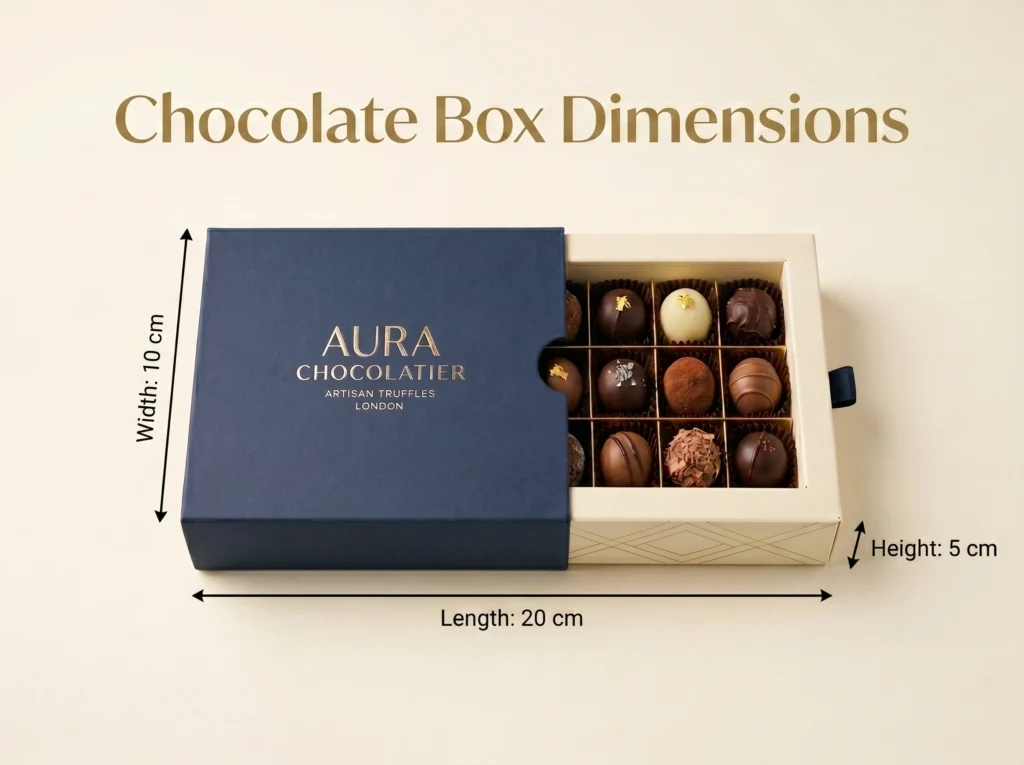
Picking the right chocolate box size feels small, but it changes everything. Get it right, and your pralines, truffles, and bonbons sit snug and look stunning. Get it wrong, and your treats slide around or get crushed. This friendly guide walks you through every chocolate box dimension you need, from a tiny 4-piece box to a big 24-piece gift set.
Let’s make your chocolate packaging look amazing and ship safely.
Why Chocolate Box Dimensions Matter
Size is not just about looks. The right box dimensions protect your confectionery and save you money. A box that is too big wastes material and lets chocolates rattle. A box that is too small squishes the ganache and ruins the shape.
When your count matches the box, every piece has its own spot. That clean look builds trust and makes people want to buy. Good fit also helps with shipping costs, since smaller, smarter packaging weighs less.
Standard Chocolate Box Dimensions (Size Chart)
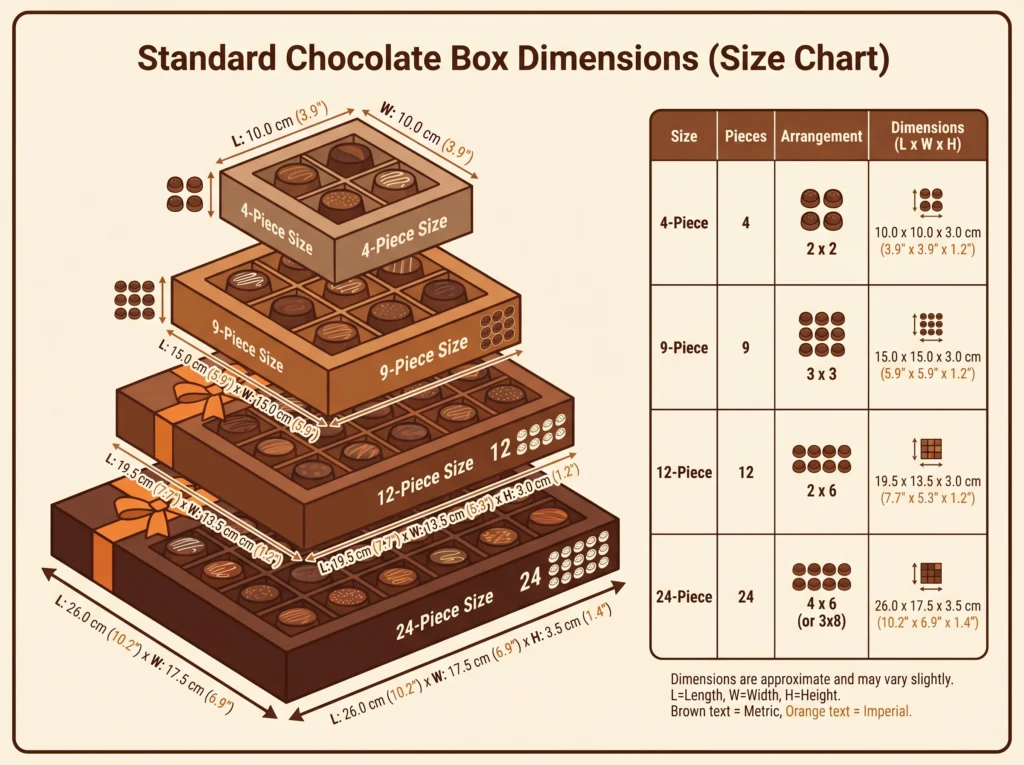
Here is a quick chocolate box size chart with the most common sizes. Measurements show length × width × height in both inches and centimeters.
| Piece Count | Inches (L × W × H) | Centimeters (L × W × H) | Best For |
|---|---|---|---|
| 4-piece | 3″ × 3″ × 1.25″ | 7.6 × 7.6 × 3.2 cm | Favors, samples |
| 6-piece | 6″ × 3.5″ × 1.25″ | 15.2 × 8.9 × 3.2 cm | Small gifts |
| 9-piece | 5″ × 5″ × 1.5″ | 12.7 × 12.7 × 3.8 cm | Birthdays |
| 12-piece | 8″ × 6″ × 1.5″ | 20.3 × 15.2 × 3.8 cm | Holidays |
| 16-piece | 9″ × 9″ × 1.5″ | 22.9 × 22.9 × 3.8 cm | Big gifts |
| 24-piece | 12″ × 8″ × 1.5″ | 30.5 × 20.3 × 3.8 cm | Sharing boxes |
Tip: These are common sizes, not strict rules. Your exact chocolate box dimensions depend on the size of each bonbon and how much space you want around them.
Internal vs External Dimensions
This part trips up a lot of people, so let’s keep it simple. External dimensions are the outside of the box, which matter for shipping and shelf space. Internal dimensions are the inside space where your chocolates actually sit.
Always plan around the internal dimensions. A thick rigid box has walls that take up room, so the inside is smaller than the outside. If you only check the outside, your treats may not fit. Measure the inside, then add a little wiggle room.
How to Measure for the Perfect Fit
Follow these easy steps to find your ideal size:
- Measure one chocolate at its widest point (length, width, and height).
- Multiply by how many pieces fit per row and column.
- Add space for an insert tray, divider, or cavity that holds each piece.
- Add 2 to 3 mm of breathing room so nothing gets stuck.
- Pick the box dimensions that match that total, rounding up.
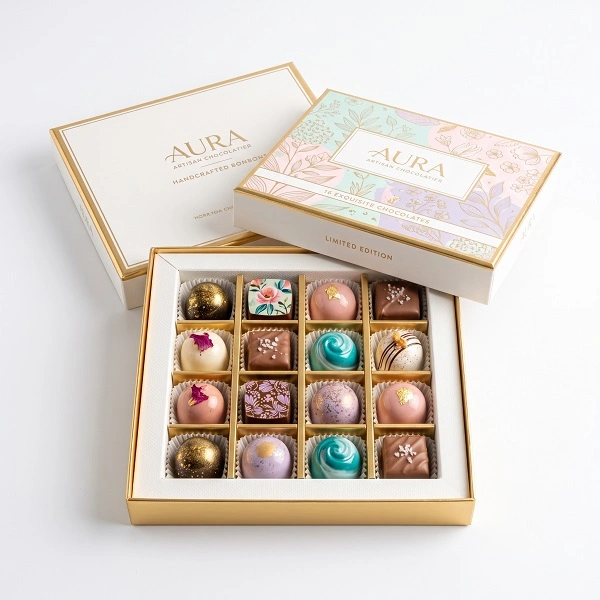
A snug cavity keeps each truffle in place during travel. The insert also makes the box feel fancy when someone lifts the lid.
Also Read: Tea Packaging Box Dimensions: The Complete Sizing Guide for Brands
Box Styles That Change the Dimensions
The style of box affects your final size. Here are popular options:
- Rigid box: Sturdy and premium, with thick walls. Great for luxury chocolate packaging, but the walls add to the footprint.
- Folding carton: A light paperboard box that ships flat. Budget-friendly and easy to print.
- Window box: A clear panel shows the chocolates inside, perfect for retail shelves.
- Magnetic closure box: A lid snaps shut with a satisfying click for a high-end feel.
- Sleeve box: A base slides into an outer sleeve, giving you two surfaces to design.
Each style uses cardstock, kraft, or corrugated material, and each one slightly changes your inside space.
Common Chocolate Box Sizes by Occasion
Different events call for different sizes:
- Valentine’s Day: A heart-shaped or 9-piece box feels romantic and giftable.
- Holidays: A 12-piece or 16-piece box works for family sharing.
- Wedding favors: Tiny 4-piece boxes fit each guest’s place setting.
- Corporate gifts: A 24-piece sharing box impresses a whole office.
Matching the size to the moment makes your chocolate box feel thoughtful and just right.
Also Read: 5 Creative Design Chocolate Box Packaging Ideas That Make Buyers Stop and Stare
Material and Finish Options
The look and feel come from finishing touches. Popular choices include embossing, foil stamping, and die-cut windows. These details work on rigid box and folding carton styles alike.
Choosing the right grammage (paper thickness) keeps the box strong without making it heavy. Heavier paperboard feels premium, while lighter cardstock keeps shipping cheap.
Eco-Friendly Chocolate Packaging Trends
Shoppers love brands that care about the planet. Sustainable gift box options and biodegradable packaging are growing fast. Many makers now use recycled kraft and plant-based inks.
Eco-friendly chocolate packaging does not have to cost more or look plain. You can still add custom printed chocolate boxes with bright colors and a clean design. Going green is a smart way to win loyal fans.
FAQ
How big is a standard chocolate box?
A common 12-piece box measures about 8″ × 6″ × 1.5″ (20.3 × 15.2 × 3.8 cm).
What size box fits 9 chocolates?
A 9-piece box is usually around 5″ × 5″ × 1.5″ (12.7 × 12.7 × 3.8 cm) in a 3-by-3 grid.
Should I measure internal or external dimensions?
Plan around internal dimensions so your chocolates fit, then check external dimensions for shipping.
What is the best box for shipping chocolates?
A rigid box with a snug insert tray protects each piece during travel.
Can I order a custom size?
Yes. Custom chocolate box dimensions let you match the exact size of your pralines or truffles.
Final Thoughts
The right chocolate box dimensions turn a simple treat into a gift people remember. Start by measuring your chocolates, add a little room, and pick a style that fits your brand. Whether you choose a window box, a magnetic closure box, or a classic folding carton, the perfect fit is within reach.
Ready to package your chocolates with confidence? Brands like ONO Custom Boxes can help you bring your ideal size and design to life. Your treats deserve packaging that looks as good as they taste.