
Picking the right box size for your tea can feel tricky, but it does not have to be. The size of your tea packaging box shapes how fresh your tea stays, how good your shelf looks, and how much you spend on shipping. Get it right, and your brand shines. Get it wrong, and you waste money on air, broken boxes, or stale leaves.
This friendly guide walks you through everything about tea box dimensions, from tiny sample boxes to big bulk cartons. By the end, you will know exactly what size you need and why it matters.
Why Tea Box Dimensions Matter So Much
Your box is the first thing a shopper touches. A clean, well-sized box tells people your tea is worth buying. But sizing is about more than looks.
The right tea packaging size protects your product. Tea is delicate. Air, light, and moisture can ruin the taste fast. A box that fits snugly, paired with a good moisture barrier or foil lining, keeps every leaf fresh. A box that is too big lets tea bags slide around and bruise.
Smart sizing also saves cash. Shipping companies charge by size and weight. An oversized box means you pay to ship empty space. When you match your box dimensions (LxWxH) to your tea, you cut shipping costs and use less material. That is a win for your wallet and the planet.
Understanding Length, Width, and Height
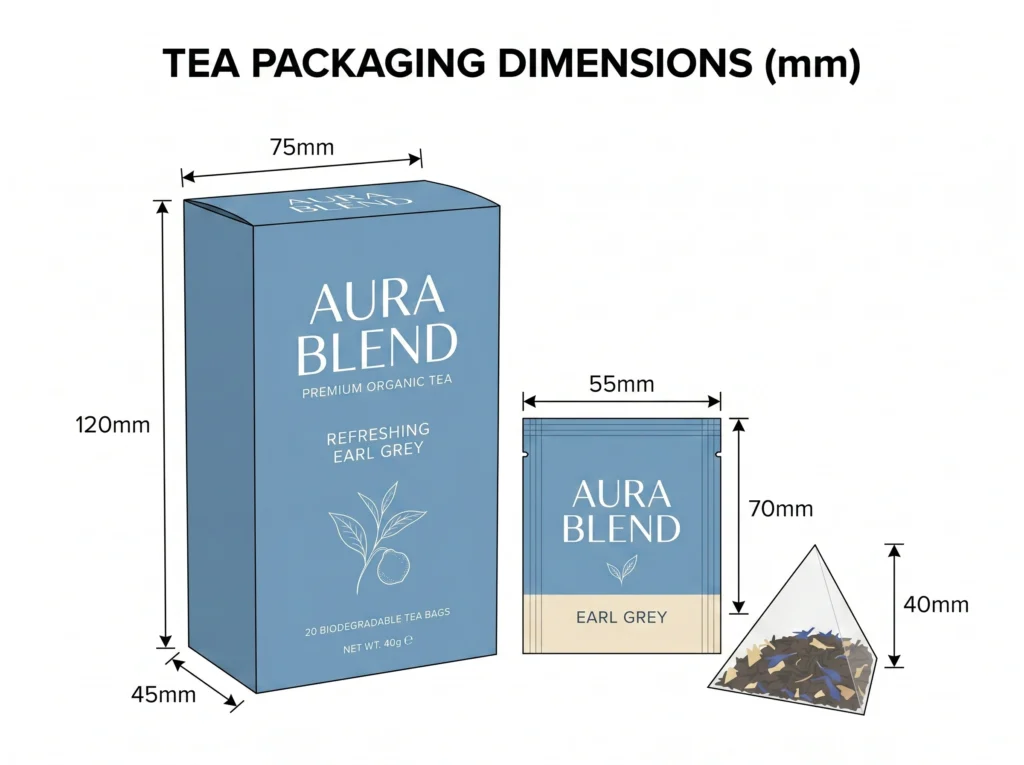
Every box is measured by three numbers: length x width x height (LxWxH). These are usually listed in millimeters (mm), centimeters (cm), or inches.
Here is a key tip: always know the difference between internal vs external dimensions. Internal size is the space inside the box where your tea sits. External size is the outside of the box. For thick rigid chipboard or corrugated cardboard, the gap between the two can be large. Always order based on what fits inside.
When you ask a supplier for a quote, give them all three numbers plus your fill weight. This helps them pick the right paperboard thickness, measured in GSM or caliper (microns).
Standard Tea Box Sizes
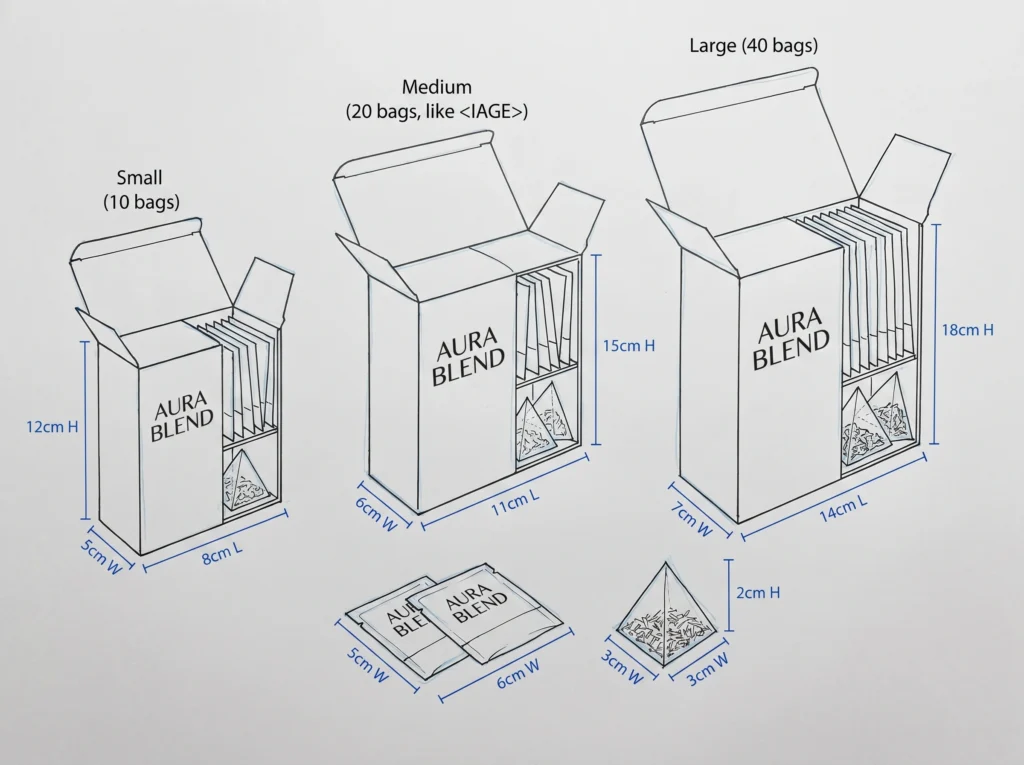
Below is a handy chart of common tea box sizes. Use these as a starting point, then adjust for your exact tea and bag count.
| Box Type | Typical Use | Internal Dimensions (mm) | Internal Dimensions (inches) | Holds |
|---|---|---|---|---|
| Sample / Single Box | Trial packs, gifts | 60 × 60 × 60 | 2.4 × 2.4 × 2.4 | 1–5 tea bags |
| Standard Retail Carton | 20-bag tuck-end box | 105 × 70 × 80 | 4.1 × 2.8 × 3.1 | 20 tea bags |
| Loose Leaf Caddy | Loose tea, tins | 80 × 80 × 110 | 3.1 × 3.1 × 4.3 | 50–100 g loose leaf |
| Bulk / Family Box | Big retail packs | 150 × 90 × 130 | 5.9 × 3.5 × 5.1 | 100 tea bags |
| Luxury Rigid Box | Gift sets, premium | 200 × 120 × 60 | 7.9 × 4.7 × 2.4 | Assorted gift pack |
Note: These are guides, not hard rules. Your die-cut template and box net/dieline can be tweaked to fit any need.
Common Tea Box Types and Their Sizing
Not all boxes work the same way. Here are the main styles and how their shape affects size.
Tuck-End Carton
This is the classic tea box. The flaps tuck in at the top and bottom. A tuck-end box is light, cheap, and great for tea bag cartons. It folds flat for storage, which saves space before you fill it.
Lid and Base Box
A lid and base box has a separate top that lifts off, like a shoebox. This rigid tea packaging box style feels premium and is perfect for gift sets and luxury rigid tea boxes.
Pillow Box and Sleeve
A pillow box has curved ends, while a sleeve slides over an inner tray. Both are eye-catching choices for single-serve or matcha packaging.
Tin Caddy
A tin caddy made of tinplate is reusable and seals out air well. It is a favorite for loose leaf tea and fits the trend toward refillable tea tins.
Also Read: CBD Box Dimensions: The Complete Sizing Guide for Perfect Packaging
Choosing the Right Material and Thickness
Size and material go hand in hand. A thin, flimsy board needs more support, while a thick board adds bulk. Here are the popular food-grade material choices:
- Kraft paper: A natural, brown, recyclable cardboard that looks earthy and honest. Great for eco-friendly tea packaging.
- SBS board: A smooth white board that prints beautifully. Ideal for bright, bold printed packaging.
- Corrugated cardboard: Has a wavy flute layer inside for strength. Best for bulk packaging and shipping.
- Rigid chipboard: Thick and sturdy for drawer box and luxury styles.
- Tinplate: Metal for tins and caddies that last.
For most retail tea boxes, a board between 300 and 400 GSM works well. Heavier tea or bulk packaging may need corrugated stock.
How Tea Bag Count Changes Your Box Size
The number of bags you pack is the biggest factor in sizing. Here is a simple way to plan:
- Measure one tea bag, including its envelope or wrapper.
- Decide how you will stack them: flat, on edge, or in rows.
- Add a little wiggle room, but not too much, so bags stay snug.
- Add space for a barrier liner, insert card, or seal flap if you use one.
A box for 20 tea bags is usually around 105 × 70 × 80 mm. A box for 100 bags jumps to roughly 150 × 90 × 130 mm. Always test with a real sample before you order a big run.
Sustainable Sizing: Less Waste, Happier Customers
Today’s shoppers care about the earth. Sustainable tea packaging is one of the biggest trends right now. Smart sizing plays a huge role here.
A box sized just right uses less material and creates less waste. Pair that with plastic-free tea boxes, compostable packaging, or biodegradable liners, and your brand stands out. Some brands even use plantable seed packaging that grows into herbs when planted.
Choosing recyclable cardboard and a minimalist tea box design also lowers your carbon footprint. A QR code on the box can share recycling tips, which fits the rise of QR code packaging.
Quick Tips Before You Order
Keep this short checklist handy when you talk to your packaging partner:
- Confirm internal vs external dimensions so your tea actually fits.
- Ask for a physical sample and a flat dieline proof.
- Match your paperboard thickness (GSM) to your tea’s weight.
- Pick a food-grade material with a proper moisture barrier.
- Plan for shipping by choosing a snug, stackable, shelf-ready packaging size.
- Order eco materials like kraft or compostable stock when you can.
If you want expert help turning these numbers into a finished design, a trusted partner like ONO Custom Boxes can build a custom tea box sized exactly for your blend.
Frequently Asked Questions
What is the standard size of a tea box?
A standard retail tea carton that holds 20 bags is about 105 × 70 × 80 mm (4.1 × 2.8 × 3.1 inches). Sizes change based on bag count and tea type.
What are the best dimensions for a loose leaf tea box?
A loose leaf caddy around 80 × 80 × 110 mm holds 50 to 100 grams of tea nicely. Taller, narrower shapes work well for loose leaf tea and tins.
Should I measure tea boxes in cm or inches?
Use whichever your supplier prefers, but always list all three numbers (LxWxH). Many factories work in mm for accuracy, then convert to inches for buyers.
How do I stop my tea from going stale in the box?
Choose a snug size, add a foil lining or moisture barrier, and seal the box well. Less empty space means less air to spoil your tea.
What material is best for eco-friendly tea boxes?
Kraft paper and compostable boards are top picks. They are recyclable, look natural, and support plastic-free goals.
Final Thoughts
Getting your tea packaging box dimensions right is one of the smartest moves you can make. The perfect size keeps your tea fresh, makes your shelf pop, cuts shipping costs, and helps the planet. Start with the standard sizes in this guide, test a real sample, and adjust until it fits like a glove. Your tea, your customers, and your budget will all thank you.