
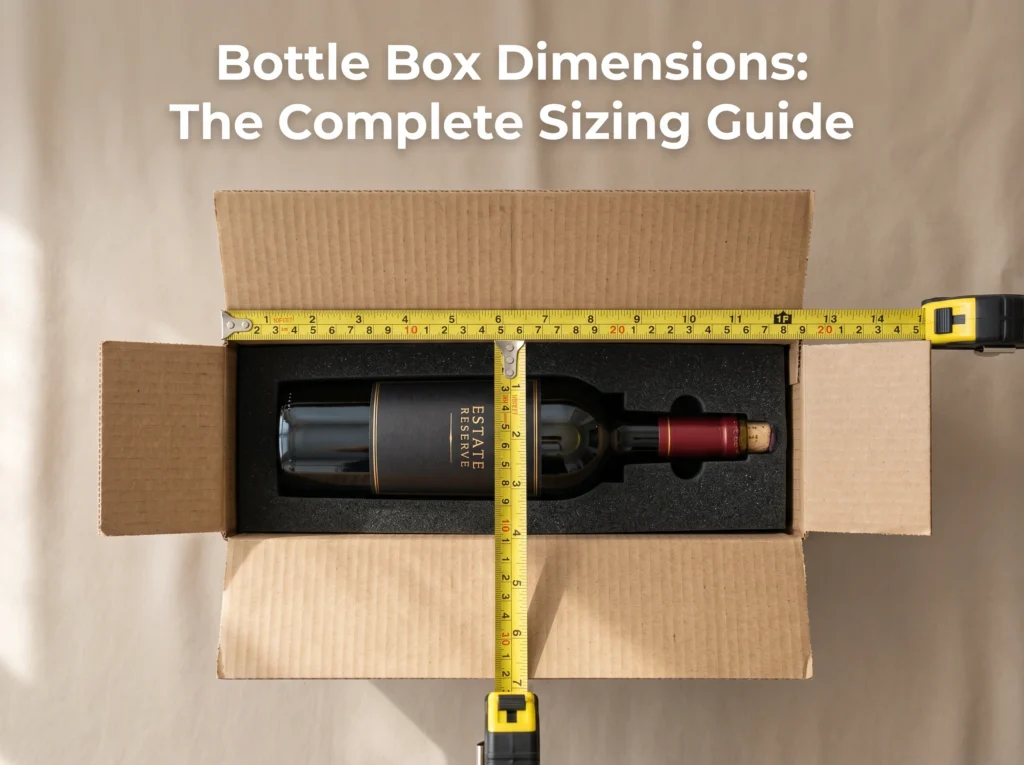
Picking the right bottle box sounds simple, but one wrong measurement can crack a bottle, blow up your shipping costs, or leave your product rattling around in too much empty space. The good news? Getting bottle box dimensions right is easy once you know what to measure and why it matters.
This guide breaks down everything in plain, friendly language. Whether you sell wine, beer, spirits, olive oil, or perfume, you’ll walk away knowing exactly how to size your bottle packaging like a pro.
Why Bottle Box Dimensions Matter So Much
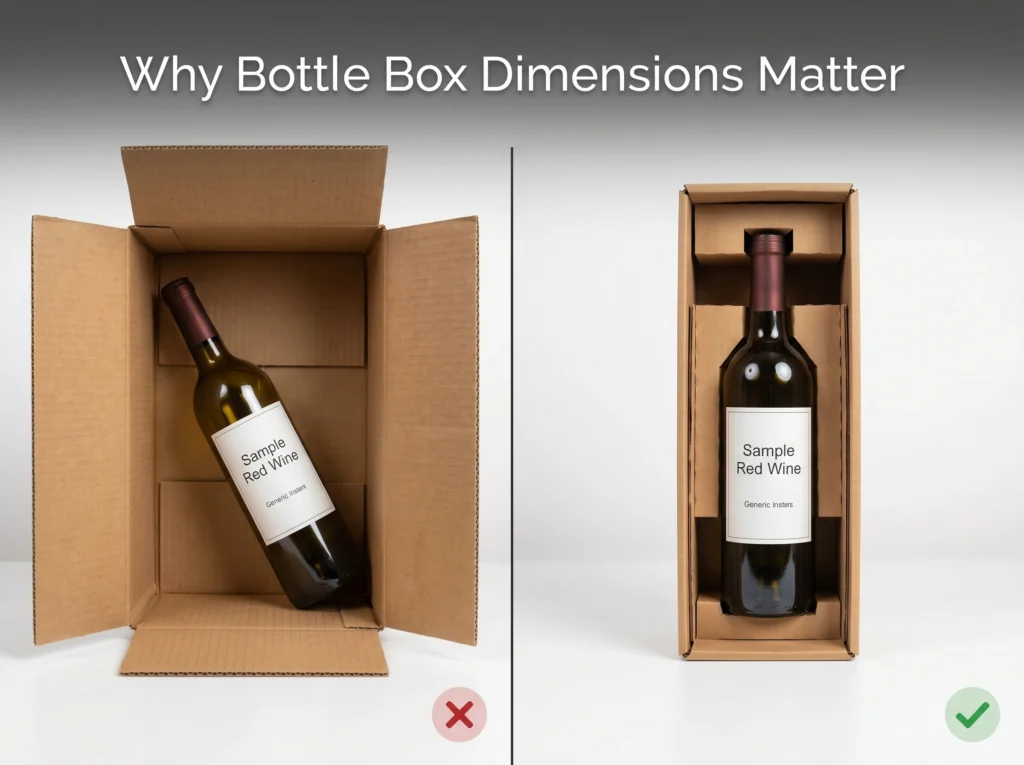
Your box does three big jobs: it protects the bottle, it controls your shipping price, and it makes your brand look polished on the shelf or doorstep.
When the box dimensions are too big, you pay extra because of dimensional weight pricing from carriers like UPS, FedEx, USPS, and DHL. When the box is too small, the bottle gets squeezed, the glass bottle can crack, and customers get unhappy. A box that fits just right keeps your bottle dimensions snug, your costs low, and your reviews glowing.
Internal vs. External Dimensions (Know the Difference)
This is the part most people get wrong, so let’s make it crystal clear.
Internal dimensions are the space inside the box where your bottle actually sits. External dimensions are the outside measurements, including the thickness of the corrugated cardboard. Carriers charge you based on the outside size, but your bottle only cares about the inside.
Always measure your bottle first, then add room for any foam insert, divider, or partition. The board grade and flute thickness of the corrugated material adds a few millimeters on each side, so factor that in too.
Also Read: Cereal Box Dimensions: The Complete Size Guide You’ll Actually Use
How to Measure a Bottle the Right Way
Grab a ruler or measuring tape and record these four numbers in millimeters (mm) or inches:
- Height from the base to the top of the cap or cork
- Base diameter the widest part at the bottom
- Neck diameter the narrow part near the top
- Total volume usually printed on the label (ml, oz, or liters)
Add a small fit tolerance of about 3–5 mm so the bottle slides in easily without forcing it. This little buffer makes packing faster and protects against tight squeezes.
Standard Bottle Box Size Chart
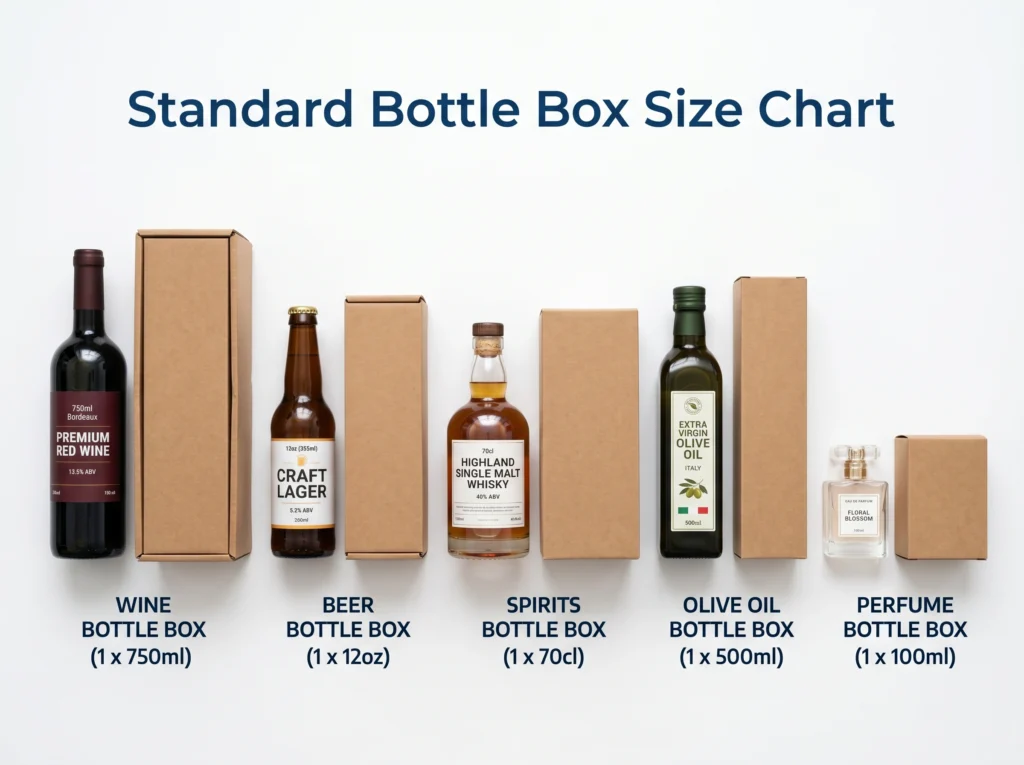
Here’s a handy reference for the most common bottles. These are typical internal dimensions for a single bottle, and a great starting point for your own box dimensions calculator math.
| Bottle Type | Volume | Base Diameter | Height | Suggested Internal Box (L × W × H) |
|---|---|---|---|---|
| Standard Wine (Bordeaux) | 750 ml | 75 mm | 300 mm | 90 × 90 × 320 mm |
| Burgundy Wine | 750 ml | 80 mm | 295 mm | 95 × 95 × 315 mm |
| Champagne | 750 ml | 90 mm | 315 mm | 105 × 105 × 335 mm |
| Beer Bottle | 330 ml | 60 mm | 230 mm | 75 × 75 × 250 mm |
| Spirits / Liquor | 700 ml | 80 mm | 280 mm | 95 × 95 × 300 mm |
| Olive Oil | 500 ml | 65 mm | 270 mm | 80 × 80 × 290 mm |
| Perfume | 100 ml | 50 mm | 120 mm | 65 × 65 × 140 mm |
Always confirm with your real bottle, since shapes vary by brand.
Multi-Bottle Box Dimensions
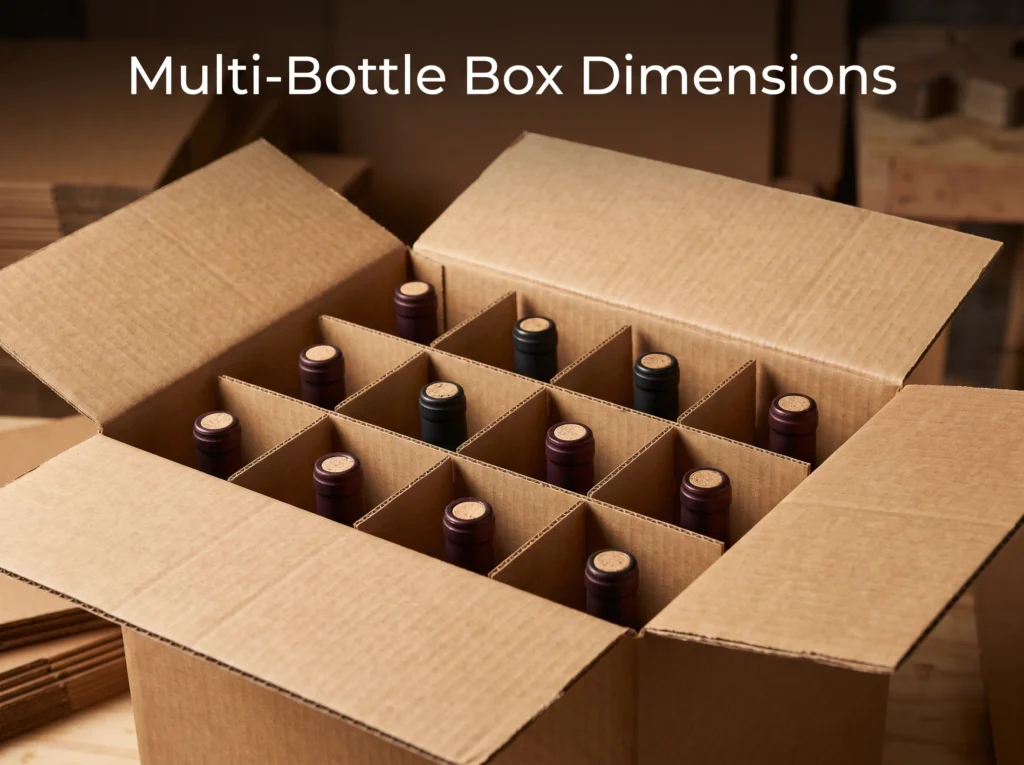
Shipping more than one bottle? You’ll need a sturdier shipping carton with dividers to stop bottles from clinking together.
A common 6 pack beer bottle box runs around 235 × 160 × 250 mm internally, while a 12 bottle wine case box lands near 380 × 290 × 340 mm. Each slot should have its own partition so every bottle travels in its own protected pocket. For heavier cases, choose a higher ECT (Edge Crush Test) rating so the cardboard holds up when stacked.
Choosing the Right Material and Protection
The bottle inside decides how tough your box needs to be. Here are smart, eco-friendly options worth knowing:
- Corrugated cardboard strong, affordable, and great for shipping
- Kraft box clean, natural look that feels premium and recyclable
- Molded pulp and molded fiber inserts plastic-free cushioning that hugs the bottle
- PE foam inserts soft protection for fragile or luxury bottles
- Void fill filler that removes empty space and stops movement
A snug insert does more than protect. It removes wasted space, which trims your dimensional weight and lowers what you pay per parcel.
Quick Dimensional Weight Tip
Carriers calculate cubic volume to set your price when a box is large but light. The formula is simple: multiply length × width × height, then divide by the carrier’s divisor. Smaller, well-fitted bottle cartons almost always cost less to ship, so trimming even a centimeter pays off over thousands of orders.
Custom Bottle Boxes Make Everything Easier
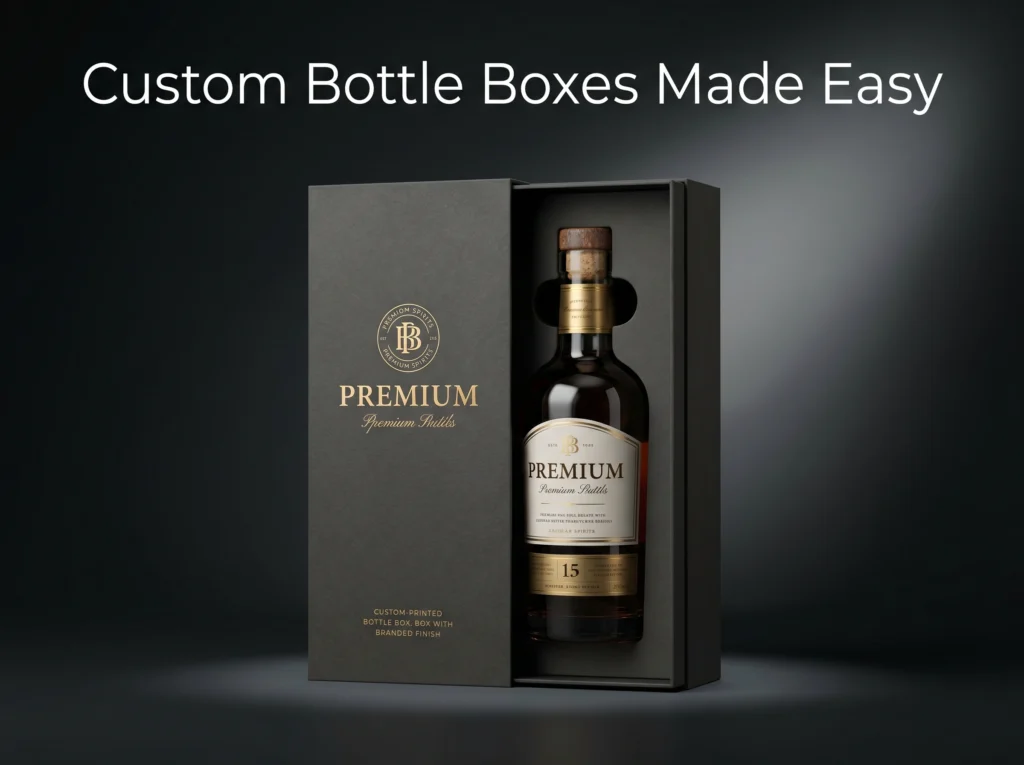
If standard sizes don’t fit your bottle, a custom bottle box built to your exact measurements is the cleanest fix. A made-to-measure box removes guesswork, cuts material waste, and gives your brand a sharp, professional look. Teams like ONO Custom Boxes can match die-cut inserts and printing to your bottle so the fit is perfect from the first order.
Sustainable and Trending Packaging Choices
Shoppers love brands that care about the planet, and packaging is an easy place to show it. Recyclable bottle boxes, plastic-free bottle shipping, and eco-friendly molded pulp inserts are rising fast in 2026. Sustainable bottle packaging and custom printed bottle boxes also help your product stand out while keeping waste low. Choosing greener materials is a win for your customers, your brand story, and the environment.
Frequently Asked Questions
What is the standard wine bottle box dimension?
A single 750 ml wine bottle fits well in an internal box of about 90 × 90 × 320 mm, with room for an insert.
Should I use internal or external dimensions when ordering?
Order by internal dimensions so your bottle fits, but check external dimensions for shipping costs.
How much extra room should I leave around a bottle?
A fit tolerance of 3–5 mm is ideal. It lets the bottle slide in easily while staying secure.
Do smaller boxes really save money?
Yes. Smaller, snug boxes lower your dimensional weight, which reduces carrier charges on every shipment.
Final Thoughts
Getting your bottle box dimensions right protects your product, delights your customers, and keeps your shipping budget happy. Measure your bottle carefully, leave a little wiggle room, pick a strong and sustainable material, and you’re set for success. With the right box, every bottle arrives safe, looks great, and tells a story your customers will remember.