

Folding cartons support sustainable packaging in five clear ways. They are made from paperboard, a renewable resource. They can hold high levels of recycled content. They are widely accepted in curbside recycling. They ship flat, which cuts freight emissions. And they use far less plastic than clamshells, blister packs, or rigid boxes. The catch is simple: the coating, ink, and window film you pick decide whether the carton stays recyclable.
Why This Question Matters Right Now
More brands are switching to fiber-based packaging every year. Some do it because shoppers ask for it. Many do it because rules now require it.
Extended Producer Responsibility (EPR) programs charge fees based on the material you use. Plastic costs more. Paper costs less. States like California (SB 54) and Oregon are already collecting. The EU Packaging and Packaging Waste Regulation (PPWR) adds more rules for anyone shipping to Europe.
So the question is no longer “are cartons greener?” The better question is: how much greener, and how do I prove it?
This guide gives you the real answers, the honest limits, and the numbers you can share with your team.
What Is a Folding Carton?
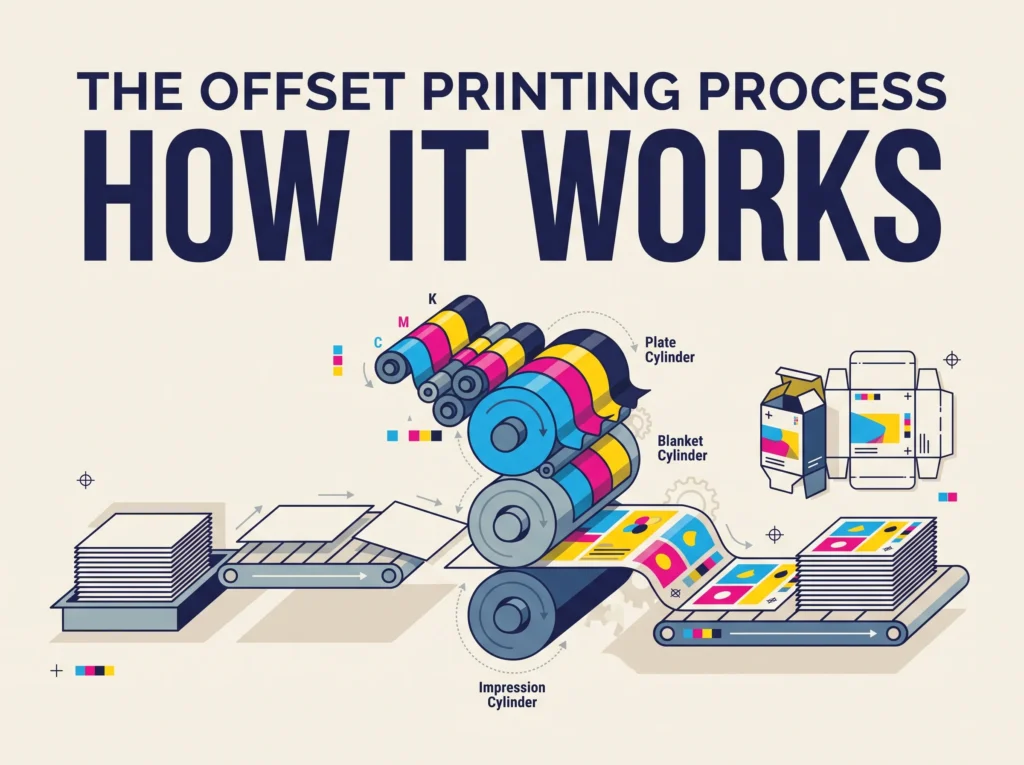
A folding carton is a printed box made from a single sheet of paperboard. The sheet is printed, cut on a dieline, creased, and glued. It arrives at your facility flat. Your team pops it open and fills it.
You already know these boxes. Cereal boxes. Toothpaste boxes. Cosmetic cartons. Medicine cartons.
Common styles include:
- Straight tuck end (STE)
- Reverse tuck end (RTE)
- Auto-lock bottom
- Seal end carton
- Sleeve and tray
Board thickness is measured in points (caliper) or GSM. Most retail cartons sit between 14pt and 24pt.
Also Read: What Are the 7 Functions of Packaging? (With Real Examples)
8 Ways Folding Cartons Support Sustainable Packaging
1. They Start With a Renewable Resource
Paperboard comes from trees. Trees grow back. Well-managed forests replant more than they harvest.
Look for FSC (Forest Stewardship Council), SFI (Sustainable Forestry Initiative), or PEFC certification. These programs track chain of custody from forest to mill to press. That paperwork is what turns a nice claim into substantiated proof.
2. They Recycle at a High Rate
Paper is one of the most recovered materials in the country. The American Forest & Paper Association (AF&PA) reported a U.S. paper recycling rate of 60%–64% in 2024, with about 46 million tons recycled. The cardboard rate was 69%–74%.
Access is strong too. Roughly 79% of Americans have curbside recycling for paper and paperboard.
Compare that with rigid plastic. Most plastic packaging recycles at a far lower rate. That gap is your strongest talking point.
3. They Accept High Recycled Content
Many board grades are built almost entirely from post-consumer waste (PCW) and recovered fiber. CRB (coated recycled board) and CCNB (clay coated news back) are common choices.
AF&PA reports that recycled fiber made up 44.4% of all fiber used at U.S. mills in 2024. That share keeps climbing.
Higher recycled content means fewer virgin inputs and a lower carbon footprint per box.
4. They Ship Flat and Save Freight
This one is easy to miss. Flat blanks stack tight. One truck can carry many times the volume of pre-formed rigid boxes or plastic tubs.
Fewer trucks means lower Scope 3 emissions and lower shipping bills. Flat-packed shipping is a rare win where the green choice is also the cheap choice.
5. They Allow Lightweighting
Lightweighting (also called downgauging) means dropping to a thinner caliper without losing strength. Moving from 24pt to 20pt board can trim material use by a real margin across a full run.
Pair this with right-sizing and cube optimization and you cut fiber, ink, and freight at once.
6. They Replace Single-Use Plastic
Cartons are a direct swap for many plastic formats:
| Old plastic format | Carton replacement | What you gain |
|---|---|---|
| Clamshell | Tuck-end carton with insert | Curbside recyclable, better print area |
| Blister pack | Paper-based blister card | Lower EPR fee, less plastic |
| Rigid plastic jar box | Carton sleeve or STE carton | Lower cost, easier storage |
| Shrink-wrapped multipack | Auto-lock bottom carton | Cleaner shelf look, no film waste |
| Foam-lined mailer | Molded pulp insert + carton | Mono-material, one bin |
This is where the biggest carbon footprint savings usually show up.
7. They Work With Cleaner Inks and Coatings
Most modern converters run water-based inks, soy-based inks, and aqueous coatings. These cut solvent use during printing and are friendlier at the repulping stage.
Digital printing helps too. Short runs mean fewer makeready sheets, less setup waste, and no big minimum you have to store or scrap.
8. They Break Down Naturally
Uncoated kraft board and plain SBS are biodegradable. Some cartons meet ASTM D6400 and earn BPI certification for compostable claims.
That said, recyclable is usually the stronger claim in the U.S. Recycling access is much wider than industrial composting access. Pick the claim your customer can actually act on.
Also Read: What Are the 7 Types of Packaging? Full Guide
Board Grade
Not all paperboard is equal. Use this to match grade to goal.
| Board grade | Typical recycled content | Print quality | Curbside recyclable | Best for |
|---|---|---|---|---|
| SBS (solid bleached sulfate) | Low (virgin fiber) | Excellent | Yes | Cosmetics, pharma, food contact |
| CRB (coated recycled board) | High (80%+ recovered) | Good | Yes | Cereal, dry goods, retail |
| CCNB (clay coated news back) | High | Fair to good | Yes | Value retail, hardware |
| FBB (folding boxboard) | Mixed | Very good | Yes | Premium retail, Europe |
| Kraft / uncoated | Varies | Rustic, natural | Yes | Eco brands, artisan goods |
Simple rule: need the best print? Choose SBS. Need the best recycled story? Choose CRB.
Which Finishes Keep Your Carton Recyclable?
This is the part most guides skip. Your finish choice can quietly cancel your recyclability claim.
| Finish | Recyclability impact | Verdict |
|---|---|---|
| Aqueous coating | Repulps cleanly | Safe |
| Water-based / soy-based ink | Removed during deinking | Safe |
| Spot UV (light coverage) | Usually accepted | Mostly safe |
| Soft-touch lamination (plastic film) | Film must be separated | Risky |
| Full plastic lamination | Often rejected at the MRF | Avoid |
| Foil stamping (small area) | Small areas usually pass | Mostly safe |
| Metallized board | Hard to repulp | Avoid |
| Plastic window film (PET) | Contaminates the fiber stream | Swap it |
| PLA or paper-based window | Better, check local rules | Improved |
| PFAS grease coatings | Restricted in several states | Avoid |
Two practical tips:
- Ask your converter for a recycle-ready or mono-material build. That means one material family, one bin.
- Ask about PFAS-free grease resistance if your product is food. Maine, Washington, Minnesota, and New York already restrict these chemicals in food packaging.
Folding Cartons vs Plastic
| Factor | Folding carton | Rigid plastic |
|---|---|---|
| Raw material | Renewable fiber | Fossil-based resin |
| U.S. recycling access | Very wide (~79% curbside) | Narrow and format-specific |
| Shipping volume | Flat, very efficient | Bulky, air-heavy |
| EPR fee exposure | Lower | Higher |
| Moisture and grease | Needs a coating | Naturally resistant |
| Print quality | Excellent | Limited without a label |
| Tooling cost | Low (dieline only) | High (molds) |
Cartons win on most sustainability measures. Plastic still wins on wet, oily, and heavy-duty jobs. An honest comparison builds more trust than a one-sided one.
What Buyers Worry About
| Your concern | Straight answer |
|---|---|
| “Can I legally say recyclable?” | Yes, if the finish repulps and you follow FTC Green Guides. Use How2Recycle labeling for clarity. |
| “Will lamination ruin it?” | Plastic film lamination often will. Aqueous coating will not. |
| “Is recycled board more costly?” | Usually not. CRB often costs less than virgin SBS. |
| “Will it survive grease?” | Yes, with a PFAS-free fiber-based barrier coating. |
| “Can I keep a window?” | Yes. Ask for plastic-free window film or a die-cut window with no film. |
| “How do I report the savings?” | Track board weight, recycled percentage, and pallet count. That feeds a basic life cycle assessment (LCA). |
| “What about small orders?” | Digital printing makes low MOQ runs affordable. |
Rules and Deadlines to Watch
| Rule | Region | Why it matters |
|---|---|---|
| SB 54 | California | Producer fees and packaging reduction targets |
| EPR programs | Oregon, Colorado, Maine, Minnesota and more | Fees scale by material recyclability |
| PPWR | European Union | Recyclability and recycled content rules for EU sales |
| PFAS restrictions | Multiple U.S. states | Bans certain grease coatings in food packaging |
| FTC Green Guides | United States | Sets the bar for honest green claims |
Switching to fiber-based packaging is one of the fastest ways to lower your fee exposure under these programs.
How to Order a Sustainable Folding Carton (7 Steps)
- Measure your product. Get exact length, width, and depth. Add tolerance.
- Pick your style. STE, RTE, or auto-lock bottom for heavier items.
- Choose your board grade. Use the table above. CRB for recycled story, SBS for premium print.
- Set your caliper. Ask your supplier if you can drop one step through downgauging.
- Choose safe finishes. Aqueous coating, soy or water-based ink, minimal foil.
- Request certification paperwork. Ask for FSC chain of custody documents in writing.
- Proof the dieline. Approve a physical white sample before the full run.
Who Benefits Most
- Cosmetics and skincare brands replacing plastic outer packs
- Food and snack brands needing PFAS-free grease resistance
- Supplement and nutraceutical brands moving away from shrink film
- Cannabis and CBD brands meeting state packaging rules
- Subscription box brands cutting shipping weight
- Retail suppliers meeting big-box sustainability scorecards
- Pharmaceutical packers needing tamper evidence plus recyclability
Frequently Asked Questions
Are folding cartons recyclable in curbside programs?
Yes, in most U.S. communities. About 79% of Americans have curbside access for paper and paperboard. Heavy plastic lamination or a plastic window can cause rejection, so keep finishes simple.
Are folding cartons biodegradable or compostable?
Uncoated paperboard is biodegradable. Compostable claims need testing to standards like ASTM D6400 and certification from BPI. For most U.S. brands, “recyclable” is the more useful claim.
Does lamination make a carton non-recyclable?
Plastic film lamination often does. Aqueous coating and light spot UV normally pass. Ask your supplier for a recycle-ready build if you want the safest option.
What is FSC certification?
FSC confirms the fiber came from responsibly managed forests. Your supplier needs a valid chain of custody number to let you print the logo.
How much recycled content can a folding carton have?
CRB and CCNB grades can run 80% or more recovered fiber. Virgin SBS runs low but delivers the cleanest print surface.
Are folding cartons PFAS-free?
They can be. Many converters have already moved to fiber-based barrier coatings without PFAS. Always ask for written confirmation, since several states now restrict these chemicals.
Do folding cartons lower EPR fees?
In most programs, yes. Fee schedules favor materials with strong recycling infrastructure, and paperboard scores well.
Can I get a window without plastic?
Yes. Options include an open die-cut window, PLA-based film, or paper-based mesh. Each has trade-offs in clarity and product protection.
Ready to Make the Switch?
Sustainable packaging works best when the box is designed for it from the first sketch. The right board grade, the right coating, and a dieline built for right-sizing do more than any label ever will.
If you want cartons built with FSC-certified board, recycled content, PFAS-free coatings, and low minimums, the team at ONO Custom Boxes can walk you through grades, finishes, and a free dieline proof before you commit to a run.
Send your product dimensions and your sustainability goal. You will get a clear recommendation and pricing back fast.