
Did you know that about 70% of buying decisions happen because of packaging design? That means your food packaging box is your hardest-working salesperson. It works 24/7. It never takes a break.
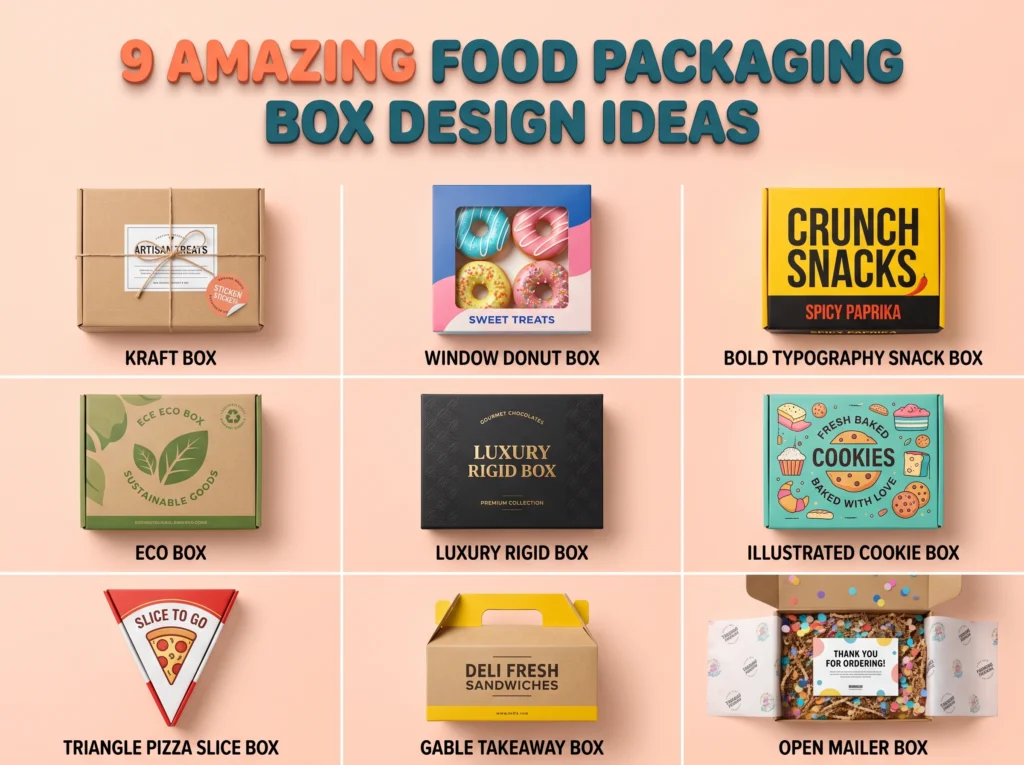
Here’s the exciting part: you don’t need a big budget to stand out. In this guide, you’ll find 9 amazing food packaging box design ideas that real small businesses use to win more customers. We’ll cover materials, real costs, eco-friendly packaging options, and 2026 packaging trends like QR codes and smart packaging.
Let’s open the box!
Quick Answer
The 9 best food packaging box design ideas are: minimalist kraft boxes, die-cut window boxes, bold typography designs, eco-friendly mono-material boxes, smart QR code packaging, luxury rigid boxes, illustrated storytelling boxes, custom-shaped structural boxes, and interactive unboxing designs. The right choice depends on your food type, budget, and brand personality.
Why Your Food Box Design Matters More Than Ever
Think about the last time you tried a new snack. What made you pick it up? For 64% of shoppers, it was the package design alone.
Your custom food boxes do three big jobs:
- Protect your food keeping it fresh, safe, and grease-free
- Build brand identity so people remember you
- Create shelf appeal so people choose you over competitors
Now let’s look at the 9 ideas, one by one.
1. Minimalist Kraft Boxes (Best for Startups)
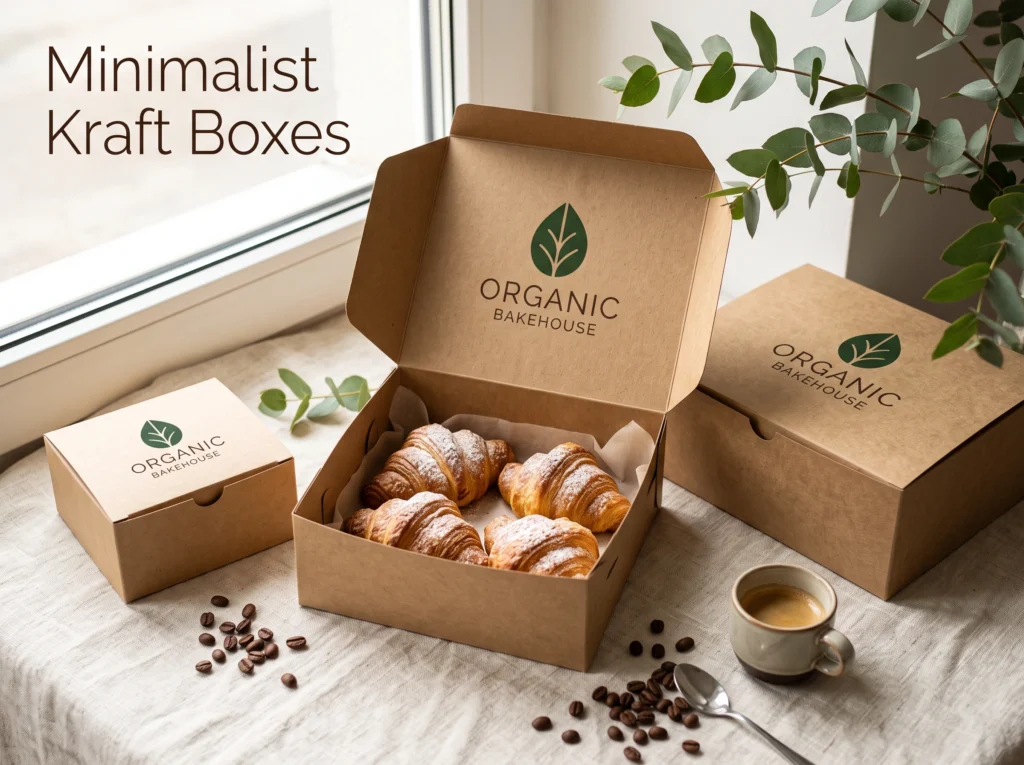
Best for: Bakeries, organic snacks, coffee, granola Cost: $ (Low)
Minimalist packaging design is simple, clean, and easy to read. Studies show clean designs can raise what customers are willing to pay by up to 24%.
Kraft paper boxes have a warm, natural brown look. Shoppers instantly connect that look with sustainable packaging and honest ingredients. Add one bold logo, simple typography, and lots of empty space. That’s it.
Pro Tip: Use a single accent color (like deep green or terracotta) on kraft. It pops without looking busy.
2. Die-Cut Window Boxes (Let the Food Sell Itself)
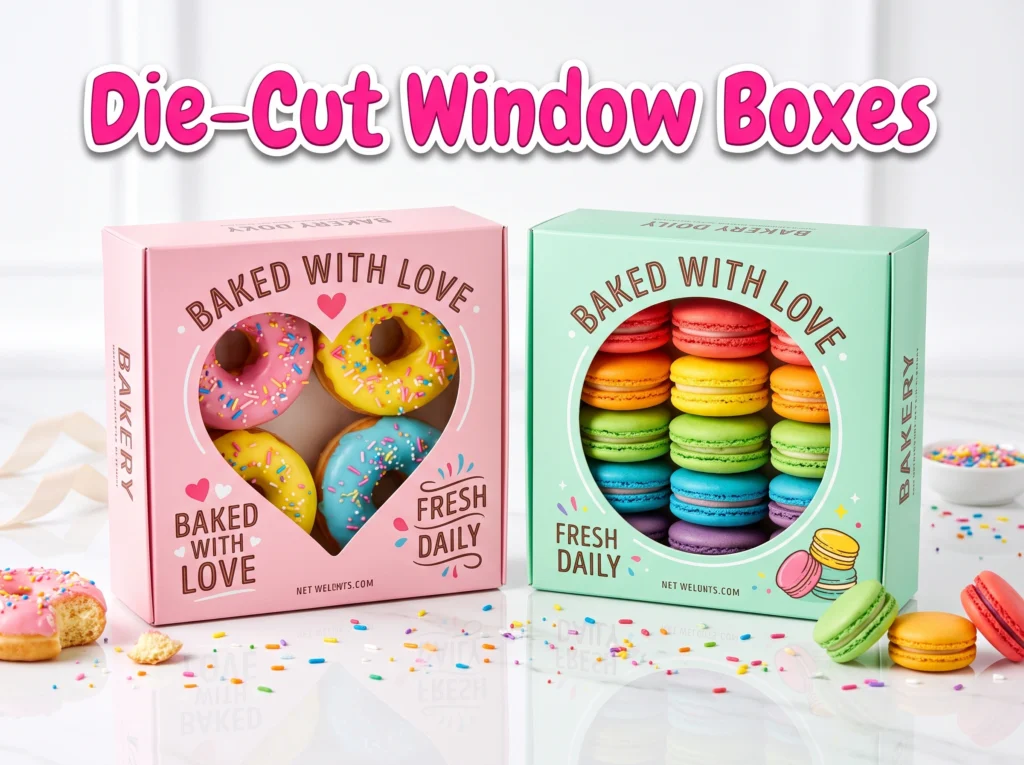
Best for: Cookies, cupcakes, donuts, fresh pasta, salads Cost: $$ (Medium)
A die-cut window box has a clear opening that shows the real food inside. When customers can see freshness, trust goes up fast.
Shape the window creatively. A heart-shaped window for Valentine’s cookies. A steam-swirl window for hot foods. The window itself becomes part of your brand storytelling.
Food safety note: Use food-grade PET window film and make sure the box has a grease-resistant coating for oily treats.
3. Bold Typography Boxes (Stop the Scroll and the Stroll)
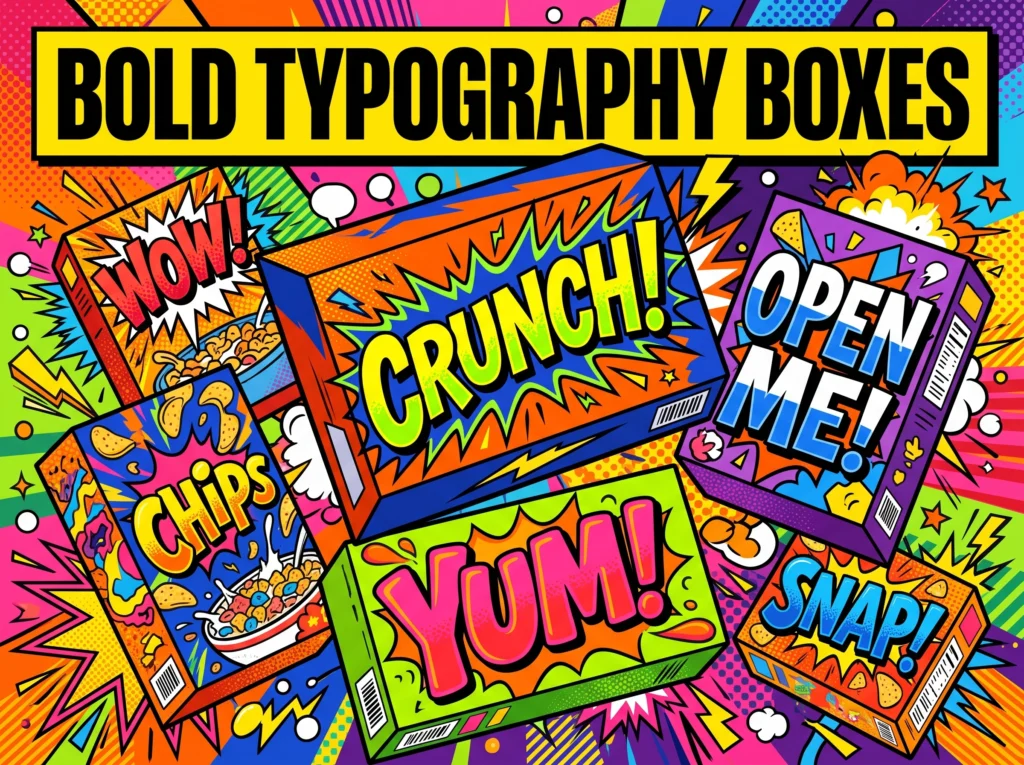
Best for: Snack brands, energy bars, trendy drinks, Gen Z products Cost: $ (Low)
In 2026 packaging design trends, big and bold fonts are the star. Research shows bold fonts improve brand recall by 29% and speed up recognition by 32%.
Skip the fancy pictures. Let giant, playful words do the talking: “CRUNCH TIME,” “BAKED WITH JOY,” “OPEN ME.”
This style is budget-friendly because it needs no photography just smart visual hierarchy and strong color psychology.
Also Read: Food Packaging Box Dimensions: The Complete Size Guide for Every Meal
4. Eco-Friendly Mono-Material Boxes (The 2026 Must-Have)
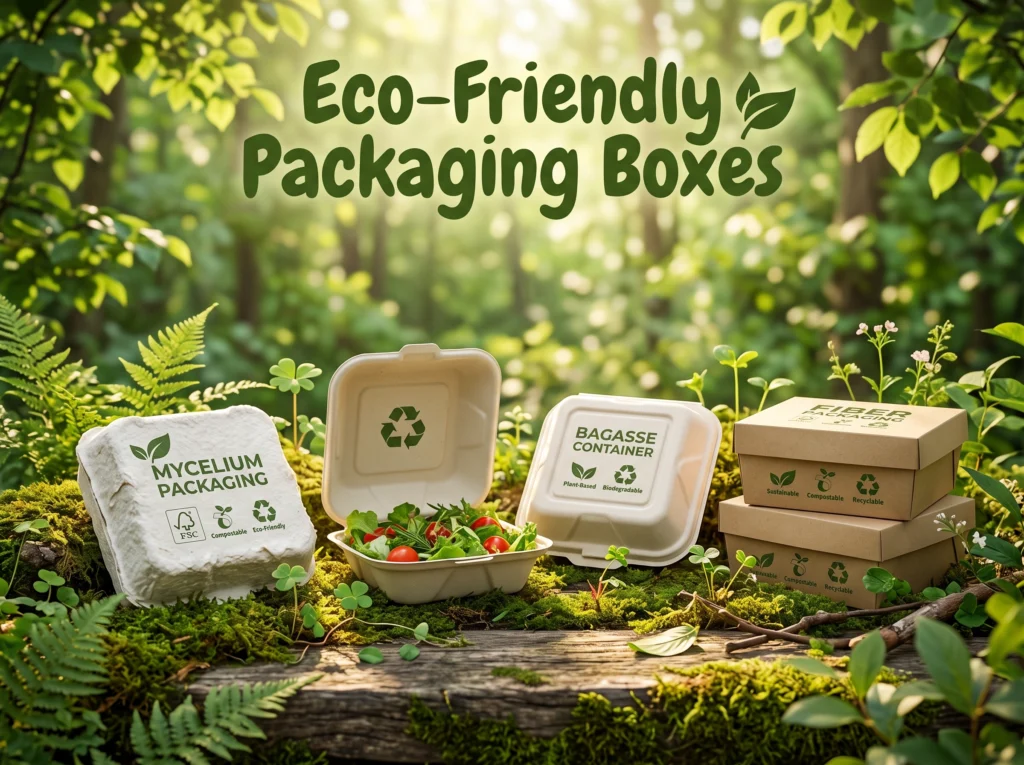
Best for: Every food brand that wants future-proof packaging Cost: $$ (Medium)
Sustainability is now the #1 force in food packaging trends. Around 90% of shoppers say they’re more likely to buy from brands using eco-friendly packaging, and 43% will even pay more for it.
Winning options include:
- Recyclable paperboard and fiber-based packaging (paper hits an 82% recycling rate in Europe)
- Compostable boxes made from bagasse (sugarcane waste)
- Mycelium packaging grown from mushroom roots it composts in about 30 days!
- PCR (post-consumer recycled) board
Important: Print your recycling icons and certifications (like FSC certification) clearly. In 2026, shoppers want proof, not just green promises. Experts call this substantiated sustainability.
5. Smart QR Code Packaging (Turn a Box Into an Experience)
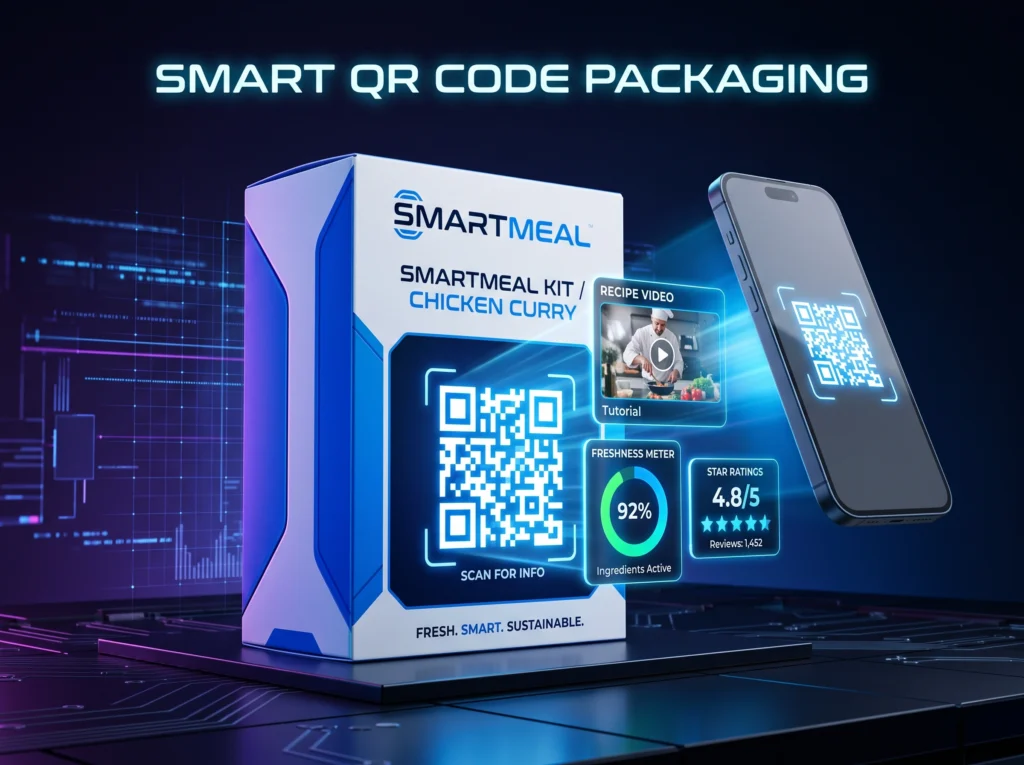
Best for: Meal kits, premium snacks, health foods, e-commerce food brands Cost: $$ (Medium)
Smart packaging connects your box to the digital world. One small QR code can unlock:
- Recipe videos
- Your brand’s origin story
- Freshness and traceability info
- Discount codes and loyalty rewards
The interactive packaging market is expected to reach $50+ billion by 2030. Some advanced packages even use sensors that show freshness in real time. Adding a simple QR code today costs almost nothing and it makes your brand feel modern and trustworthy.
6. Luxury Rigid Boxes (Premium Feel, Premium Price)
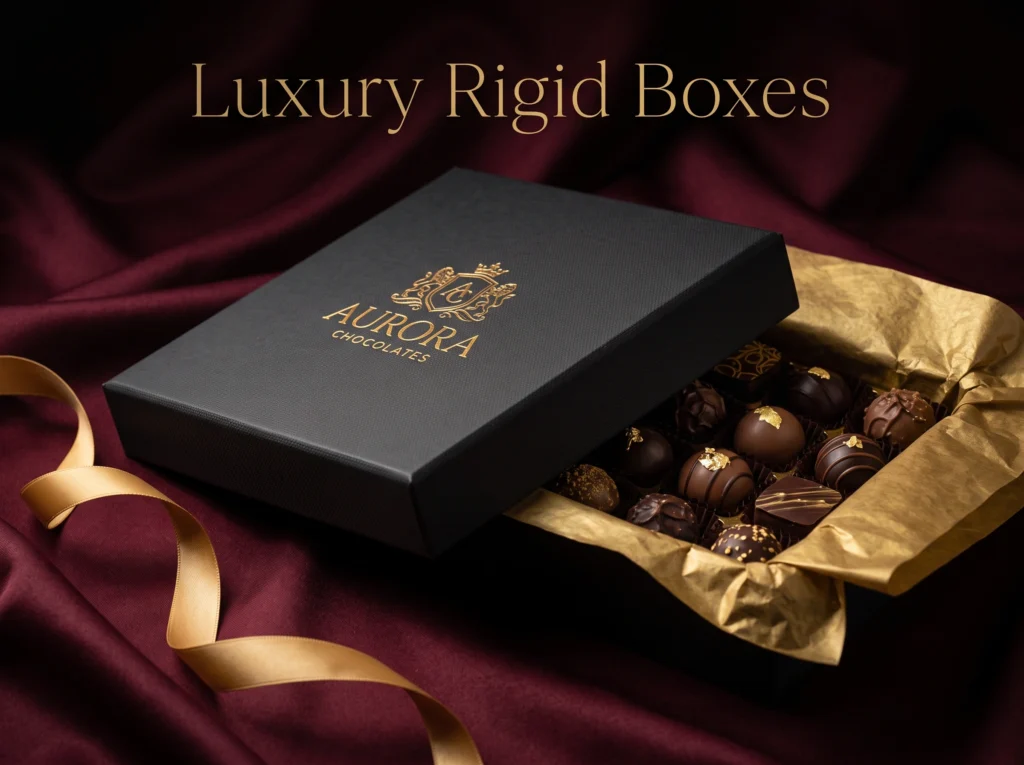
Best for: Chocolates, gift sets, gourmet foods, holiday collections Cost: $$$ (High)
A rigid box feels heavy, sturdy, and special like opening a gift. Add these printing techniques for extra magic:
- Foil stamping (gold or copper shine)
- Embossing (raised, touchable logos)
- Matte finish with spot gloss highlights
- Magnetic closures and custom inserts
The 2026 luxury trend is “lightweight luxury” premium looks with less material waste. A rigid box is also reusable, which shoppers love.
7. Illustrated Storytelling Boxes (Make Them Feel Something)
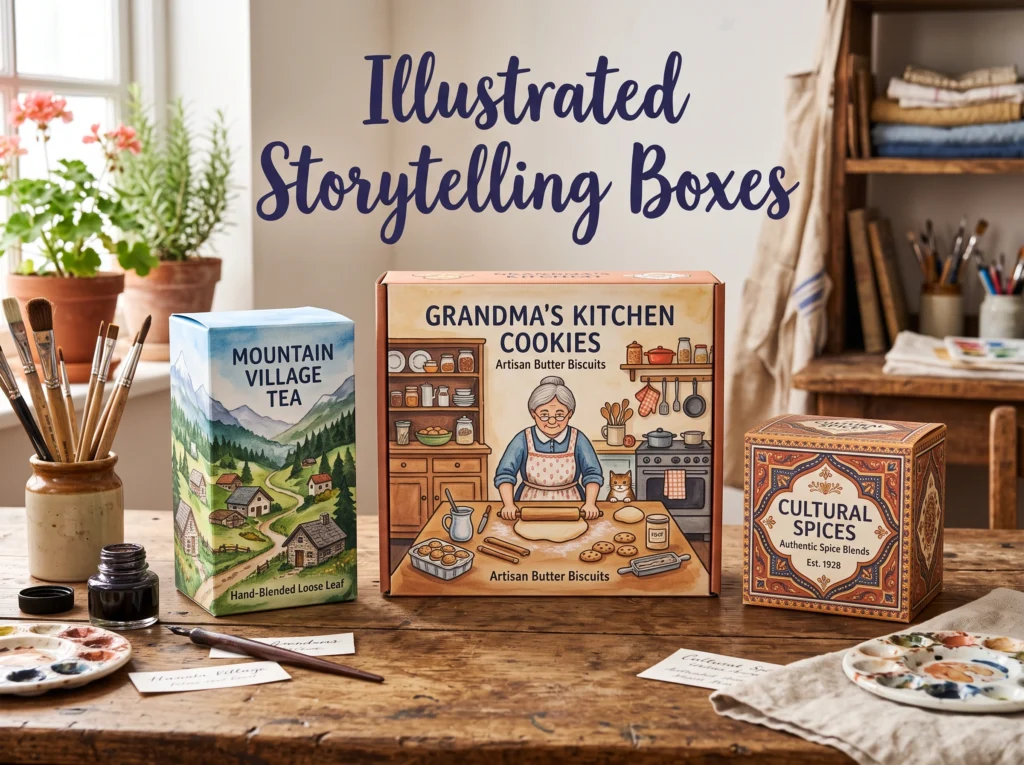
Best for: Family recipes, cultural foods, artisan and heritage brands Cost: $$ (Medium)
Hand-drawn art is winning in 2026 because it feels human in a world full of perfect AI images. Cultural and heritage design local patterns, regional motifs, family stories is now seen as “the new premium.”
Wrap your box in an illustrated story: the farm your ingredients come from, the grandmother behind the recipe, or the city that inspired the flavor. Brand storytelling on packaging builds emotional bonds that plain designs simply can’t.
8. Custom-Shaped Structural Boxes (Be Impossible to Ignore)
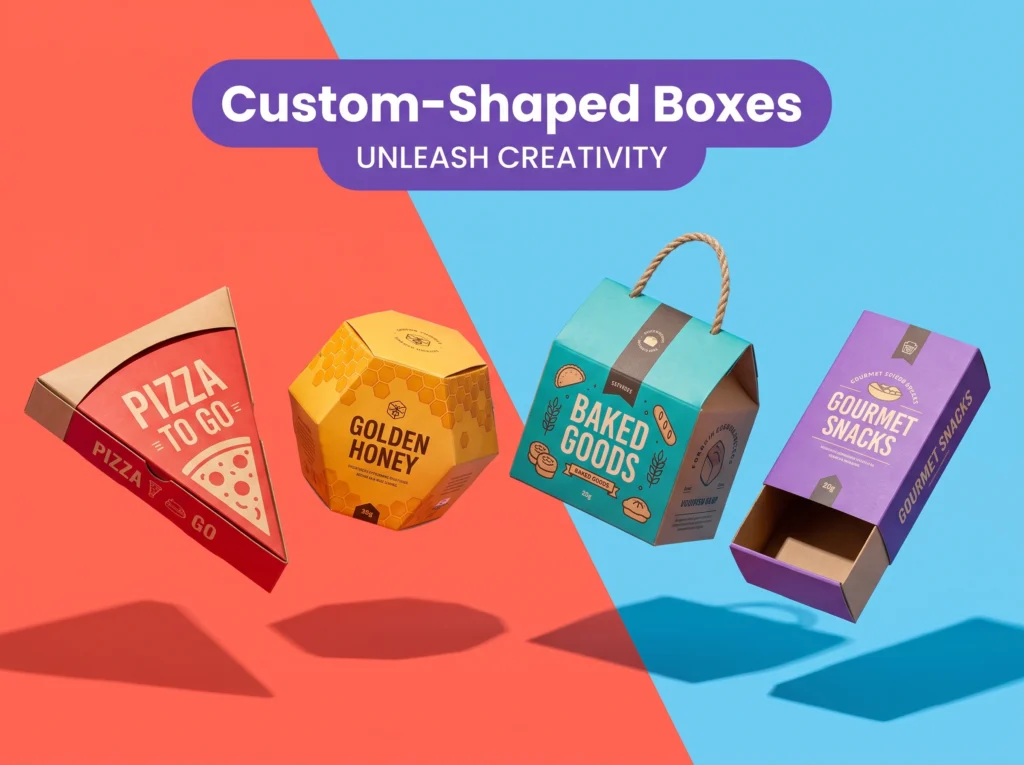
Best for: Kids’ snacks, party foods, seasonal launches Cost: $$$ (High)
Why be a square when you can be a slice? Structural packaging design means the box shape itself grabs attention:
- Triangle boxes for pizza slices
- Gable boxes (little house shapes with handles) for takeaway
- Hexagon boxes for honey products
- Sleeve boxes that slide open like a drawer
A unique dieline (the flat blueprint of your box) costs more upfront. But on a crowded shelf, an unusual shape creates instant market differentiation.
9. Interactive Unboxing Boxes (Designed to Be Shared)
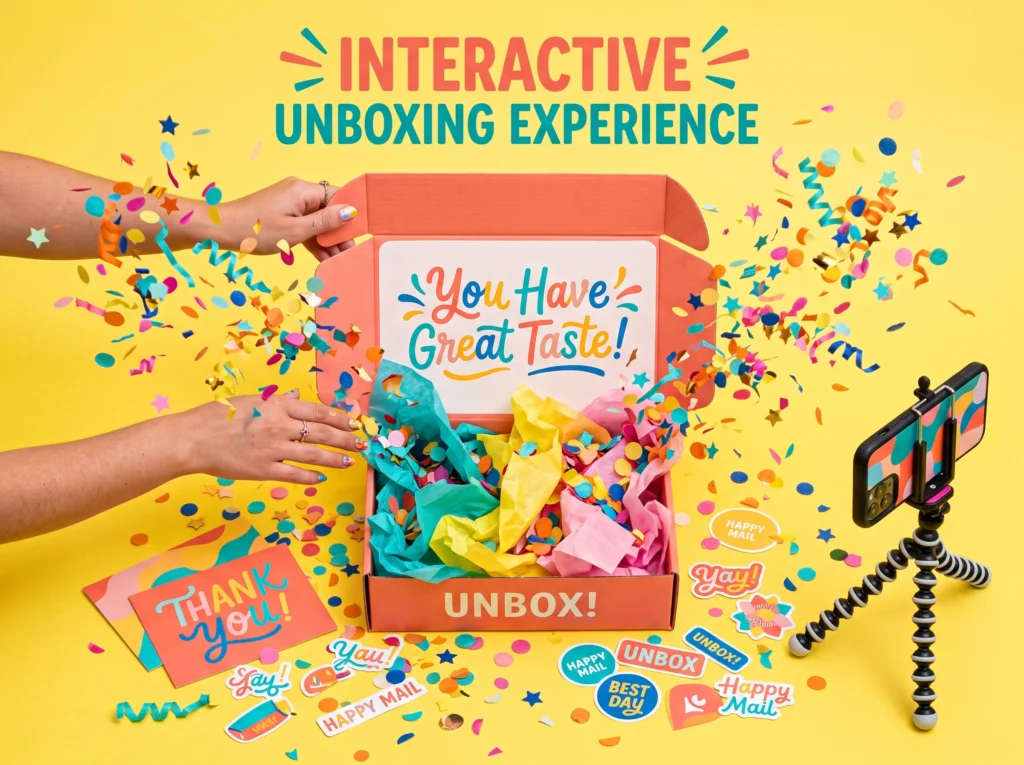
Best for: E-commerce food brands, subscription boxes, gift orders Cost: $$ (Medium)
Sensory unboxing is one of the top 2026 packaging trends. The goal: make opening your box so fun that customers film it and share it.
Ideas that work:
- Hidden messages inside the lid (“You have great taste!”)
- Colorful inside printing (plain outside, party inside)
- Tissue paper, stickers, and thank-you cards
- Tear strips that open smoothly
Every shared unboxing video is free advertising. That’s how a mailer box becomes a marketing machine.
Which Food Box Design Fits Your Brand?
| Design Idea | Best For | Material | Cost Level | Eco-Friendly? | Wow Factor |
|---|---|---|---|---|---|
| 1. Minimalist Kraft | Bakeries, organic snacks | Kraft paper | $ | High | ⭐⭐⭐ |
| 2. Die-Cut Window | Cookies, fresh foods | Paperboard + PET | $$ | Medium | ⭐⭐⭐⭐ |
| 3. Bold Typography | Snacks, drinks | Paperboard | $ | High | ⭐⭐⭐⭐ |
| 4. Eco Mono-Material | All food brands | Fiber/bagasse/PCR | $$ | Highest | ⭐⭐⭐ |
| 5. Smart QR Code | Meal kits, premium | Any + QR print | $$ | High | ⭐⭐⭐⭐ |
| 6. Luxury Rigid | Chocolates, gifts | Rigid board | $$$ | Medium | ⭐⭐⭐⭐⭐ |
| 7. Illustrated Story | Artisan, heritage | Paperboard | $$ | High | ⭐⭐⭐⭐ |
| 8. Custom Shape | Kids, seasonal | Corrugated/board | $$$ | Medium | ⭐⭐⭐⭐⭐ |
| 9. Interactive Unboxing | E-commerce, gifts | Corrugated mailer | $$ | High | ⭐⭐⭐⭐⭐ |
Common Problems (And Simple Fixes)
“My product looks cheap next to competitors.”
Fix: Try Idea #3 (Bold Typography) or #1 (Minimalist Kraft). Clean design signals quality no big budget needed.
“I don’t know which material suits my food.”
Fix: Greasy foods need a grease-resistant coating. Fragile items need corrugated cardboard. Dry snacks work great in folding cartons or paperboard.
“Eco-friendly boxes seem too confusing.”
Fix: Start simple. Pick recyclable kraft or paperboard, print the recycling icon, and you’re already ahead of most brands.
“I want Instagram-worthy packaging.”
Fix: Combine Idea #9 (Interactive Unboxing) with Idea #7 (Illustrated Story). Surprise + beauty = shares.
“Where do I even order custom boxes?”
Fix: Trusted suppliers like ONO Custom Boxes offer low minimum order quantities, free dieline templates, and digital printing for small runs perfect for testing a design before going big.
How to Get Started: 5 Simple Steps
- Know your food type. Hot, cold, greasy, or fragile? This picks your material for you.
- Pick ONE idea from this list. Mixing too many styles confuses shoppers.
- Design a mockup. Free tools like Canva or 3D tools like Pacdora make this easy.
- Order a small test batch. Digital printing makes short runs affordable in 2026.
- Ask real customers. Show two designs. Let them vote. Then scale the winner.
FAQs
What are the best food packaging box design ideas for small businesses?
Minimalist kraft boxes and bold typography designs are the best starting points. Both are low-cost, look professional, and work with digital printing for small orders.
Which material is best for food packaging boxes?
It depends on your food. Kraft and paperboard suit dry foods. Corrugated cardboard protects fragile or shipped items. Rigid boxes fit luxury products. Always choose food-grade material.
How much does custom food packaging cost?
Simple printed kraft boxes can start around $0.30–$1 per box in bulk. Die-cut windows, foil stamping, and custom shapes raise the price. Rigid luxury boxes can cost $3–$10+ each.
What is the most eco-friendly food packaging box?
Mono-material fiber boxes, bagasse containers, and mycelium packaging lead the way in 2026. Paper-based options are strong too, with very high recycling rates.
How does packaging design affect food sales?
Hugely. Around 70% of purchase decisions are influenced by packaging, and 64% of shoppers have tried a new product just because the design attracted them.
What packaging design trends are big in 2026?
Fiber-first packaging, smart QR codes, substantiated sustainability, bold typography, cultural storytelling, and sensory unboxing are the top 2026 food packaging trends.
Are kraft boxes food safe?
Yes when they’re made from food-grade kraft with the right liner or grease-resistant coating. Always confirm food-contact compliance with your supplier.
What should be printed on a food packaging box?
Your logo, product name, ingredients, allergens, net weight, expiry date, storage advice, and any certifications (organic, FSC, recyclable icons). Keep the front clean; put details on the side or back.
Final Thoughts
Great food packaging box design isn’t about spending more it’s about choosing smart. Start with one idea from this list. Test it. Improve it. Your box is the first “hello” between your food and your customer, so make it a warm one.
Which of these 9 ideas fits your brand best? Sketch it today your shelf-stopping box is closer than you think!