
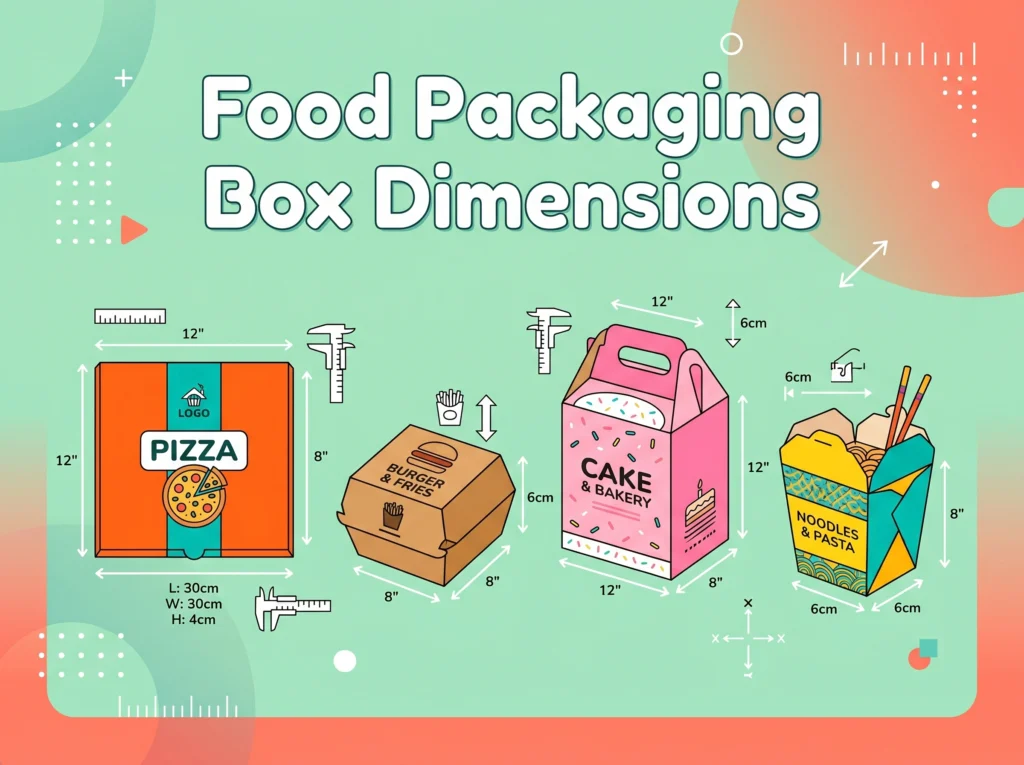
Picking the right box size feels small, but it changes everything. The wrong fit can crush a cake, leak sauce, or cost you extra on shipping. The right fit keeps food fresh, looks clean, and saves money. This guide walks you through food box dimensions in a simple way, so you can choose with confidence.
By the end, you will know how to measure, what the standard food packaging box dimensions are, and how to match a box to the food inside it.
Why Box Size Matters More Than You Think
A box is not just a container. It protects the food, carries your brand, and affects your costs. When the packaging box sizes match the meal, three good things happen.
First, the food stays safe. A snug box stops sliding, so a burger box holds its shape and a cake box keeps the frosting smooth. Second, you spend less. Shippers charge by dimensional weight (DIM weight), so a right-sized box lowers your bill. Third, your branding looks sharp. A clean, well-fitted box with custom printing makes any meal feel special.
Quick Tip: Always match the box to the portion size. A too-big box wastes material and money. A too-small box damages the food.
How to Measure a Food Packaging Box
Measuring is easy once you know the order. Box sizes are always written as Length x Width x Height (L x W x H).
- Length: the longest side of the opening
- Width: the shorter side of the opening
- Height: the distance from the bottom to the top
Here is the key point many people miss. There are interior vs exterior dimensions. Interior size is the space inside, which is what holds your food. Exterior size is the outside, which matters for stackability and shipping. Board thickness and flute size create the small gap between the two. For food, the interior number is the one that counts.
You can measure in inches, centimeters, or millimeters. Many guides also list capacity in oz or ml for cups, trays, and bowls.
Also Read: Coffee Packaging Box Dimensions: The Complete Sizing Guide
Standard Food Packaging Box Dimensions Chart
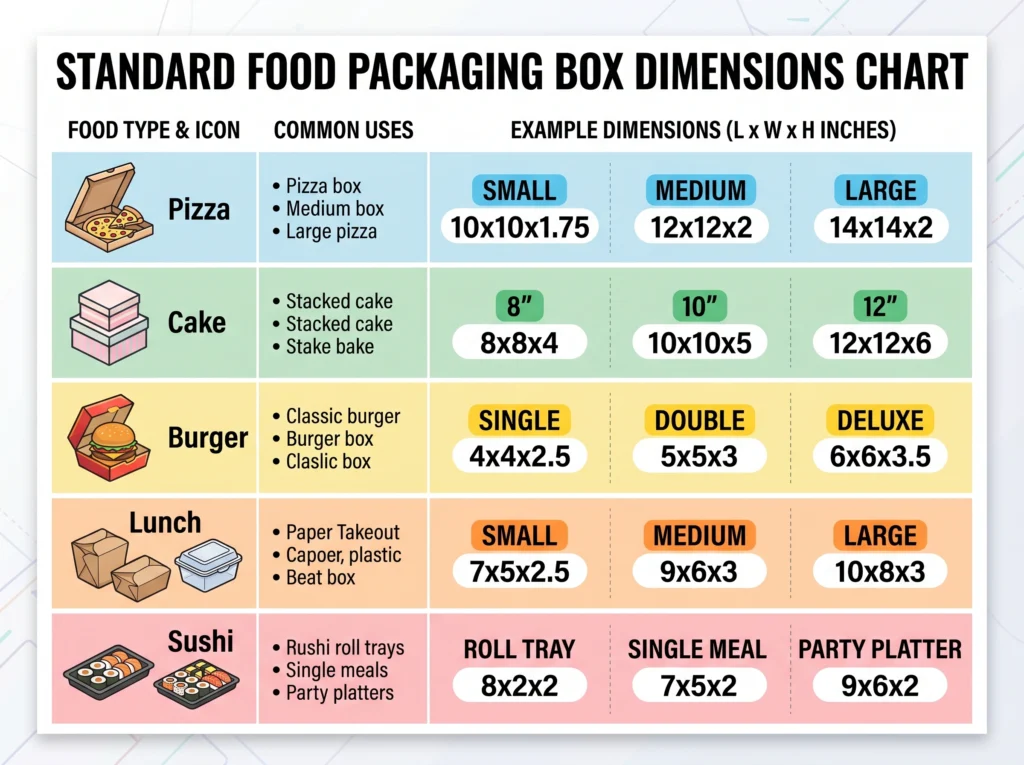
Below is a handy standard food packaging box dimensions chart. These are common sizes used across the food service industry. Use them as a starting point, then adjust for your menu.
| Box Type | Common Size (L x W x H) | Best Used For | Typical Material |
|---|---|---|---|
| Pizza Box | 10x10x2″ / 12x12x2″ / 16x16x2″ | Pizzas, flatbreads | Corrugated fiberboard (E-flute) |
| Cake / Bakery Box | 8x8x4″ / 10x10x5″ | Cakes, pastries, cupcakes | Paperboard with window cutout |
| Burger Box | 5x5x3″ / 6x6x3″ | Burgers, sliders, buns | Kraft paper, grease-resistant |
| Lunch / Meal Prep Box | 9x6x3″ / 8x6x2″ | Combo meals, salads, rice bowls | Kraft, food-grade, leak-proof |
| Noodle / Pail Box | 3x3x4″ (16 oz) | Noodles, fries, rice | Paperboard, foldable |
| Sushi Box | 7x5x2″ / 9x6x2″ | Sushi rolls, sashimi | Clear PET or kraft clamshell |
| Sandwich / Wrap Box | 4x4x4″ | Wraps, subs, panini | Kraft, tuck-end design |
| Donut / Dessert Box | 6x6x3″ / 9x9x3″ | Donuts, cookies, treats | Paperboard with insert |
These sizes cover most needs, but custom orders let you fine-tune the fit for your exact product.
Matching the Box to the Food
Different foods need different features. Here is how to think it through.
Hot and greasy foods like fries and burgers need a grease-resistant, food-grade box with ventilation holes. The holes let steam escape so the food does not get soggy. Cold or fresh foods like salads and sushi do better in a leak-proof clamshell container or a box with a window cutout so customers can see inside.
Delicate items like cakes and pastries need a sturdy bakery box with an insert or tray to stop sliding. Stacked or layered meals work best in a hinged lid design with a solid auto-lock bottom that holds weight without bending.
For food delivery box dimension standards, brands shipping through services like DoorDash and Uber Eats often choose insulated boxes that keep meals warm during transit.
Also Read: Vape Packaging Box Dimensions: A Simple Guide for the Perfect Fit
Choosing the Right Material
The box shape matters, but so does what it is made of. Here are the common choices.
- Kraft paper: natural look, strong, great for eco-friendly branding
- Corrugated fiberboard: extra strong, ideal for shipping perishable food and pizza
- Paperboard: light and smooth, perfect for custom printing on bakery and dessert boxes
- Clamshell (PET or kraft): easy open-and-close, good for grab-and-go meals
Look for recyclable, biodegradable, or compostable options. These match the rise of sustainable food packaging and help your brand connect with eco-minded customers. Many buyers now look for plastic-free packaging and plant-based packaging as well.
How Box Size Affects Shipping Costs
If you ship food, size is money. Carriers use dimensional weight (DIM weight), which means a big, light box can cost as much as a small, heavy one. The fix is right-sizing packaging. Choose the smallest box that protects the food well.
Smaller, smarter boxes also support reduced packaging waste, which is a clear win for both your budget and the planet. Nesting and stackability also help you store boxes neatly and ship more in less space.
Money Saver: Before a large order, ask your supplier about MOQ (minimum order quantity) and bulk packaging rates. Buying smart at scale lowers your cost per box.
Quick Box Selection Checklist
Use this fast checklist before you order.
- Measure your food at its widest and tallest points.
- Add a small buffer so the food fits without being squeezed.
- Pick the interior dimension that matches, not the exterior.
- Choose features like vents, a window cutout, or a leak-proof seal.
- Select a material that fits your food and your values.
- Confirm capacity in oz or ml for cups, bowls, and trays.
- Plan for branding with space for custom printing and your logo.
Trends Shaping Food Box Design Today
Food packaging keeps evolving. A few trends are worth watching.
Ghost kitchen packaging is growing fast as delivery-only kitchens need boxes built for transit. Tamper-evident seals give customers peace of mind that their meal arrived untouched. QR-coded packaging and smart packaging add a digital layer, linking to menus, reorder pages, or freshness info. Many brands are also moving to recyclable mono-material designs that are easier to recycle.
These ideas all point to one goal: packaging that protects food, builds trust, and respects the planet. Companies like ONO Custom Boxes help businesses bring these ideas to life with sizes and styles built for their menu.
Frequently Asked Questions
What is the most common pizza box size?
The most common sizes are 10x10x2″, 12x12x2″, and 16x16x2″. The size you pick should match your pizza diameter with a little room to spare.
Should I use interior or exterior dimensions for food?
Use interior dimensions. That is the real space your food sits in. Exterior size matters mainly for shipping and stacking.
How do I lower my shipping costs on food boxes?
Use right-sizing packaging to cut dimensional weight. The smaller the box that still protects the food, the lower your cost.
What box is best for keeping food fresh?
For hot food, use a vented, grease-resistant box. For cold food, use a leak-proof clamshell. Both keep food at its best during travel.
Are eco-friendly food boxes strong enough?
Yes. Modern kraft and corrugated boxes are both recyclable and sturdy, so you do not have to choose between strength and sustainability.
Final Thoughts
Choosing the right food packaging box dimensions is a simple skill that pays off every single day. Measure carefully, match the box to the food, and pick a material that fits your brand and your goals. Do that, and your meals will arrive fresh, look great, and cost less to ship.
Start with the standard food packaging box dimensions chart above, fine-tune for your menu, and you will be set up for success.