
Choosing the right oyster pail box can feel tricky when every supplier lists different sizes. The good news? Once you understand how packaging dimensions match food capacity, picking the perfect box becomes simple and fast.
This friendly guide walks you through every standard oyster pail size, what each one holds, and which dish fits best. By the end, you’ll know exactly which takeout box dimensions work for your menu, your branding, and your budget.
What Is an Oyster Pail Box?
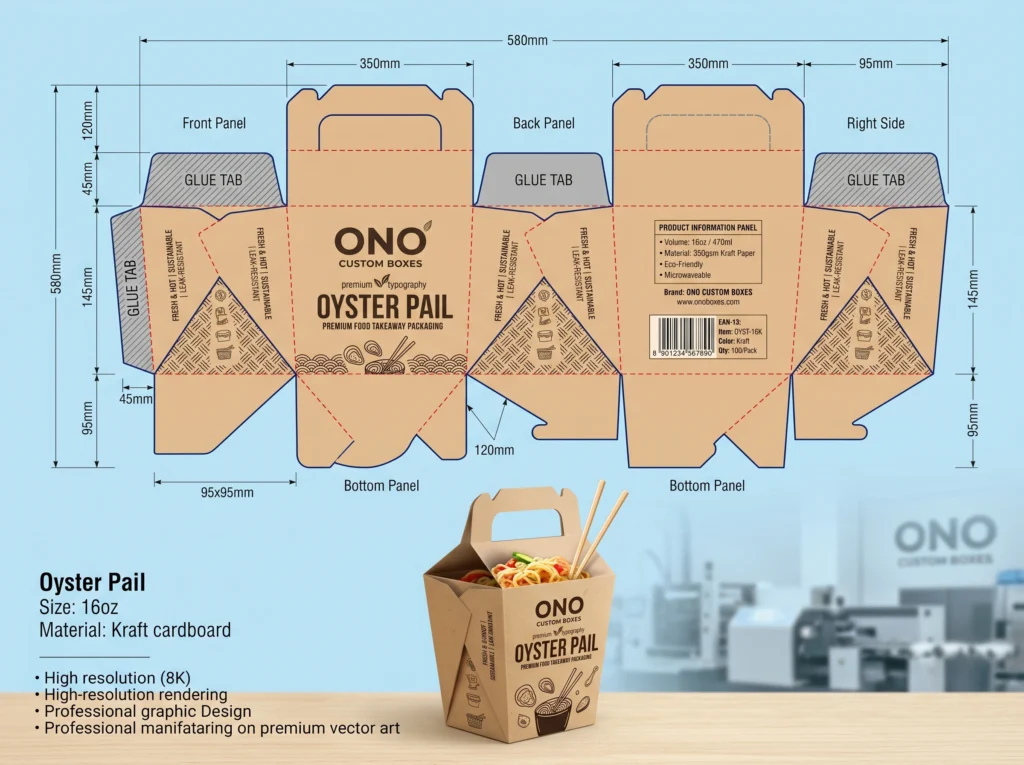
An oyster pail is the iconic folding Chinese takeout box with a thin wire handle on top. Originally designed to carry fresh oysters, it became the go-to container for food packaging because it’s leak-resistant, foldable, and easy to print on.
Today, restaurants, food trucks, ghost kitchens, and e-commerce sellers use these paperboard containers for noodles, rice, salads, snacks, and even party favors. The shape is recognizable, the kraft paper look feels premium, and the design keeps food warm.
Why Oyster Pail Dimensions Matter
Getting the box size right protects your food, your costs, and your customer experience. Here’s why packaging measurements deserve your attention:
- Portion fit: The right container capacity stops spills and keeps portions looking full.
- Shipping costs: Smaller, stackable boxes lower freight and storage fees.
- Branding space: Larger surface area gives more room for your custom printing and logo.
- Food safety: Proper sizing supports grease resistance and a secure, leak-proof seal.
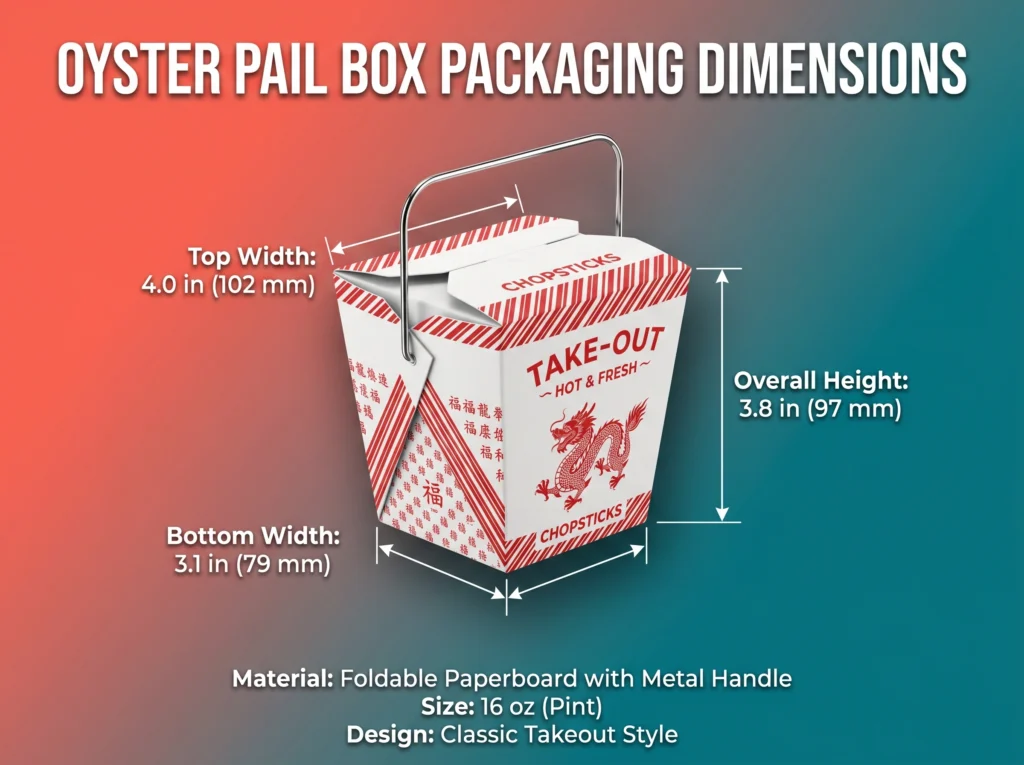
Understanding the difference between capacity (how much it holds, measured in ounces or milliliters) and physical dimensions (the actual length, width, and height) is the key to smart sourcing.
Standard Oyster Pail Box Sizes and Dimensions Chart
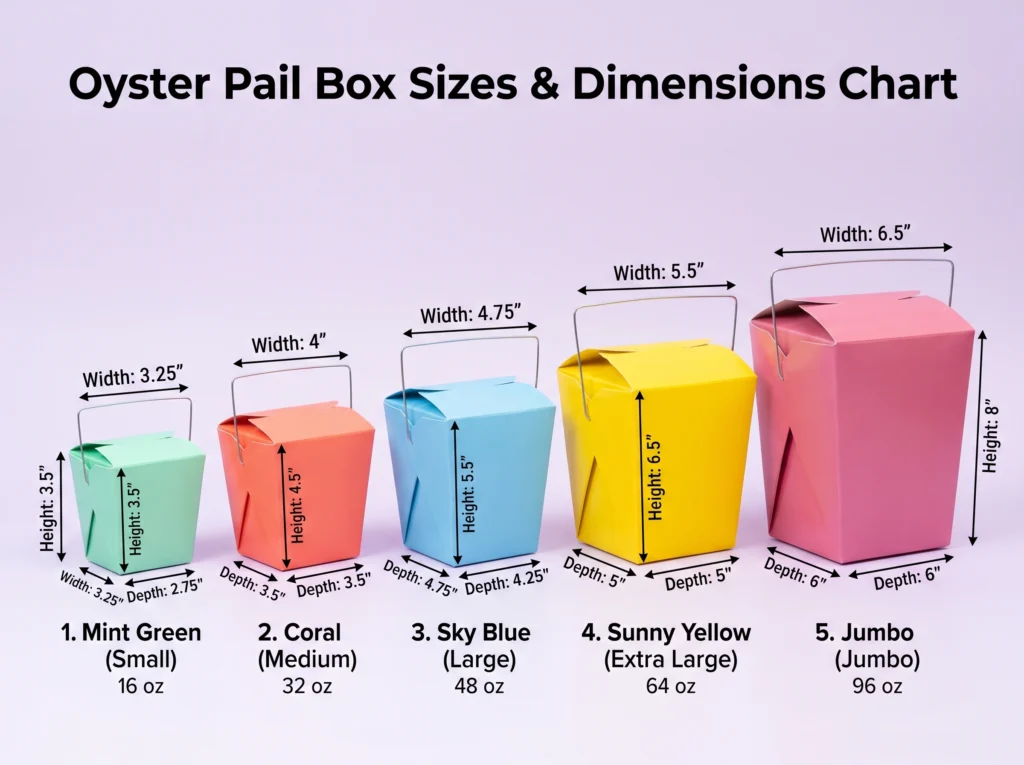
Below is a clear size chart mapping each popular oyster pail capacity to its approximate dimensions and best food use. Note that exact measurements vary slightly between manufacturers, so always confirm specs before a bulk order.
| Capacity | Approx. Dimensions (L × W × H) | Best For |
|---|---|---|
| 8 oz (236 ml) | 2.75″ × 2″ × 2.5″ | Sauces, dips, small snacks, samples |
| 16 oz (473 ml) | 3″ × 2.5″ × 3.5″ | Single noodle servings, sides, appetizers |
| 26 oz (768 ml) | 3.5″ × 3″ × 4″ | Rice bowls, salads, main dishes |
| 32 oz (946 ml) | 4″ × 3.5″ × 4.5″ | Generous mains, stir-fry, pasta |
| 64 oz (1,892 ml) | 5.25″ × 4.5″ × 5″ | Family portions, sharing meals, bulk items |
Quick tip: When in doubt, size up slightly. A box that’s a touch roomy looks fuller and prevents messy overflow during delivery.
Capacity vs. Dimensions: What’s the Difference?
This is the most common point of confusion, so let’s make it crystal clear.
Capacity tells you the volume a box holds, usually shown in fluid ounces or milliliters. Dimensions tell you the physical size of the folded box, shown as length × width × height in inches or centimeters.
Two boxes can hold the same ounces but have different shapes, one taller and narrow, one short and wide. Always check both numbers so the box fits your food and your packaging line.
Which Oyster Pail Size Should You Choose?
Match the box to the dish for the best presentation and value:
- Noodles and pasta: A 16 oz or 26 oz pail keeps strands neat and warm.
- Rice bowls: The 26 oz size offers the perfect balance of room and portion control.
- Salads: Go with 32 oz so greens stay loose and fresh.
- Family meals: The 64 oz box handles sharing portions with ease.
- Sauces and sides: The compact 8 oz pail is ideal for dips and extras.
Material and Sustainability Options
Beyond dimensions, the material shapes your customer’s experience and your eco-footprint. Popular choices include:
- Kraft paperboard: A natural, earthy look that signals quality and eco-friendly packaging.
- Poly-coated board: Adds grease resistance and moisture protection for saucy dishes.
- Compostable and recyclable options: Great for brands focused on sustainable packaging and green messaging.
Many sizes are microwave-safe when made without metal handles, and some are freezer-friendly, so ask your supplier about heat and cold ratings for each option.
Also Read: Serum Box Packaging Dimensions: The Complete Easy Guide
Custom Oyster Pail Packaging: What to Know
Want your branded takeout boxes to stand out? Custom oyster pail packaging lets you print logos, colors, and patterns directly on the box. Keep these points in mind:
- Minimum order quantity (MOQ): Custom runs often start at a set number of units, so plan ahead.
- Print area: Larger box dimensions offer more space for designs and messaging.
- Lead time: Custom printing adds production time, so order early for busy seasons.
- Unit cost: Bigger sizes and full-color printing affect your per-box price.
A trusted partner like ONO Custom Boxes can help you match the right dimensions to your menu while keeping your branding sharp and your costs in check.
Storage and Shipping Tips
Smart packaging choices save money long after the order arrives:
- Choose flat-pack or collapsible styles to shrink storage space.
- Keep stackable sizes consistent so boxes nest neatly on shelves.
- Order in bulk to lower per-unit and freight costs.
- Store boxes in a dry, cool spot to protect the paperboard from moisture.
Frequently Asked Questions
What are the standard oyster pail sizes?
The most common sizes are 8 oz, 16 oz, 26 oz, 32 oz, and 64 oz, covering everything from sauces to family-sized meals.
What are the dimensions of a 26 oz oyster pail?
A 26 oz oyster pail typically measures around 3.5″ × 3″ × 4″, though exact specs vary by manufacturer.
Are oyster pail boxes leak-proof?
Many poly-coated oyster pails resist leaks and grease, making them great for saucy dishes. Always confirm the coating for liquid-heavy foods.
Can you microwave an oyster pail box?
Yes, if the box is microwave-safe and has no metal wire handle. Remove any metal handle first and check the supplier’s heat rating.
What’s the difference between an oyster pail and a Chinese takeout box?
They’re the same thing! “Oyster pail” and “Chinese takeout box” both describe the folding paperboard container with a wire handle.
What size oyster pail is best for rice or noodles?
A 16 oz or 26 oz pail works beautifully for single servings of rice or noodles.
Are oyster pail boxes recyclable?
Many kraft and uncoated options are recyclable or compostable. Coated versions depend on local recycling rules, so check your area’s guidelines.
Final Thoughts
Picking the right oyster pail box packaging dimensions comes down to one simple idea: match the capacity and size to your food, your branding, and your shipping needs. Use the size chart above as your go-to reference, confirm specs with your supplier, and you’ll deliver meals that look great and travel safely every time.
With the right box in hand, your food stays fresh, your brand shines, and your customers come back for more.