
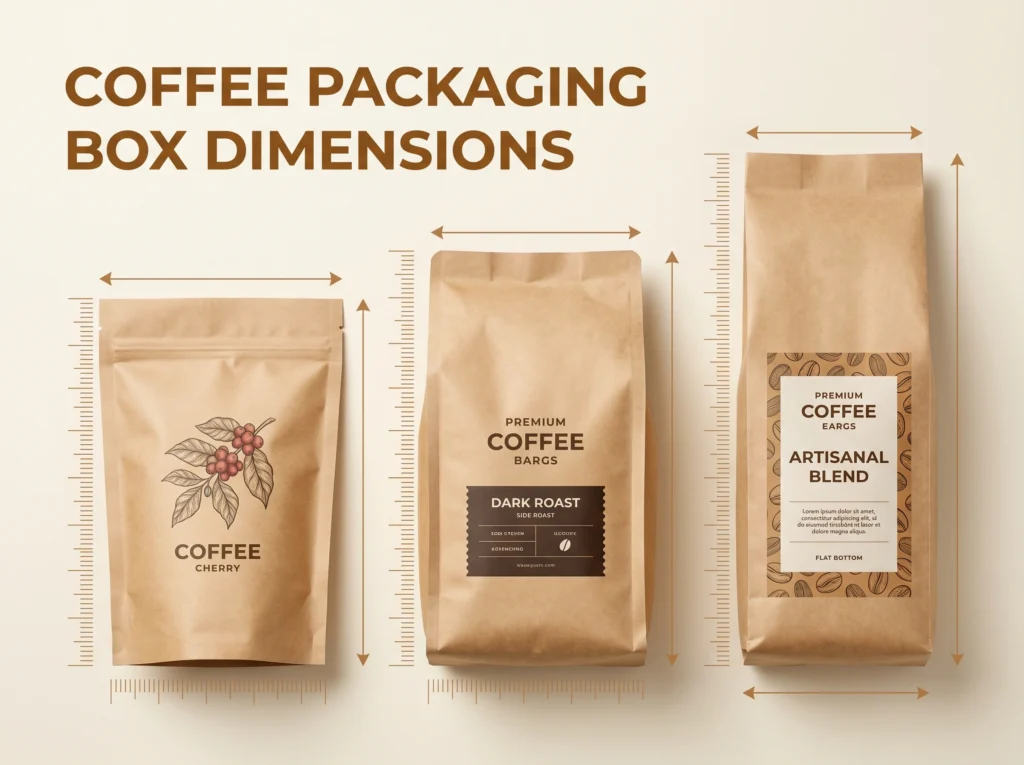
Choosing the right coffee box size is one of the smartest moves you can make for your brand. Get it right, and your beans stay fresh, your shipping costs drop, and your coffee packaging looks amazing on the shelf. Get it wrong, and you waste money on air, crushed bags, and unhappy customers.
This friendly, easy-to-follow guide breaks down everything you need to know about coffee packaging box dimensions. Whether you sell 250g of single-origin beans or full 1kg / 2.2lb wholesale bags, you’ll walk away knowing exactly which size fits your product. Let’s dive in!
Why Coffee Packaging Box Dimensions Matter So Much
Coffee is sensitive. It needs protection from air, light, and moisture to taste its best. The right packaging box does three big jobs at once:
- It keeps your coffee fresh by giving the degassing valve and barrier film room to work.
- It saves money by cutting wasted space (and shipping weight).
- It makes your custom branded coffee bags pop, so shoppers reach for yours first.
When your box dimensions match your fill weight, everything just clicks. Too big, and your coffee bag rattles around and gets crushed. Too small, and you can’t seal it properly. The sweet spot is what we’re chasing in this guide.
Understanding How Coffee Is Measured
Before we look at sizes, let’s clear up the units. Coffee is sold by net weight, not volume. You’ll see weights in grams (250g, 340g, 500g, 1kg) and in ounces (8oz, 12oz, 16oz) or pounds.
Here’s the tricky part: the same weight can take up different space depending on whether you’re packing whole beans or ground coffee. Whole beans are fluffier and need more room. Ground coffee settles and packs tighter. That’s why fill weight vs. volume is such an important idea when picking your coffee bag size.
You also need headspace, a little gap at the top of the bag. This space lets you seal the package cleanly and gives gases somewhere to go.
Also Read: Tea Packaging Box Dimensions: The Complete Sizing Guide for Brands
Common Coffee Bag Styles and Their Dimensions
Different bag styles fit different needs. Here are the most popular ones you’ll find.
A stand-up pouch (SUP) stands tall on a shelf and shows off your design. A side-gusset bag is the classic coffee look with folds on each side. A flat-bottom (box) pouch sits flat and feels premium. A quad-seal bag has crisp corners and a sturdy shape. Each style uses a gusset (the folded part that lets the bag expand) measured by gusset width.
Standard Coffee Bag Size Chart
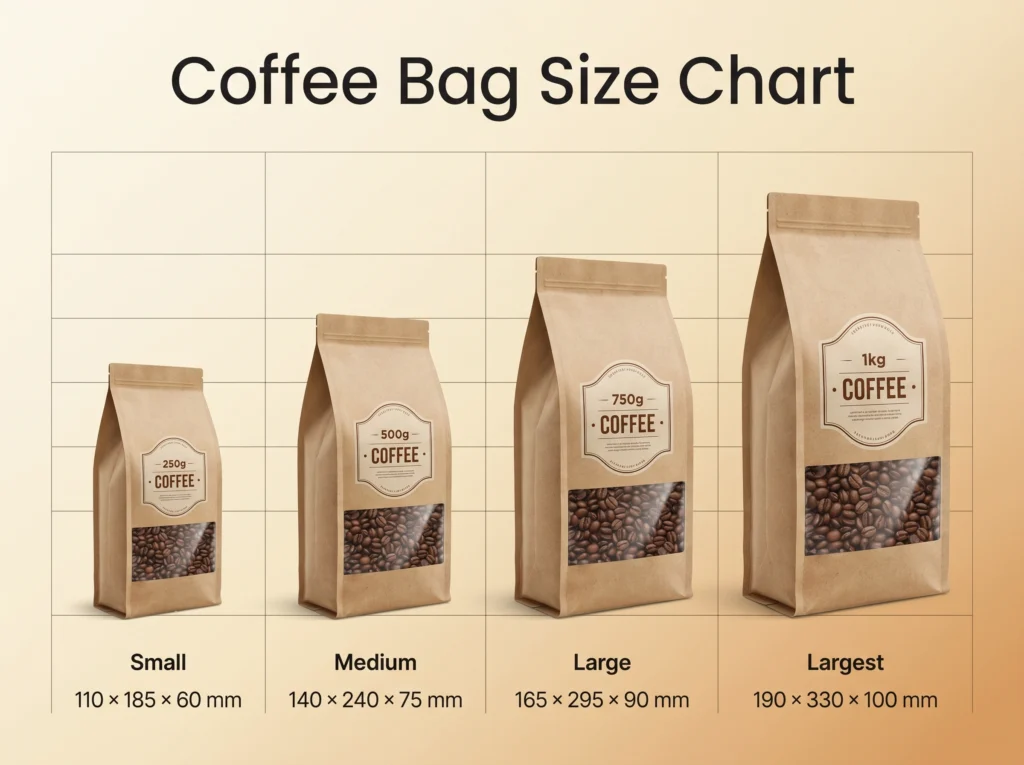
This table shows typical standard coffee bag sizes mapped to common fill weights. Use it as your starting point. Remember, these are general guides, measured as width × height × depth (gusset).
| Fill Weight | Approx. Ounces | Bag Dimensions (W × H × Gusset) | Best For |
|---|---|---|---|
| 250g | ~8.8 oz | 5″ × 8.5″ × 3″ | Single-origin samples, retail |
| 340g | 12 oz | 5.5″ × 9″ × 3.5″ | Most popular retail size |
| 500g | ~17.6 oz | 6.5″ × 10″ × 3.5″ | Value retail packs |
| 1kg | 2.2 lb | 7.5″ × 12″ × 4″ | Wholesale, cafés, bulk |
Tip: Always confirm sizes with your supplier, since material thickness and bag style can shift these numbers a little.
Also Read: Cigarette Box Dimensions: The Complete Size Guide
Shipping Box and Carton Dimensions
Your bags need a home during transit. That’s where the shipping box comes in. A corrugated mailer protects bags from bumps and drops. For bulk orders, a coffee carton or Regular Slotted Container (RSC) holds multiple bags neatly.
When choosing a mailer box for coffee bags, pay attention to inner dimensions vs. outer dimensions. The inner space is what actually fits your product. Box strength comes from the flute type, like B-flute or E-flute corrugated cardboard. E-flute is thinner and great for retail-ready folding cartons, while B-flute gives more cushioning for shipping.
If you’re building a coffee subscription box or a coffee gift box, plan a little extra room for filler, a thank-you card, or a brochure. These small touches turn a simple delivery into a delightful unboxing moment.
How to Measure Coffee Packaging the Right Way
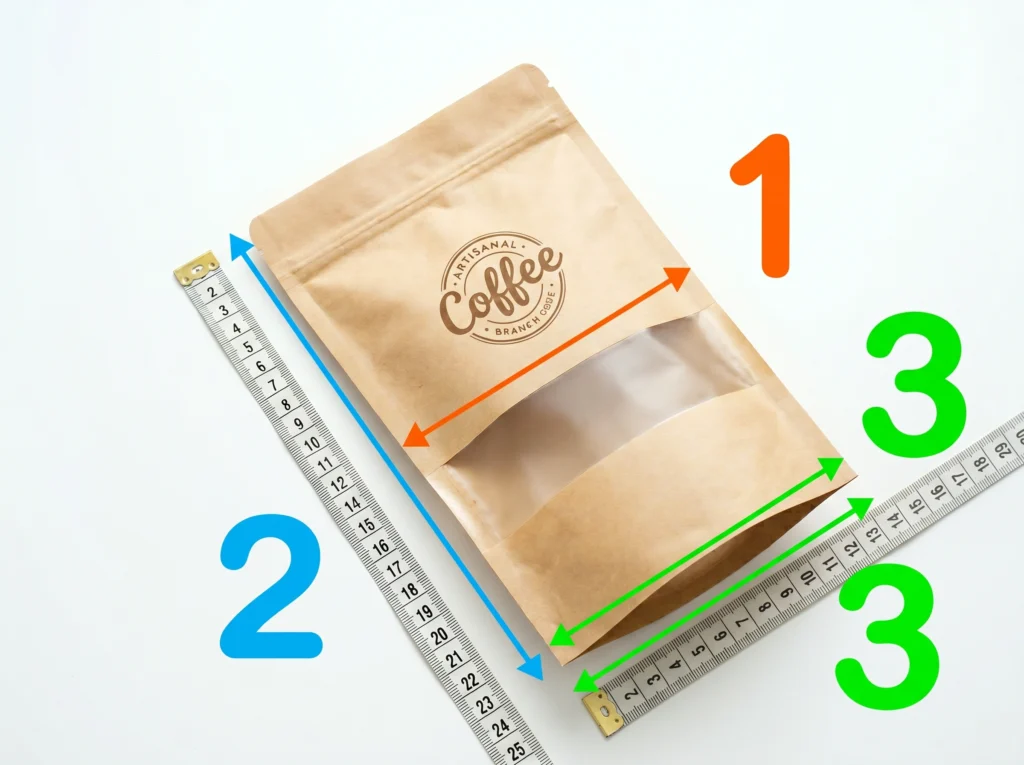
Want to know how to measure coffee packaging like a pro? Follow these simple steps:
- Fill a sample bag with your exact product weight, whether beans or ground coffee.
- Let it settle, then measure the width across the front.
- Measure the height from the bottom seal to just below the top seal, leaving headspace.
- Open the bottom gusset fully and measure its depth.
- Add a small buffer so your resealable zipper or tin-tie closes easily.
Doing a real-world test beats guessing every time. It saves you from ordering thousands of bags that don’t fit.
Choosing the Right Materials
The look and feel of your package depend on materials. Kraft paper gives a natural, earthy vibe. PET and aluminum foil layers create a strong barrier film that locks in freshness. For eco-minded brands, compostable film and recyclable mono-material pouches are growing fast.
A one-way degassing valve is a must for fresh-roasted coffee. It lets carbon dioxide escape without letting oxygen in. Pair that with nitrogen flush sealing, and your coffee stays fresher for longer. These features all need to fit within your chosen coffee packaging box dimensions, so factor them into your planning.
Trending Ideas to Make Your Packaging Stand Out
Coffee packaging keeps evolving, and customers love brands that feel modern. Here are fresh trends worth exploring:
- Sustainable coffee packaging and compostable coffee bags for eco-conscious buyers.
- Minimalist coffee bag design with clean fonts and bold color.
- QR code packaging that links to brew guides or your story.
- Single-origin packaging that celebrates where the beans grew.
- Low-MOQ coffee packaging so small roasters can order custom sizes affordably.
Brands that blend smart sizing with great design win loyal fans. A company like ONO Custom Boxes can help you turn these ideas into real, shelf-ready packaging that fits your beans perfectly.
Also Read: Coffee Mug Box Packaging Dimensions: The Complete Size Guide
Retail vs. Wholesale Packaging
| Feature | Retail Packaging | Wholesale Packaging |
|---|---|---|
| Common Weight | 250g–500g | 1kg–5kg |
| Bag Style | Stand-up pouch | Side-gusset or quad-seal |
| Priority | Shelf appeal | Bulk efficiency |
| Closure | Resealable zipper | Heat seal |
| Box Type | Folding carton | Corrugated RSC carton |
Frequently Asked Questions
What is the most popular coffee bag size?
The 340g / 12oz bag is the go-to retail size for most roasters. It fits comfortably in cabinets and lasts the average household a couple of weeks.
How do I stop my coffee bags from getting crushed in shipping?
Use a snug corrugated mailer with the right inner dimensions, choose B-flute for cushioning, and avoid leaving too much empty space.
Can I get custom coffee packaging box dimensions?
Yes! Many suppliers offer custom coffee box packaging dimensions with low-MOQ options, so you can match your exact bean weight and brand style.
Do whole beans and ground coffee need different bag sizes?
Often, yes. Whole beans take up more space, so the same weight may need a slightly larger bag than ground coffee.
Final Thoughts
Getting your coffee packaging box dimensions right is a win for freshness, savings, and style. Start with the standard coffee bag size chart, test a real sample, pick the right shipping box, and add the features your coffee needs, like a degassing valve and a strong barrier film.
With the right sizing and a little creativity, your coffee will look great, ship safely, and taste fresh in every cup. Happy packaging!