
Picture this: your first batch of custom boxes arrives. You slide your cream jar inside… and it rattles like a maraca. Or worse it doesn’t fit at all.
This happens more often than you think. The good news? It’s 100% avoidable. This guide shows you exactly how cream box packaging dimensions work, so you order the right size the first time.
What Are Cream Box Packaging Dimensions?
Cream box packaging dimensions are the three measurements of a box: Length × Width × Height (L × W × H). These numbers tell you how much space the box has inside for your cream jar or tube.
Here’s the part most people miss: there are two kinds of measurements.
- Internal dimensions = the space inside the box (this is what your jar needs to fit)
- External dimensions = the outside size (this affects shipping costs and shelf space)
Always ask your packaging supplier which one they list. Most quote internal dimensions but never assume.
Standard Cream Box Size Chart
This is the fastest way to find your size. Match your jar volume to the recommended box dimensions below:
| Jar Size | Box Dimensions (Inches) | Box Dimensions (mm) | Best Box Style |
|---|---|---|---|
| 15ml (0.5 oz) | 1.6 × 1.6 × 1.4 | 40 × 40 × 35 | Tuck-end box |
| 30ml (1 oz) | 2 × 2 × 1.8 | 50 × 50 × 45 | Tuck-end box |
| 50ml (1.7 oz) | 2.4 × 2.4 × 2.2 | 60 × 60 × 55 | Tuck-end or sleeve box |
| 100ml (3.4 oz) | 3 × 3 × 2.6 | 75 × 75 × 65 | Tuck-end or rigid box |
| 200ml (6.8 oz) | 3.5 × 3.5 × 3.2 | 90 × 90 × 80 | Rigid box |
Tip: These sizes include a small clearance gap. Your exact jar shape may vary, so always measure first (steps below).
How to Measure Your Cream Jar in 3 Easy Steps
Grab a ruler or caliper. This takes two minutes.
Step 1: Measure the widest point. Include the lid lids are often wider than the jar body.
Step 2: Measure the full height. Go from the base to the very top of the closed lid.
Step 3: Add clearance. Add 2–3mm (about 1/8 inch) on each side. This gives a snug fit without squeezing. If you plan to use an insert tray or padding, add extra room for that too.
That’s it. Those final numbers are your internal box dimensions.
Why Getting Dimensions Right Saves You Money
The right custom packaging size does three big things:
1. Protects your product. A snug fit stops the jar from bouncing during shipping. Less damage means fewer refunds and happier customers.
2. Cuts shipping costs. Carriers charge by dimensional weight the size of your package, not just its heaviness. A box that’s even half an inch too big can bump you into a higher price bracket on every single order.
3. Looks premium. A jar that fits perfectly feels intentional. That’s the heart of a great unboxing experience and it’s why brands with minimalist cosmetic packaging win so many repeat buyers.
Choosing the Right Box Style for Your Dimensions
Your size affects which box structure works best:
- Tuck-end boxes (folding cartons) the go-to for most skincare packaging sizes. Light, affordable, easy to print on.
- Rigid boxes thicker and sturdier. Great for larger jars and luxury creams.
- Sleeve boxes a sliding outer cover. Stylish for gift sets.
Material matters too. Smaller boxes work well with lighter cardstock (around 14–18pt). Bigger boxes need heavier stock or kraft paperboard so they don’t flex. Many brands now choose eco-friendly cream packaging like biodegradable or kraft cream boxes customers notice, and they love it.
Designing Your Box: The Dieline Basics
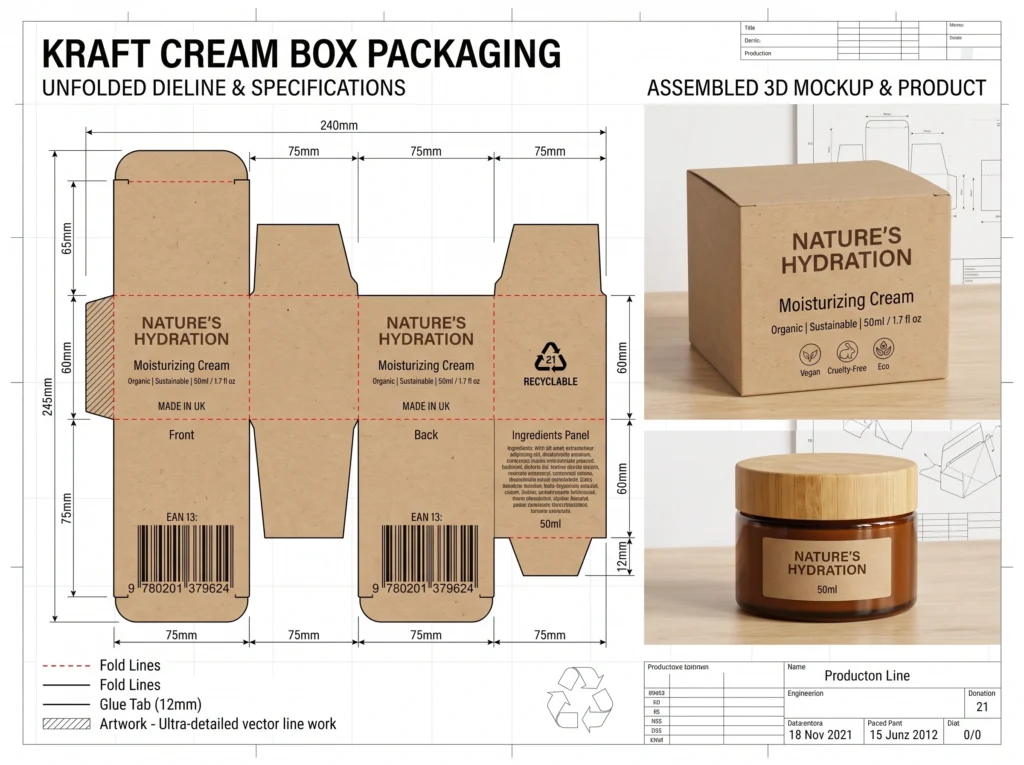
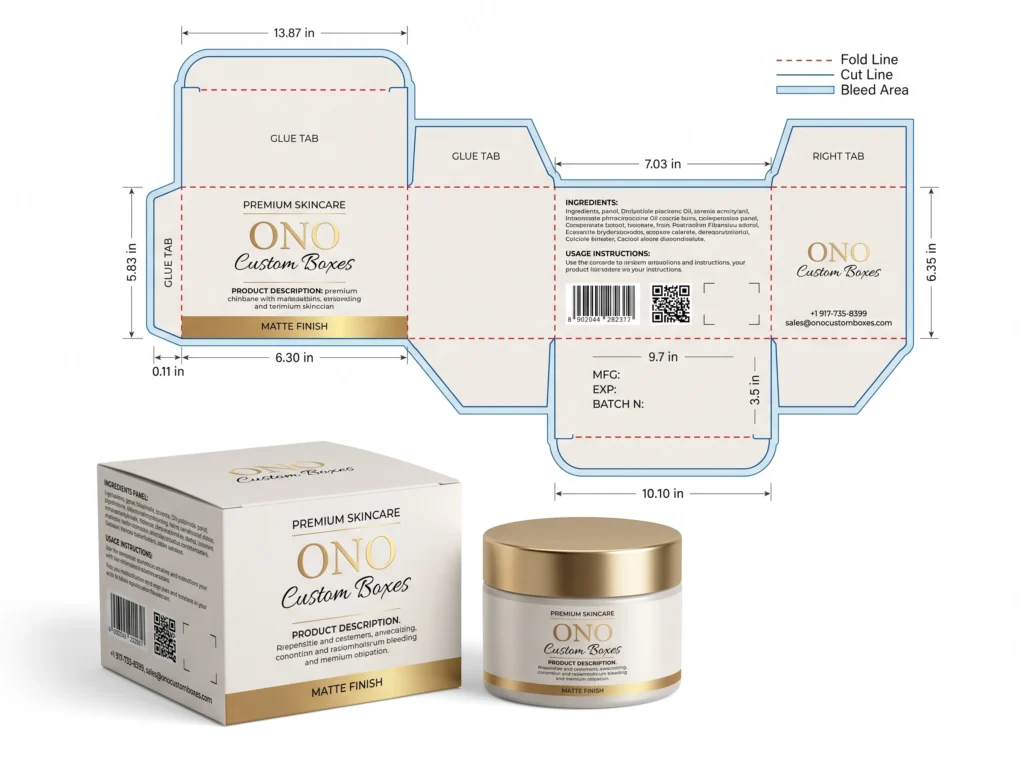
A dieline is the flat blueprint of your box before it’s folded. It shows every panel, fold line, and glue tab. When you order custom printed cream boxes, your supplier builds the dieline from your dimensions.
One helpful shortcut: many suppliers offer free dieline templates for standard sizes. Companies like ONO Custom Boxes provide dieline support and low MOQ options, which is a big help for new skincare brands and private label sellers who want to test a size before committing to thousands of units.
Common Mistakes to Avoid (User Pain Points Solved)
- Mixing up mm and inches. Double-check your units before ordering. A “60” box in mm is very different from 60 inches!
- Forgetting the lid height. The lid adds height. Measure the closed jar.
- Ordering without a sample. Request one sample box first. It costs a little now and saves a lot later.
- Ignoring the dimension order. Suppliers list sizes as L × W × H, but always confirm a few flip the order.
- Skipping clearance space. Zero clearance = a box you have to force open. Too much = rattling. Aim for 2–3mm per side.
Frequently Asked Questions
What are the standard dimensions of a cream box?
Most cream boxes range from 40 × 40 × 35mm (for 15ml jars) up to 90 × 90 × 80mm (for 200ml jars). See the size chart above for exact matches.
Are box dimensions measured inside or outside?
Most suppliers list internal dimensions, since that’s the space your jar needs. Always confirm before you order.
What box size fits a 2 oz (60ml) cream jar?
A box around 2.5 × 2.5 × 2.3 inches (65 × 65 × 58mm) usually works well. Measure your exact jar to be sure, since lid shapes vary.
How much clearance should I leave?
Add 2–3mm on each side of the jar. This gives a smooth, snug fit.
Do box dimensions really affect shipping costs?
Yes. Carriers use dimensional weight pricing, so smaller boxes almost always cost less to ship.
Can I get custom-size cream boxes in small quantities?
Yes. Many suppliers now offer low minimum order quantities (MOQ), sometimes starting at 50–100 boxes.
What material thickness should I choose?
For small cream boxes, 14–18pt cardstock is common. Larger or heavier jars do better with rigid board.
Get these five steps right, and your cosmetic packaging will fit perfectly, ship affordably, and look amazing on every shelf.