
Ever ordered boxes that were too small for your products? You are not alone. Picking the wrong cardboard box dimensions is one of the most common (and costly) mistakes new sellers make.
Here is the good news: measuring a box is simple once you know the rules. In this guide, you will learn how box measurements work, which standard box sizes fit your needs, and how the right size can lower your shipping costs.
Let’s open this up.
Quick Answer
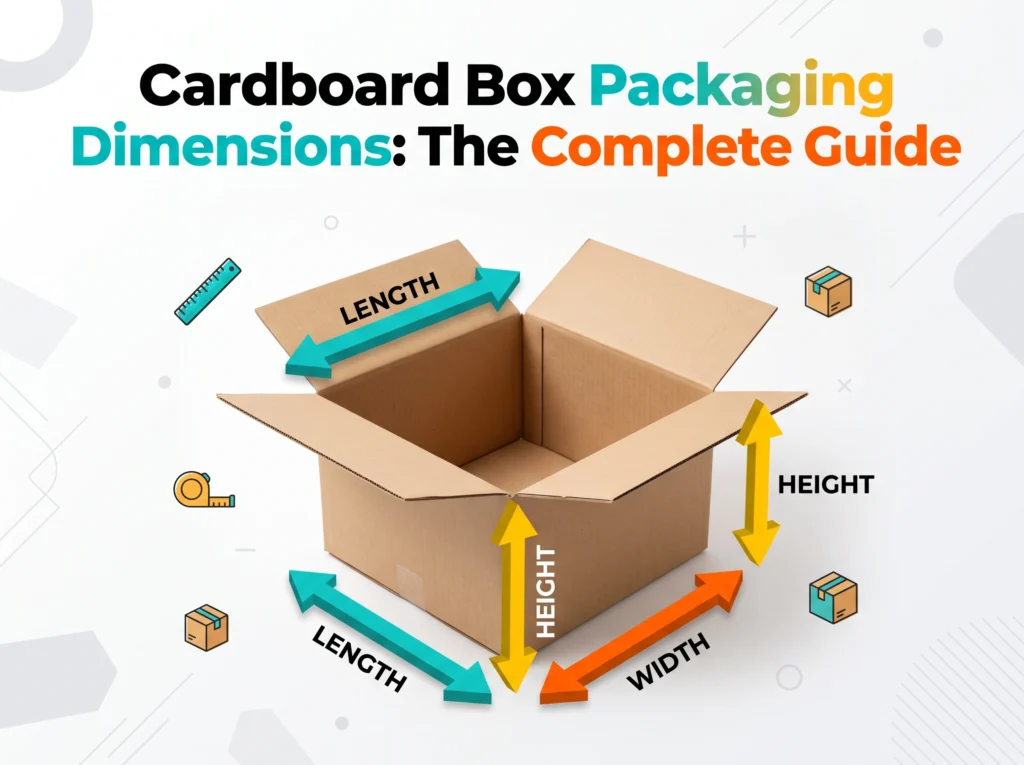
Cardboard box packaging dimensions are always listed as Length × Width × Height (L × W × H), and they refer to the internal dimensions of the box. The length is the longest side of the opening, the width is the shorter side of the opening, and the height (or depth) is the distance from the opening down to the base.
So a 12″ × 10″ × 6″ box has an opening that is 12 inches long and 10 inches wide, with 6 inches of depth inside.
How to Measure Cardboard Box Dimensions (Step by Step)
Grab a tape measure and an open box. Then follow these three steps:
- Length: Measure the longest side of the box opening.
- Width: Measure the shorter side of the same opening.
- Height (Depth): Measure from the top of the opening down to the bottom of the box.
Pro Tip: Always measure from the inside. Internal dimensions tell you how much space your product gets. External dimensions matter for shipping rates, because carriers measure the outside of your package.
Internal vs. External Dimensions: Why It Matters
This small detail causes big problems. Here is the difference:
- Internal dimensions = the space inside the box (fits your product)
- External dimensions = the outside size (used for dimensional weight pricing)
Corrugated cardboard has thickness. A single-wall box adds about 1/8 inch per side. A double-wall box adds about 1/4 inch per side. If your product is exactly 12 inches long, a box with a 12-inch external length will not fit it. Always check the internal measurements before you buy.
Standard Cardboard Box Size Chart
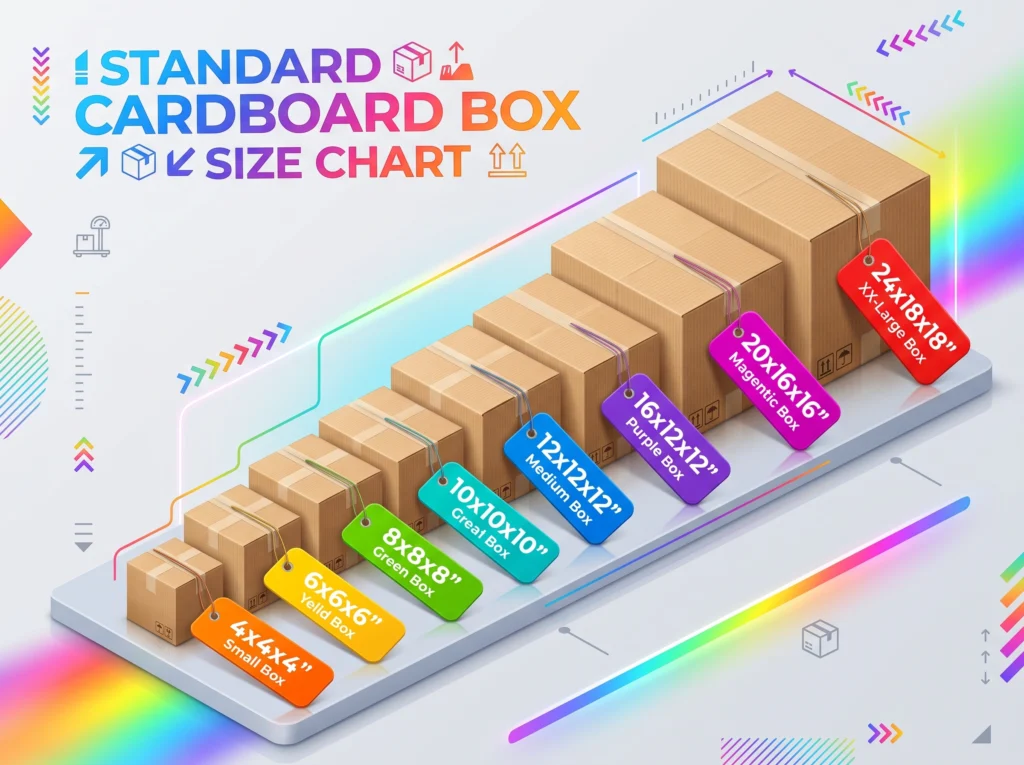
Here is a handy box size chart with the most popular shipping box sizes and what they work best for:
| Box Size (L × W × H) | Common Name | Best For |
|---|---|---|
| 4″ × 4″ × 4″ | Extra Small Cube | Candles, cosmetics, small e-commerce items |
| 6″ × 6″ × 6″ | Small Cube | Mugs, skincare sets, accessories |
| 8″ × 8″ × 8″ | Medium Cube | Gift sets, subscription boxes |
| 12″ × 9″ × 4″ | Shirt/Apparel Box | Clothing, books, flat items |
| 12″ × 12″ × 12″ | Standard Medium | Shoes, electronics, multi-item orders |
| 16″ × 12″ × 8″ | Large Shipping Box | Home goods, bulk orders |
| 18″ × 18″ × 16″ | Moving Box (Small) | Books, kitchen items |
| 24″ × 18″ × 18″ | Moving Box (Large) | Bedding, lamps, bulky items |
Note: Sizes may vary slightly by supplier. Always confirm internal dimensions before ordering custom box sizes.
Carrier Size Rules You Should Know
Every carrier has limits. Going over them can add fees fast. Here is a quick comparison:
| Carrier | Max Size Rule | Key Detail |
|---|---|---|
| USPS | 130″ combined length + girth | Flat rate boxes have fixed sizes |
| UPS | 165″ length + girth; 108″ max length | DIM weight applies to most packages |
| FedEx | 165″ length + girth; 108″ max length | Oversize fees kick in early |
| Amazon FBA | 25″ max on any side (standard-size tier) | Strict rules; check current guidelines |
What is girth? Girth = (2 × Width) + (2 × Height). Add the length to get your combined total. Carriers use this number to spot oversized packages.
Important: Carrier rules and fees change often. Always check the official USPS, UPS, FedEx, or Amazon Seller Central pages before you ship.
How Box Dimensions Affect Your Shipping Costs
Here is where smart sizing saves real money. Carriers now charge by dimensional weight (DIM weight) a formula based on box size, not just actual weight.
The formula: (Length × Width × Height) ÷ DIM divisor (often 139 for domestic US shipments)
Example: A 12″ × 12″ × 12″ box = 1,728 cubic inches ÷ 139 = about 12.4 lbs billable weight. Even if your product weighs 3 lbs, you may pay for 13 lbs!
The fix? Right-sized packaging. Choose a box that fits your product with just 1–2 inches of clearance for void fill like paper or air pillows. Smaller box = lower DIM weight = happier profit margins.
Understanding Box Styles and Flute Types
Not all corrugated boxes are built the same. Two things change how your dimensions work in real life:
Common Box Styles
- RSC (Regular Slotted Container): The classic shipping box. All flaps meet in the middle. Great value for most products.
- Mailer Box (Roll End Tuck Top): Sturdy, self-locking, and perfect for a great unboxing experience. Popular with subscription box brands.
- Die-Cut Box: Custom shapes made from a dieline template. Ideal for unique products.
Flute Types (Board Thickness)
- E-Flute (~1/16″): Thin and smooth. Best for retail and custom printed mailer boxes.
- B-Flute (~1/8″): Good crush resistance. Common for shipping.
- C-Flute (~5/32″): The most popular choice. Strong cushioning for e-commerce shipping.
Thicker flutes mean stronger boxes but also slightly less internal space. Factor this in when choosing packaging dimensions.
How to Choose the Right Box Size (Simple Checklist)
Use this quick checklist before ordering:
- Measure your product (L × W × H) at its widest points
- Add 1–2 inches on each side for protective void fill
- Match that to the closest standard box size (cheaper than custom)
- Check the DIM weight so shipping costs stay low
- Confirm carrier limits (USPS, UPS, FedEx, or Amazon FBA rules)
- Pick the right flute type for your product’s fragility
If no standard size fits well, custom box sizes are worth it. Brands like ONO Custom Boxes let you order boxes made to your exact packaging dimensions, which cuts wasted space, lowers shipping bills, and supports sustainable packaging goals.
Common Pain Points (And How to Solve Them)
“I do not know if my dimensions are internal or external.” Ask your supplier directly. Most list internal dimensions, but always confirm especially for tight-fitting products.
“My shipping costs jumped and I do not know why.” Check your dimensional weight. A box even one inch too big can push you into a higher price tier.
“My products keep getting damaged.” Your box may be too big (items shift around) or too small (no cushioning). Aim for that 1–2 inch buffer with proper void fill.
“Custom boxes seem expensive.” Compare total cost, not just box cost. Right-sizing often saves more in shipping than the custom box premium.
“I sell internationally and units confuse me.” Keep a simple conversion handy: 1 inch = 2.54 cm. Many suppliers list both inches and centimeters.
Trending: Sustainable and Smart Packaging in 2026
The packaging world is moving fast. Here are trends worth knowing:
- Right-sized packaging: Automated box-on-demand machines cut boxes to exact product size, reducing waste.
- Frustration-free packaging: Amazon rewards easy-open, waste-free designs through its SIPP program.
- Plastic-free packaging: Paper-based void fill and kraft materials are replacing bubble wrap.
- Eco-friendly shipping boxes: Recycled corrugated fiberboard is now the industry standard.
- AI packaging design tools: Software now suggests optimal box dimensions based on your product catalog.
Choosing smart packaging dimensions is not just good for your wallet it is good for the planet, too.
Frequently Asked Questions
How do you measure cardboard box dimensions?
Measure Length × Width × Height, in that order. Length is the longest side of the opening, width is the shorter side, and height is the depth from the opening to the base. Use internal dimensions for product fit.
Are box dimensions internal or external?
Most suppliers list internal dimensions because that is the usable space. Carriers, however, measure external dimensions for pricing. Know both numbers.
What does 12x12x12 mean on a box?
It means the box is 12 inches long, 12 inches wide, and 12 inches tall inside a perfect cube with 1,728 cubic inches of space.
What is the standard size of a cardboard box?
There is no single standard, but 12″ × 12″ × 12″ is one of the most common shipping box sizes. Small cubes (4″–8″) are popular for e-commerce, while 18″+ boxes are common for moving.
How do I calculate dimensional weight?
Multiply Length × Width × Height (in inches), then divide by the carrier’s DIM divisor (often 139). Compare that number to the actual weight you pay for whichever is higher.
What is the biggest box USPS will ship?
USPS accepts packages up to 130 inches in combined length and girth. Check the current USPS site for weight limits and pricing, as rules update regularly.
What are Amazon FBA box size requirements?
Standard-size items generally must fit within set inch and weight limits, and shipment boxes have their own caps. Amazon updates these rules, so always verify in Seller Central before shipping.
What is the difference between single-wall and double-wall boxes?
A single-wall box has one layer of fluted cardboard fine for most products under 40 lbs. A double-wall box has two layers for heavy or fragile items.
How much clearance should I leave inside a box?
Leave 1–2 inches on all sides for void fill. Fragile items may need 2–3 inches of cushioning.
What is an RSC box?
RSC stands for Regular Slotted Container the most common box style, where all four top and bottom flaps are the same length and the outer flaps meet in the middle.
Key Takeaways
- Box dimensions always follow the L × W × H format
- Internal dimensions = product fit; external dimensions = shipping cost
- Use the DIM weight formula to avoid surprise fees
- Right-sized packaging saves money and reduces waste
- Always verify current carrier rules before shipping
Final Thoughts
Understanding cardboard box packaging dimensions puts you in control. You will pick better boxes, pay less for shipping, and keep your products safe on every trip. Start by measuring your best-selling product today, match it to the size chart above, and watch your packaging costs shrink.
Got a product with tricky dimensions? A quick chat with a packaging supplier can point you to the perfect fit often in minutes.