
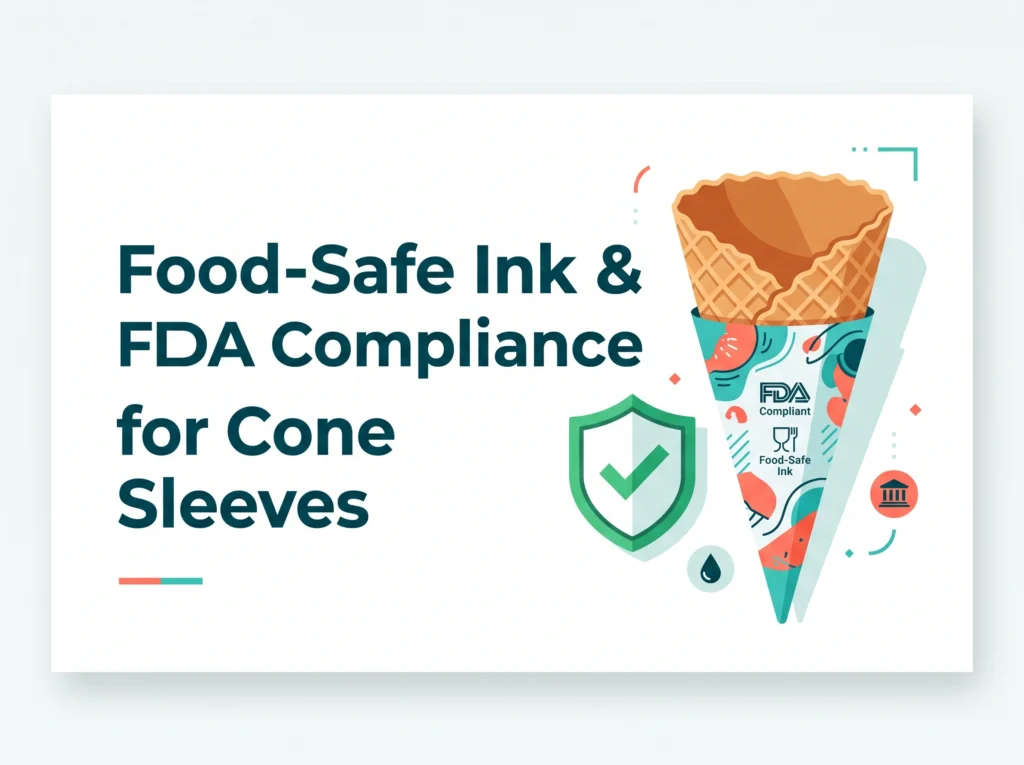
Here is a fact that surprises most food business owners: the FDA never “approves” packaging ink. Not once. Not for anyone.
So when a supplier tells you their cone sleeves use “FDA-approved ink,” that claim alone should make you pause. What you actually need is FDA-compliant printing and knowing the difference can protect your customers, your health inspection score, and your brand’s reputation.
This guide breaks down food-safe ink, FDA compliance, and food-contact materials in plain language. By the end, you will know exactly what to check before ordering printed cone sleeves for your ice cream shop, dessert truck, or snack brand.
What Is Food-Safe Ink?
Food-safe ink is printing ink made to stay where it belongs on the sleeve, not on your food. It is formulated so harmful chemicals do not transfer onto the cone or the treat inside. Experts call this transfer ink migration, and stopping it is the whole point of food-grade printing.
Three things make an ink food safe:
- Safe ingredients. The ink avoids toxic heavy metals and risky solvents. Many use GRAS substances (Generally Recognized As Safe) as building blocks.
- Low migration. Low-migration inks are designed so almost nothing moves from the print into the food, even with heat or grease.
- Proper curing. The ink must dry or cure fully. Wet or half-cured ink is the biggest cause of set-off migration when ink from one sleeve rubs onto the food-facing side of another in a stack.
Does the FDA Regulate Cone Sleeve Printing?
Yes but not the way most people think. The FDA regulates food-contact materials through rules like FDA 21 CFR 176.170, which covers paper and paperboard that touch aqueous and fatty foods. Ice cream, frozen custard, and fried snacks all count as fatty or wet foods, so this rule matters for cone sleeves.
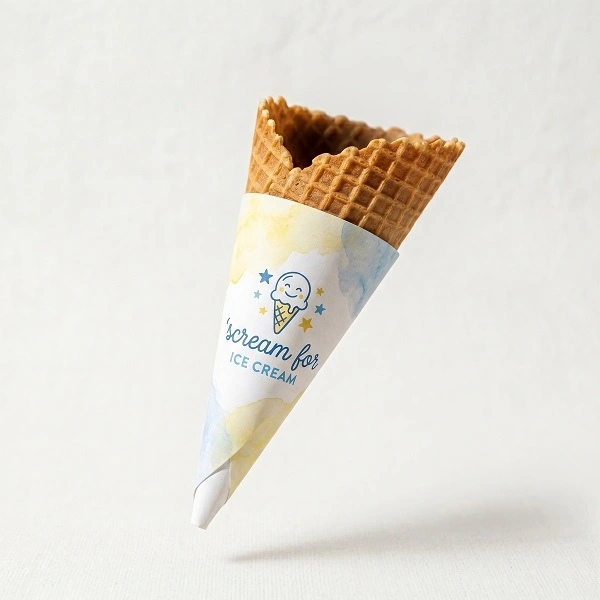
Here is the key idea: a cone sleeve is usually treated as indirect food contact packaging because the printed side faces out. But sleeves wrap tightly around cones, edges touch food, and condensation happens. Smart brands treat sleeves as if they were direct food contact items and print accordingly. Health inspectors respect that extra care and so do customers.
Good Manufacturing Practices (GMP) also apply. A compliant printer keeps inks, presses, and storage clean and documented so nothing unsafe reaches your packaging.
Food-Grade vs. Food-Safe: What’s the Difference?
These two terms get mixed up all the time.
- Food-grade means a material is made from substances allowed to touch food.
- Food-safe means the finished product material plus ink plus coating is safe in real use, at real temperatures, with real food.
A sleeve can use food-grade paper but still fail the food-safe test if the printer uses cheap ink or skips proper curing. Always ask about the full process, not just the paper.
Also Read: 10 Best Ice Cream Cone Brands in the USA (2026 Taste Test Rankings)
Comparing Food-Safe Ink Types for Cone Sleeves
| Ink Type | Food Safety Level | Print Quality | Cost | Best For |
|---|---|---|---|---|
| Water-based ink | Excellent very low migration | Good, soft colors | $ | Eco-friendly brands, kraft sleeves |
| Soy-based ink | Very good | Rich, vibrant colors | $$ | Full-color branding |
| UV low-migration ink | Excellent built for food packaging | Sharp, glossy detail | $$$ | Premium sleeves, fatty foods |
| Standard offset ink | Risky not made for food contact | High | $ | Non-food packaging only |
Quick takeaway: water-based inks and soy-based inks give small businesses safety plus value. UV low-migration inks are worth the upgrade for premium brands or greasy foods.
5 Questions to Ask Your Cone Sleeve Supplier
Print this list. Ask every supplier before you order.
- “Are your inks compliant with FDA 21 CFR 176.170?” A trusted supplier answers fast and shows documentation.
- “Do you use low-migration inks?” Listen for real terms like migration testing or EuPIA guidelines not vague promises.
- “How do you prevent set-off migration?” They should mention full curing and careful stacking.
- “Is your paperboard food-grade?” The substrate matters as much as the ink.
- “Can you provide a compliance statement?” A written statement protects you during a health inspection.
Suppliers like ONO Custom Boxes handle these questions daily and print cone sleeves with food-safe processes from paper to press, which is exactly the standard you should hold every vendor to.
Also Read: 5 Amazing Cone Sleeves Packaging Design Ideas (Guide)
Common Mistakes That Cost Food Businesses Money
- Trusting “FDA approved” claims. Remember: compliance yes, approval no. Vague claims often hide corner-cutting.
- Assuming eco-friendly means food safe. A recycled sleeve with the wrong ink can still cause ink migration. Sustainability and safety are separate checks.
- Ignoring grease and heat. Fatty foods pull chemicals out of ink faster. If you serve fried treats or rich ice cream, low-migration printing is the safer call.
- Skipping documentation. No compliance paperwork means no proof when the inspector asks. Keep supplier statements on file.
- Overlooking PFAS. Many US states now restrict PFAS (“forever chemicals”) in food packaging. Ask for PFAS-free sleeves to stay ahead of new laws.
What About International Rules?
Selling beyond the US? Two names to know:
- EU Regulation 1935/2004 the European framework for all food-contact materials.
- Swiss Ordinance a strict, widely respected list of permitted packaging ink substances. Many global brands follow it voluntarily.
If your supplier meets FDA rules plus Swiss Ordinance standards, you are covered almost anywhere.
The Payoff: Why Food-Safe Printing Wins You Customers
Safe packaging is not just a legal box to tick. It is a marketing edge. Shoppers increasingly read packaging claims, and phrases like “printed with food-safe, PFAS-free, water-based inks” build instant trust. You pass inspections with confidence, protect the people who love your food, and stand out from competitors who never thought past the design.
The best part? Food-safe printing usually adds only a small amount to your per-unit cost far less than the price of one failed inspection or one bad review.
Also Read: Cone Sleeves Packaging Dimensions: A Simple Guide for the Perfect Fit
Frequently Asked Questions
What is food-safe ink for cone sleeves? It is ink formulated with safe ingredients and low migration, so chemicals do not transfer from the printed sleeve onto the cone or food.
Are printed cone sleeves FDA compliant?
They can be if the printer uses inks and paper that meet FDA food-contact rules like 21 CFR 176.170 and follows Good Manufacturing Practices.
Does the FDA approve packaging inks? No. The FDA does not approve inks. It sets rules that materials and processes must comply with. “FDA compliant” is the correct term.
Can ink from a cone sleeve transfer to food?
Yes, through ink migration or set-off especially with heat, grease, or poor curing. Low-migration inks and proper drying prevent this.
Are soy-based and water-based inks food safe?
Generally yes, when made for food packaging and fully cured. They are popular choices for cone sleeves and other food wrappers.
Do cone sleeves count as direct food contact packaging?
Officially they are usually indirect contact, but because edges touch food, quality suppliers print them to direct-contact safety standards.
What certifications should I ask a supplier for?
Ask for an FDA compliance statement, low-migration ink confirmation, food-grade paperboard proof, and for extra credit Swiss Ordinance or EuPIA-aligned inks.
How much more does food-safe printing cost?
Typically a small premium per unit. Water-based and soy inks are budget-friendly, while UV low-migration inks cost more but suit premium and greasy-food brands.
Final Thoughts
Choosing FDA-compliant cone sleeves comes down to three checks: safe ink, food-grade paper, and a supplier who proves it in writing. Ask the five questions above, request documentation, and consider PFAS-free, low-migration printing for full peace of mind. Your customers get safe treats, your inspector gets easy answers, and your brand gets packaging it can be proud of.