
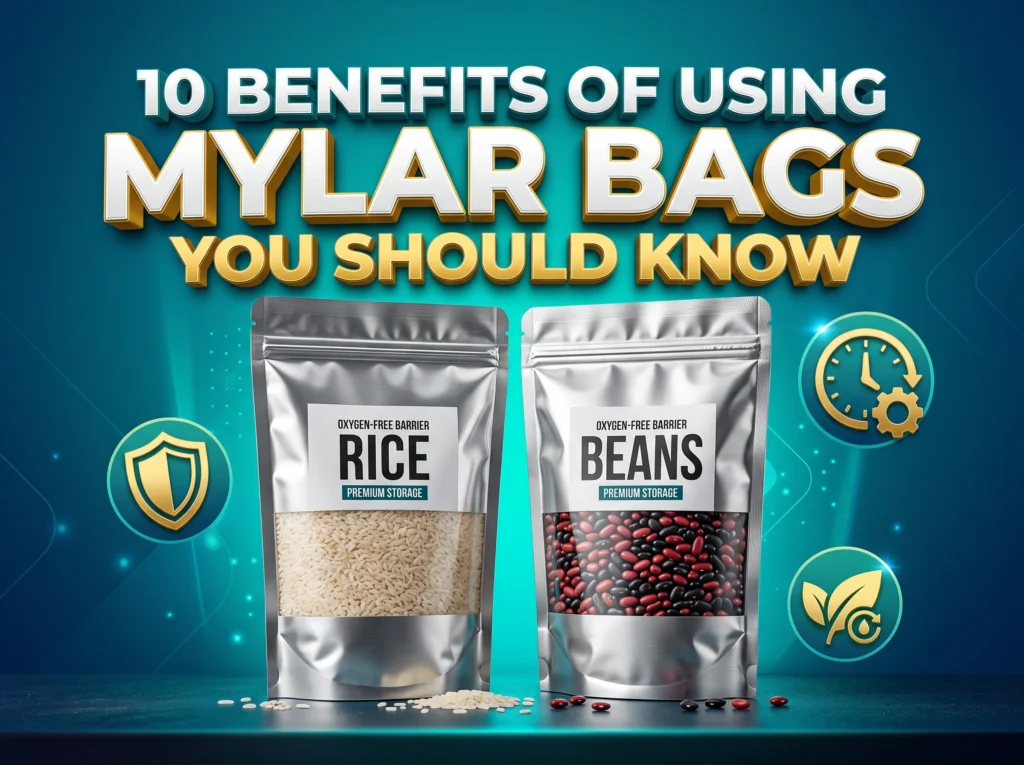
Quick Answer: Mylar bags protect food from oxygen, moisture, and UV light. When you pair them with oxygen absorbers, dry foods like rice, beans, and oats can stay fresh for 25 to 30 years. That is why preppers, homesteaders, and small food brands trust them for long-term food storage.
Ever opened a bag of rice and found it stale, clumpy, or worse full of bugs? You are not alone. Regular plastic bags let air and moisture sneak in. Slowly, your food loses flavor, texture, and nutrition.
Here is the good news: there is a simple, low-cost fix. Mylar bags create an airtight seal that locks out the three things that spoil food oxygen, moisture, and light. In this guide, you will learn the 10 biggest benefits of using Mylar bags, plus handy charts, pro tips, and answers to the questions people ask most.
Let’s dive in.
What Are Mylar Bags?
A Mylar bag is not just a shiny pouch. It is a smart, multi-layer shield. The name Mylar comes from a BoPET film (a strong polyester) first developed by DuPont in the 1950s. Each bag has three layers working together:
- A tough polyester outer layer that resists tears and punctures
- An aluminum middle layer that blocks oxygen, UV light, and moisture
- A food-safe polyethylene inner layer that melts to form a tight heat seal
Even NASA has used Mylar material because it is light, strong, and reliable. If it works in space, it can work in your pantry.
10 Benefits of Using Mylar Bags
1. Food Lasts Up to 25–30 Years
This is the number that surprises most people. Dry foods sealed in Mylar bags with oxygen absorbers can stay safe and tasty for decades. Compare that to a plastic container, where white rice may only last 6 to 12 months. That is not a sales pitch it is simple science. Remove the oxygen, block the light and moisture, and food stops breaking down.
2. Blocks Oxygen Completely
Oxygen is food’s number one enemy. It causes oxidation, which ruins flavor and destroys vitamins. Quality Mylar bags have an oxygen transmission rate (OTR) of less than 0.01 cc per 100 square inches per day. In plain words: almost zero air gets in. Add an oxygen absorber (a small packet of iron powder), and the inside of the bag becomes nearly oxygen-free.
3. Keeps Moisture Out
Moisture leads to mold, clumping, and spoiled food. The aluminum layer in a Mylar bag acts as a moisture barrier at the molecular level. Your flour, sugar, pasta, and dried fruits stay dry and fresh even in humid climates.
4. Total Protection From Light
Sunlight and even indoor light break down nutrients in grains, coffee, spices, and dehydrated foods. Mylar’s metallic layer is fully opaque. Your food rests in complete darkness no matter where you store it. This UV light protection is a big win for anything light-sensitive.
5. Locks In Freshness and Flavor
Mylar bags act as an odor barrier in both directions. Coffee keeps its rich aroma inside. Outside smells stay out. This is why coffee roasters, snack brands, and spice sellers love resealable Mylar pouches for retail packaging.
6. Saves You Money
Here is a fun fact: about 30–40% of the U.S. food supply goes to waste, according to the USDA. Buying bulk food and sealing it in Mylar cuts that waste at home. A $35 kit of 5-gallon Mylar bags and oxygen absorbers can protect hundreds of dollars of food for decades. That is smart, simple savings.
7. Strong and Puncture-Resistant
Good Mylar bags come in different thickness levels, measured in mils (one mil = 1/1000 of an inch). Thicker bags (5 to 7 mil) resist tears and prevent “pinholing” tiny cracks that form when thin bags get folded or shipped. The 2026 benchmark for 25-year storage is 7 mil Mylar bags.
8. Lightweight, Flexible, and Space-Saving
Unlike glass jars or metal cans, Mylar bags are light and flexible. They mold to your shelf, bucket, or backpack. This makes them perfect for emergency food supplies, camping, survival kits, and e-commerce shipping. No breakage. No wasted space.
9. Safe for Food Storage
Food-grade Mylar bags are BPA-free and approved for direct food contact under FDA rules (21 CFR 177.1630 for polyester resins). The material does not leach chemicals into food. Just make sure you buy food-grade certified bags, not craft or hobby Mylar.
10. Reusable, Customizable, and Business-Friendly
Many Mylar bags come with a zipper closure, so you can open and reseal them again and again. That supports the growing eco-friendly packaging trend, since reusable Mylar bags cut down on single-use waste. For businesses, custom printed Mylar bags turn plain pouches into eye-catching, branded stand-up pouches. Companies like ONO Custom Boxes offer custom printing options that help small food, coffee, and snack brands stand out on the shelf.
Mylar Bag Thickness Chart
| Thickness | Best For | Expected Protection |
|---|---|---|
| 3.5 mil | Short-term storage, snacks, retail packaging | 1–5 years |
| 4–4.5 mil | Travel, everyday pantry use | 3–10 years |
| 5 mil | Standard long-term food storage | 10–20 years |
| 7 mil+ | Serious 25-year storage, bulk grains | 25–30 years |
Food Shelf Life in Mylar Bags (With Oxygen Absorbers)
| Food | Regular Packaging | In Mylar + Oxygen Absorber |
|---|---|---|
| White rice | 6–12 months | 25–30 years |
| Dried beans | 1–2 years | 25–30 years |
| Rolled oats | 6–12 months | 20–30 years |
| Pasta | 1–2 years | 20–30 years |
| Flour | 3–8 months | 10–15 years |
| Sugar | 2 years | 30+ years (no absorber needed) |
| Freeze-dried foods | 1–2 years | 25 years |
Note: High-oil and high-moisture foods (like nuts, brown rice, and jerky) have shorter shelf lives, even in Mylar.
How to Seal a Mylar Bag in 5 Easy Steps
- Fill the bag with fully dry, low-oil food.
- Drop in the right size oxygen absorber (about 2000cc for a 5-gallon bag).
- Press out extra air with your hands.
- Heat seal the top with a clothes iron, hair straightener, or impulse sealer.
- Label the bag with the food name and date, then store it in a cool, dark place ideally inside a food-grade HDPE bucket for rodent protection.
Pro tip: Fresh oxygen absorbers feel soft. If one feels hard, it has already been used up grab a new one.
Common Mistakes to Avoid
- Skipping the oxygen absorber (Mylar alone is not enough for decades of storage)
- Storing oily or moist foods like nuts or fresh jerky
- Leaving loose seals or air pockets
- Reusing spent oxygen absorbers
- Storing bags near sharp edges or where mice can reach them
Avoid these, and your food will stay safe for decades.
Mylar Bags vs. Vacuum Sealing: Which Wins?
| Feature | Mylar Bags | Vacuum Sealing |
|---|---|---|
| Light protection | Full | None (clear plastic) |
| Oxygen removal | Near-total (with absorbers) | Partial |
| Shelf life | 25+ years | 1–3 years |
| Best use | Long-term dry food storage | Short-term pantry and freezer |
For true long-term food storage, Mylar with oxygen absorbers is the clear winner. Vacuum sealing still shines for meats in the freezer and short-term needs. Many families use both.
Frequently Asked Questions
How long does food last in Mylar bags?
Dry foods like rice, beans, and oats can last 25 to 30 years when sealed with oxygen absorbers and stored in a cool, dark place.
Do I need oxygen absorbers with Mylar bags?
Yes, for long-term storage. The absorber removes the oxygen the bag alone cannot. One exception: sugar and salt do not need absorbers.
Are Mylar bags safe for food?
Yes. Food-grade Mylar bags are BPA-free and meet FDA food-contact standards. Always choose food-grade certified bags.
What foods should NOT go in Mylar bags?
Avoid high-moisture and high-oil foods, such as fresh produce, brown rice, nuts, and homemade jerky. Moisture and oil cause spoilage even in a sealed bag.
What thickness of Mylar bag is best?
Choose at least 5 mil for long-term storage. For 25-year storage, 7 mil is the trusted standard because it prevents pinholes.
Can Mylar bags be reused?
Yes, if they are clean and undamaged. Bags with a zipper closure are easiest to reuse. For fresh long-term storage, a new bag gives the most reliable seal.
How do you seal a Mylar bag without a machine?
A regular clothes iron or hair straightener works well. Press the open edge between the hot plates until the layers melt together.
Do Mylar bags protect against rodents?
Not fully. Mice can chew through them. Store sealed bags inside hard HDPE buckets for full protection.
Final Thoughts
Mylar bags offer a rare mix of power and simplicity. They block oxygen, moisture, and light, extend shelf life by decades, save money on bulk food, and work for everyone from emergency preppers to coffee brands. Add oxygen absorbers, pick the right mil thickness, and seal with care. Your future self will thank you every time you open a bag of perfectly fresh food.
Ready to start? Grab a starter kit of 7 mil Mylar bags and oxygen absorbers, seal your first batch of rice this weekend, and enjoy real peace of mind.