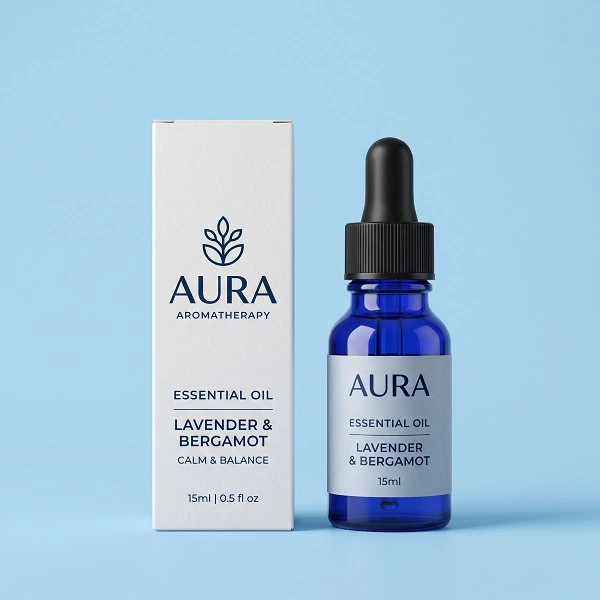
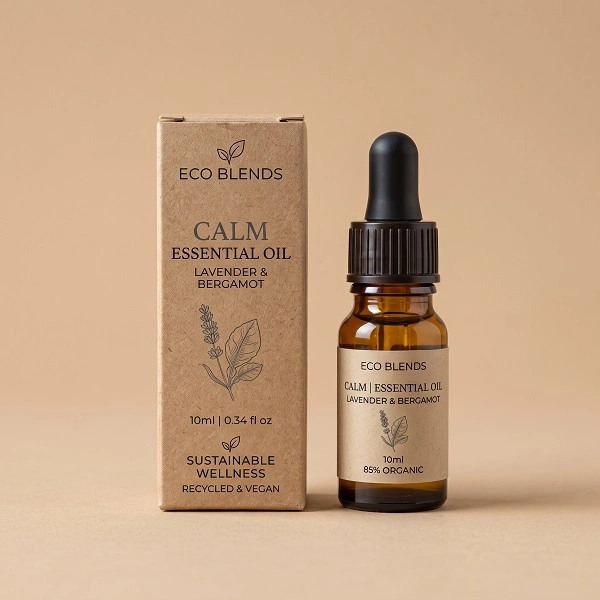
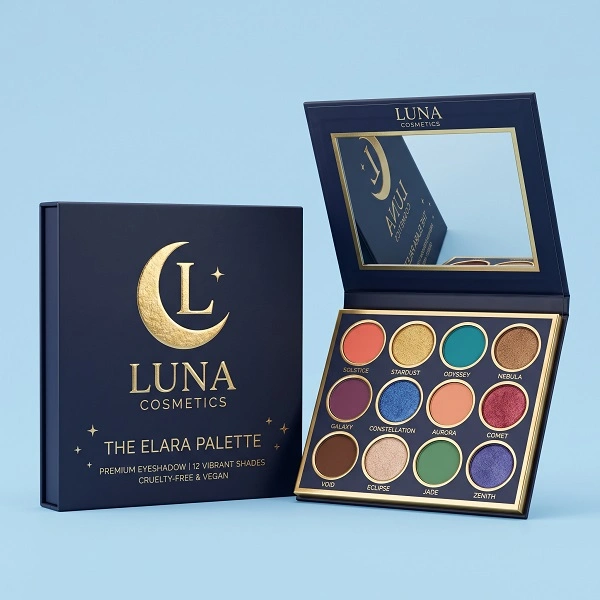
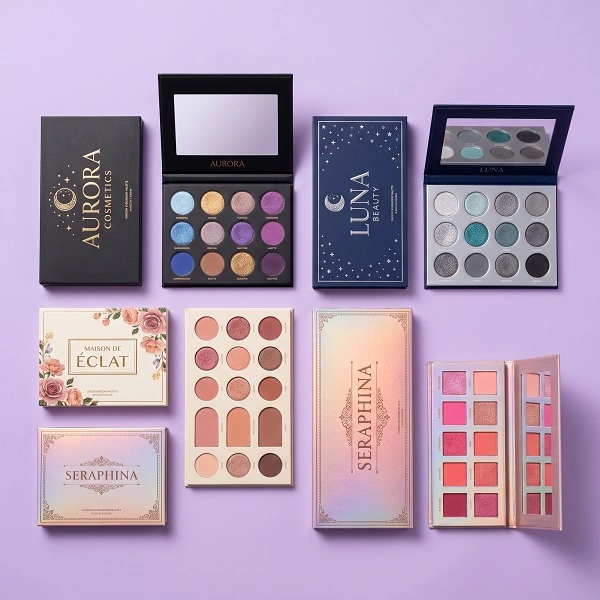
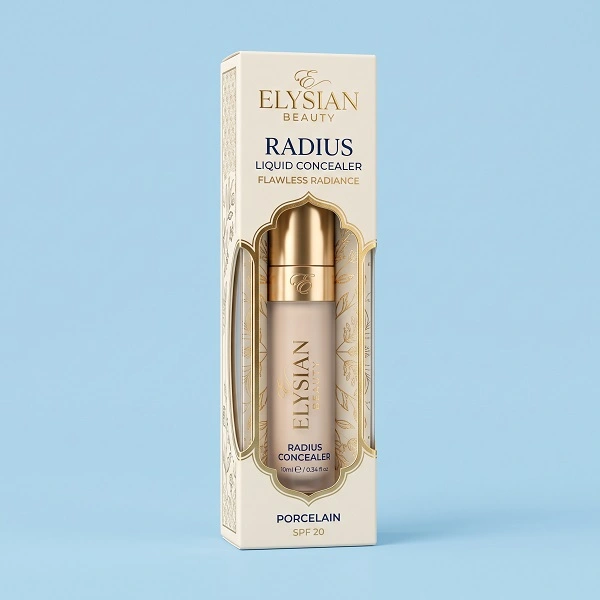
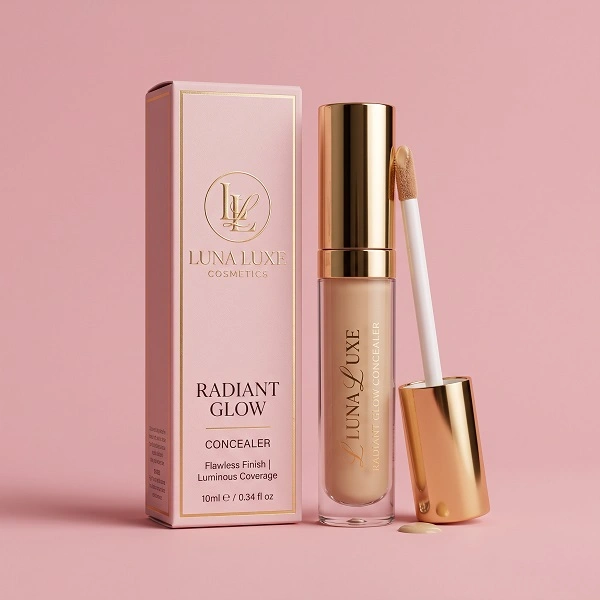
Custom derma roller boxes built to your tool’s exact dimensions, with needle-safe inserts that stop bent-needle returns. Choose kraft, SBS, or rigid stock with foil, soft-touch, or window finishes. Low 100-unit minimum, free physical samples, and fast nationwide US delivery.


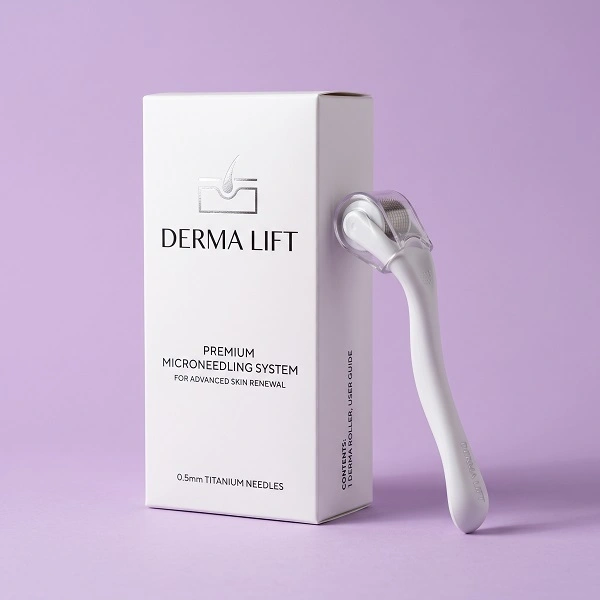
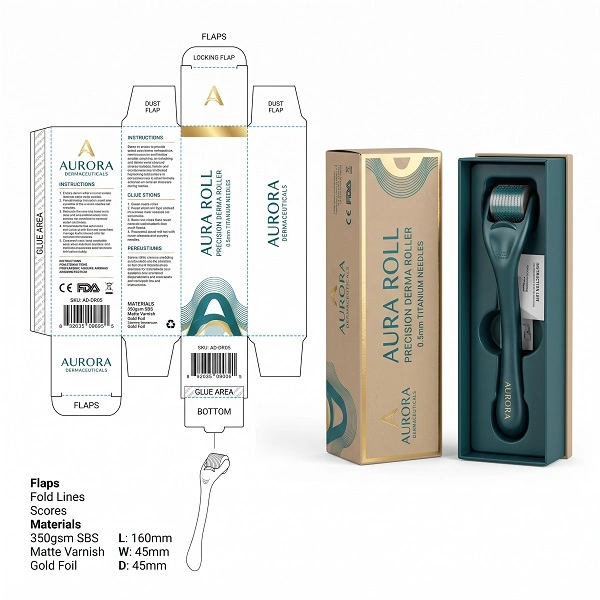



Get Your Custom Boxes Designed in Your Desired Shape, Size and Style

Get Your Custom Boxes Printed With Your Desired Artwork And Colors

Get Custom Boxes At Wholesale Prices. Low MOQs. No Die or Plate Charges
| Dimension (L + W + H) | All Custom Sizes & Shapes |
| Quantities | Low Minimum Order Required |
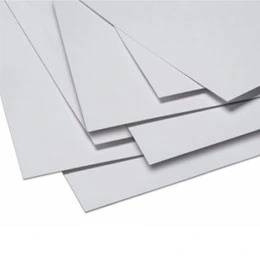
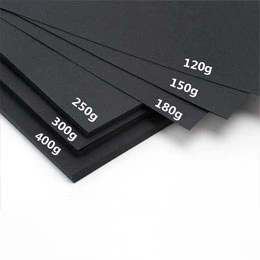
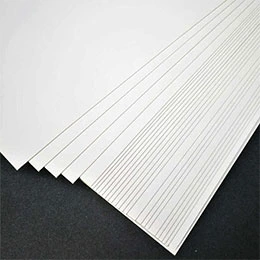
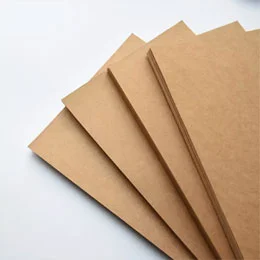
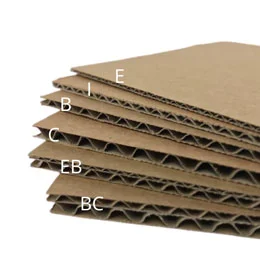
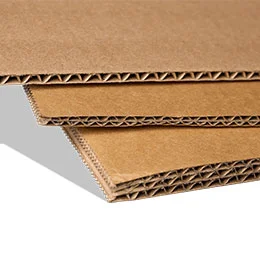
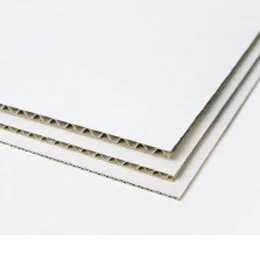
| Stock | 10pt to 28pt (60lb to 400lb) Eco-Friendly Kraft, E-flute Corrugated, Bux Board, Cardstock |
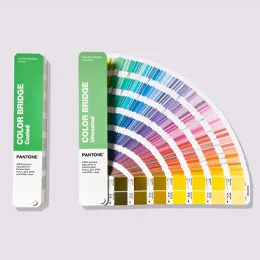
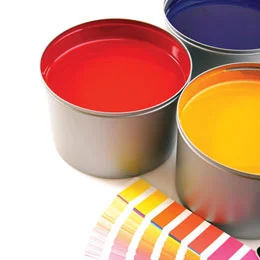
| Printing | No Printing, CMYK, CMYK + 1 PMS color, CMYK + 2 PMS colors |
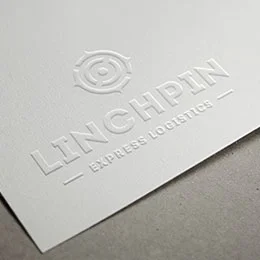
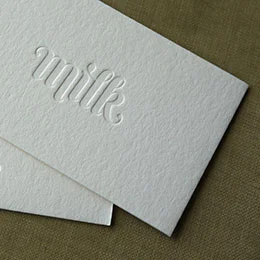
| Finishing | Gloss Lamination, Matte Lamination, Gloss AQ, Gloss UV, Matte UV, Spot UV, Embossing, Foiling |
| Included Options | Die Cutting, Gluing, Scoring, Perforation |
| Additional Options | Eco-Friendly, Recycled Boxes, Biodegradable |
| Proof | Flat View, 3D Mock-up, Physical Sampling (On request) |
| Turnaround | 8 – 12 Business Days, RUSH |
| Shipping | FREE USA |
Custom derma roller boxes are printed retail cartons built to hold microneedling tools securely, communicate needle length and sterility clearly, and meet FDA cosmetic or Class I device labeling rules. Available in kraft, SBS, and rigid stock with die-cut inserts, window patches, and tamper-evident options starting at 100 units with nationwide US delivery.
A derma roller is a precision instrument with 192 to 1,200 micro-needles sitting exposed inside a small carton. If that carton lets the head shift during transit, needles bend. If the insert is too loose, the tool rattles and the buyer assumes it’s cheap. If the panel doesn’t state needle length, sterilization status, and a lot number, retailers reject it and Amazon flags the listing.
Most brands discover this after their first 5,000-unit run. The print looks good, the box arrives, and then returns start coming in for bent needles or a distributor sends the whole pallet back because the UPC has no clear zone and the scanner won’t read it.
Custom derma roller boxes solve a narrower problem than “custom packaging.” They have to protect a fragile point-loaded product, carry regulated information in a legible hierarchy, survive e-commerce shipping without an outer carton, and still look expensive enough to justify a $39 price tag next to a $12 competitor. Getting all four right at the same time is the actual job.
Custom derma roller boxes are made-to-measure retail cartons produced from your exact tool dimensions rather than pulled from a stock catalog. The box is die-cut to the roller’s handle length and head diameter, fitted with an internal structure that immobilizes the needle drum, and printed with your brand identity plus the compliance copy your product category requires.
The build has three layers of decision-making:
Structure the carton style and the paperboard weight that carries it.
Retention the insert, tray, or blister that stops the roller from moving.
Surface printing, coating, and finishing that handle shelf presence and durability.
Brands running a single 0.5mm roller need a different spec than brands shipping a five-piece microneedling kit with serum vials. Both are covered here, but they are not the same box.
Dimensional accuracy from the tool, not the guess. Send the roller or the CAD file and the die line is drawn from measured head diameter, handle taper, and cap clearance. A 2mm error on a derma roller insert is the difference between a snug fit and a rattling one.
Needle-safe insert engineering. Cardboard inserts, EVA foam, molded pulp, and PET blister trays are all specified in-house, so the retention method is matched to needle depth and shipping method rather than defaulted to whatever is cheapest to die-cut.
Compliance-aware artwork review. Every proof is checked for the panel information the category expects needle length, material of the needles, sterilization statement, lot code and expiry space, net contents, manufacturer address, and warning copy. Artwork isn’t approved for plate until those elements have a defined position.
Physical prototypes before plate. You get a printed, cut, and assembled sample with your actual roller inside it. Not a 3D render.
Domestic production and nationwide shipping. Orders ship across all 50 states, with production planned around your launch date rather than a generic lead time.
| Style | Best for | Notes |
|---|---|---|
| Straight tuck end (STE) | Standard single-roller retail | Front panel stays clean; most common choice |
| Reverse tuck end (RTE) | Budget-conscious volume runs | Slightly less material, minor front seam |
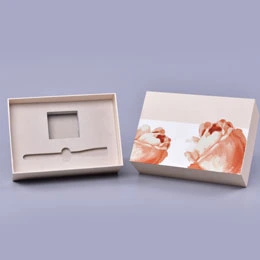
| Sleeve and tray | Premium single rollers | Reveal action; excellent for unboxing content |
| Two-piece rigid | Luxury and clinical positioning | 1,200–1,500gsm greyboard, wrapped |
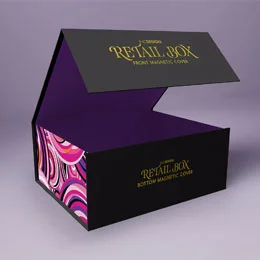
| Magnetic closure rigid | Kits, PR boxes, gifting | Highest perceived value, highest unit cost |
| Drawer / slide box | Multi-piece microneedling sets | Compartmentalized insert options |
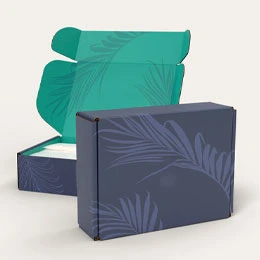
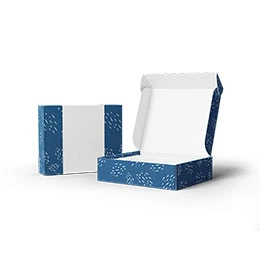
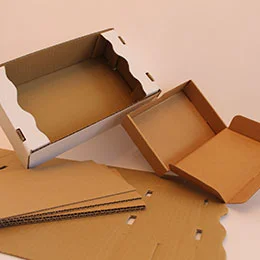
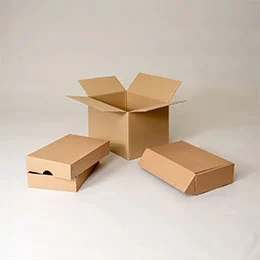
| Corrugated mailer | Direct-to-consumer without outer box | E-flute, survives carrier handling alone |
The insert is the part that decides whether your return rate is 1% or 8%.
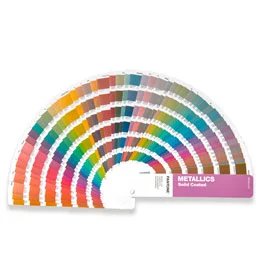
Offset lithography for runs above roughly 1,000 units; digital printing below that, which keeps short-run and test-market costs sane. CMYK plus Pantone spot matching for brand-critical colors.
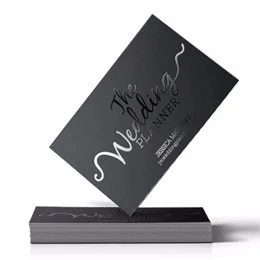
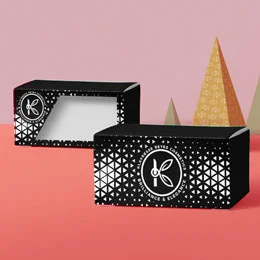
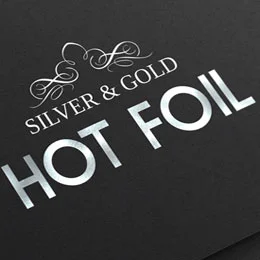
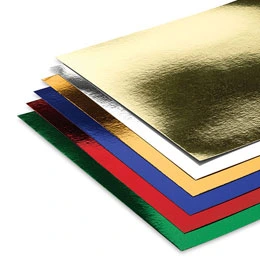
Finishing options: soft-touch matte lamination, gloss lamination, spot UV, hot foil stamping (gold, silver, rose gold, holographic), embossing and debossing, and window patching in PVC, PET, or plant-based PLA film.
Soft-touch matte with a spot UV logo remains the most reliable premium signal in the beauty tool category it reads expensive under retail lighting and photographs well for PDP imagery.
A note worth stating plainly: needle depth affects regulatory treatment. Rollers at shallow depths are commonly handled as cosmetic devices, while deeper needle lengths can fall under stricter device rules. Your regulatory consultant determines classification packaging is built to accommodate whichever set of panel requirements applies to your product.
Fewer damaged-needle returns. A correctly specified insert holds the drum on its axis. Bent-needle complaints are almost always an insert problem, not a courier problem.
Faster retail acceptance. Boxes that arrive with scannable barcodes, correct panel copy, and consistent dimensions clear buyer review without a resubmission cycle.
Higher perceived value per unit. Finishing choices let a $14 wholesale roller present as a $39 retail product. The box is the only physical brand asset the customer touches before the tool.
Lower dimensional shipping cost. Right-sized cartons reduce DIM weight on every parcel. On a 5,000-unit run, trimming half an inch off box depth pays for the die.
Consistent reorders. Once the die line and print file are locked, every subsequent run matches the first without re-tooling charges.
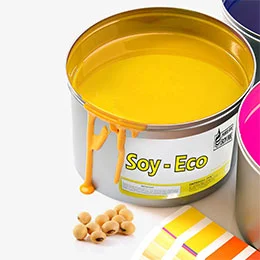
Sustainability claims you can defend. FSC stock, soy-based inks, recyclable kraft, and plastic-free windows are all documented options not vague marketing language.
1. Requirements call. Tool dimensions, needle length, order volume, shipping method, retail channel, and budget range. Ten minutes, and it removes most of the guesswork.
2. Quote and spec sheet. You receive material, style, insert, print, and finishing options with per-unit pricing at multiple quantity breaks so you can see where the cost curve bends.
3. Die line and 3D mockup. A dimensional template goes to your designer, or the in-house team builds artwork from your brand assets.
4. Physical prototype. A printed, assembled sample ships to you with your roller fitted inside. Test the fit, drop it, photograph it. Revisions happen here, before plates exist.
5. Production. Plate setup, print, die-cut, finish, glue, and quality inspection against the approved sample.
6. Delivery. Flat-packed or assembled, shipped nationwide with tracking. Typical production runs 8–12 business days after final approval; rush schedules are available.
Skincare and beauty brands launching or relaunching a microneedling line. Derma roller manufacturers supplying private-label clients who each need distinct packaging. Cosmetic companies extending into tools. Estheticians, spas, and salons building retail-ready product to sell in-clinic. E-commerce beauty stores that ship without an outer carton and need the retail box to survive the network alone. Private label manufacturers, wellness brands, retailers, and wholesale distributors moving derma rollers at volume across the United States.
The through-line: anyone whose product is small, sharp, fragile, and regulated and whose margin depends on it looking like more than it cost.
What is the minimum order for custom derma roller boxes?
Minimum order is 100 units. Digital printing makes short runs viable for market testing, while offset becomes more economical above roughly 1,000 units.
How much do custom derma roller boxes cost?
Unit cost depends on material, size, insert type, and finishing but volume moves it most. A kraft tuck-end box at 5,000 units can land under a dollar; a magnetic rigid kit box at 250 units will be several times that. Request quotes at two or three quantity breaks and the curve becomes obvious quickly.
Can I get a sample before ordering?
Yes. A physical printed prototype with your roller inside it is produced before plates are made. This is the stage to catch fit and legibility issues.
Will the packaging keep the needles from bending in transit? That depends entirely on the insert. Die-cut cardboard is adequate for shallow rollers inside an outer shipping carton. For 1.0mm and above, or for direct-to-consumer shipping, foam or molded pulp cavities are the reliable choice.
Do you offer eco-friendly derma roller packaging?
Yes FSC-certified kraft and coated stock, soy-based inks, molded pulp inserts, and plastic-free PLA window film. Kraft with one or two spot colors gives the most authentic result for clean-beauty positioning.
What information legally has to appear on the box?
Typically needle length, needle material, sterilization status, net contents, manufacturer or distributor name and address, lot number, and warning copy. Exact requirements depend on how your product is classified, so confirm with your regulatory advisor and the artwork will be laid out to fit.
How long does production take?
Around 8–12 business days after final artwork approval, plus shipping. Rush production is available when a launch date is fixed.
Can I use the same box for retail shelves and e-commerce shipping?
Yes, with E-flute corrugated construction. It costs more per unit than folding carton but removes the outer mailer entirely.
Send your roller dimensions, needle length, and target quantity, and you’ll get a spec sheet with pricing at multiple volume breaks plus a die line your designer can work from immediately.
Questions on materials or insert selection? Talk to a packaging specialist before you commit to a run.
At Ono Custom Boxes, our Artwork Preparation Guide helps ensure your custom packaging design is print-ready for high-quality results. To get started, submit vector files (AI, EPS, or PDF) in CMYK color mode, with a 1/8 inch bleed and 300 DPI resolution. Convert all text to outlines and keep it at least 1/4 inch from the edges. Review your proof to ensure accuracy before submitting. Following these steps will guarantee your design is perfectly printed on your custom boxes.
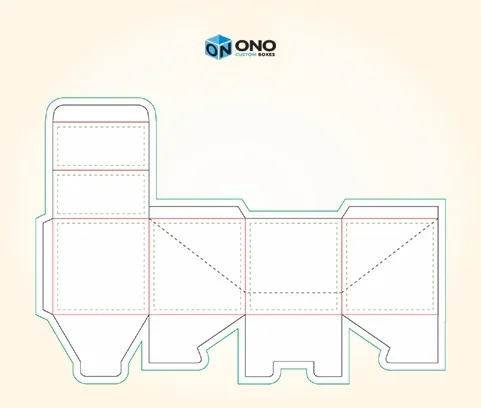
The cut line is the outline that marks where your custom packaging will be trimmed. It is typically represented by a solid black line in your artwork file.
The bleed line is the area extending beyond the cut line, usually marked with a green line in your artwork. Typically, a 1/8 inch (0.125") bleed is required to prevent any unwanted white borders.
The crease line, marked by red lines in your artwork, indicates where the box will be folded during production.
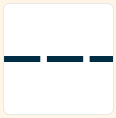
Perforation lines, shown as dotted black lines, indicate where the box will have small, evenly spaced holes for easy tearing or separation. These are often used for tear-away sections.
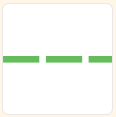
The safety margin, marked by dotted green lines, is the area around the cut line where important elements (such as text, logos, or graphics) should be kept clear.
Need Help with Ono Custom Boxes Consultant? We’re here! We offer a variety of packaging options, from sustainable choices to personalize packaging, all aimed at helping your product stand out. And with our fast turnaround, you can get started without the wait.
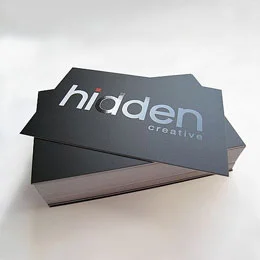
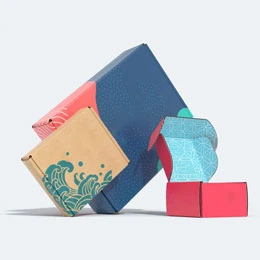




Ono Custom Boxes delivers innovative, durable, and affordable packaging tailored to meet your business needs and brand identity.
111-06 Farmers Boulevard, Rochdale Village, NY 11434
Copyright © 2026 Ono Custom Boxes. All Rights Reserved
WhatsApp us